Words that Win – The 3V Messaging Framework

VALUES, VILLAINS, and VISION

Communications consultant Anat Shenker-Osorio developed the 3V messaging framework. Effective 3V messages: 

  1. lead with shared values, 
  2. name the villains and their motives for opposing those values,
  3. present your vision for a better future. 

As linguist George Lakoff says, “People vote based on values, connection, authenticity, trust and identity” – not lists of policies and facts.

BAC’s 3V Messaging Library

The Bay Area Coalition offers 3V statements on the critical issues of our time.

January 6th Committee Report

by Select Committee

“The Select Committee to Investigate the January 6th Attack has succeeded in bringing clarity and demonstrating with painstaking detail the fragility of our Democracy. Above all, the work of the Select Committee underscores that our democratic institutions are only as strong as the commitment of those who are entrusted with their care.

As the Select Committee concludes its work, their words must be a clarion call to all Americans: to vigilantly guard our Democracy and to give our vote only to those dutiful in their defense of our Constitution.”

Nancy Pelosi, Speaker of the House

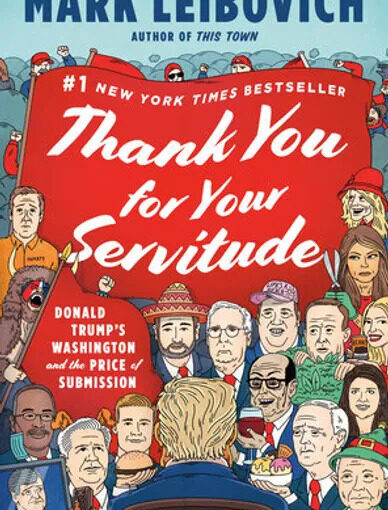
Thank You for Your Servitude

Donald Trump’s Washington and the Price of Submission
By Mark Leibovich
Publisher: Penguin Press

Recommended by Cindi

“This is a really funny book.” Kara Swisher. 

Mark Leibovich’s unflinching account of the moral rout of a major American political party, tracking the transformation of Rubio, Cruz, Graham, and their ilk into the administration’s chief enablers, and the swamp’s lesser lights into frantic chasers of the grift…isn’t another view from the Oval Office: it’s the view from the Trump Hotel. 

The Art & Science of Persuasion Playbook

A Message from Galvanize Action about a huge block of persuadable voters!

“White women are the largest voting bloc in this country and will be for decades to come. They account for 38% of the national vote share and 43% of the vote share across Galvanize Action’s priority states. Within this voting bloc, we’ve identified 44,093,812 moderate women who are not ideologically entrenched, meaning they are open to new ideas and perspectives and movable on key issues such as reproductive freedom, healthcare, gender equity, climate, and the economy.”

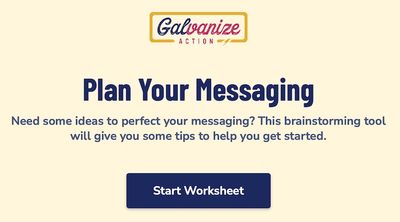
Galvanize Action has a fabulous interactive messaging worksheet we can all use!

Galvanize Action says, “We’ll share with you exactly how to create a message that meets people at their values and how to turn those into an effective ad. Our interactive worksheet will guide you through the process with prompts about your target audience and the issue you want to move them on. You’ll walk away with customized advice!”

Corruptible

Who Gets Power and How It Changes Us

By: Brian Klaas

Publisher: Scribner

Recommended by: Bruce R.

Does power corrupt, or are corrupt people drawn to power? Are tyrants made or born? Are entrepreneurs who embezzle and cops who kill the result of poorly designed systems or are they just bad people? If you were suddenly thrust into a position of power, would you be able to resist the temptation to line your pockets or seek revenge against your enemies?
To answer these questions, Corruptible draws on over 500 interviews with some of the world’s top leaders—from the noblest to the dirtiest—including presidents and philanthropists as well as rebels, cultists, and dictators. Some of the fascinating insights include: how facial appearance determines who we pick as leaders, why narcissists make more money, why some people don’t want power at all and others are drawn to it out of a psychopathic impulse, and why being the “beta” (second in command) may actually be the optimal place for health and well-being.

Corruptible also features a wealth of counterintuitive examples from history and social science: you’ll meet the worst bioterrorist in American history, hit the slopes with a ski instructor who once ruled Iraq, and learn why the inability of chimpanzees to play baseball is central to the development of human hierarchies.

Professor Jason Stanley outlines how fascism takes over a country

Fascism is a cult of the leader, who promises national restoration in the face of supposed humiliation by immigrants, leftists, liberals, minorities, homosexuals, women, in the face of what the fascist leader says is a takeover of the country’s media, cultural institutions, schools by these forces.

Fascist movements typically, though not invariably, rest on an urban/rural divide. The cities are where there’s decadence, where the elites congregate, where there’s immigrants, and where there’s criminality.

Each of these individuals alone is not in and of itself fascist, but you have to worry when they’re all grouped together, seeing the other as less than. Those moments are the times when societies need to worry about fascism.

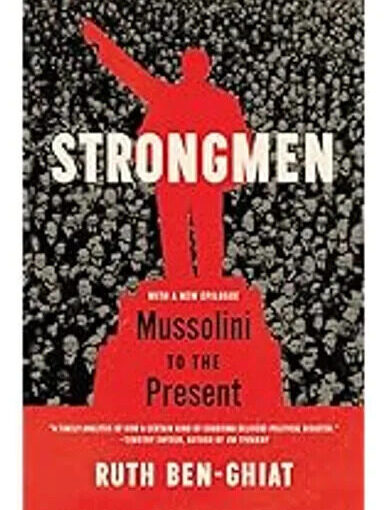
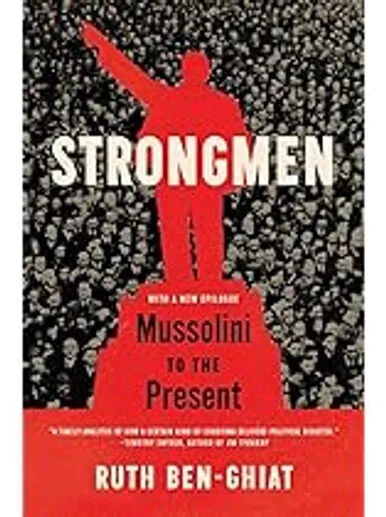
Strongmen

Mussolini to the Present

by Ruth Ben-Ghiat

Publisher: W. W. Norton & Company

Ruth Ben-Ghiat is the expert on the “strongman” playbook employed by authoritarian demagogues from Mussolini to Putin—enabling her to predict with uncanny accuracy the recent experience in America and Europe. In Strongmen, she lays bare the blueprint these leaders have followed over the past 100 years, and empowers us to recognize, resist, and prevent their disastrous rule in the future.

Read Review


Ruth Ben-Ghiat interviewed by Dean Peter Arnade at University of Hawai

How to recognize disinformation and how to stop it

Deb Lavoy explains how we fall for disinformation and how to train ourselves to avoid falling for it. (11 min.)

Deb Lavoy is on a mission to eradicate disinformation. As a former software engineer and digital marketer, she recognized the established social media marketing techniques that disinformation perpetrators appropriating to manipulate us into believing falsehoods. This talk provides tips on recognizing these tricks and how to counter them. Deb Lavoy is on a mission to eradicate disinformation. Her experience in software engineering and marketing, gave her a unique perspective on the rise of disinformation in 2016: the perpetrators were maliciously appropriating tried and tested digital marketing techniques. Deb founded the nonprofit Reality Team in response.

Reality Team drowns out the lies perpetrated over social media with simply stated truths, and arms people with tools and information to join the fight. The organization builds campaigns that change the ratio of truthful to untruthful information on social media feeds and provides tools and techniques to make it easier to tell the difference.

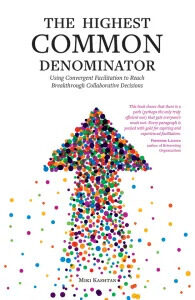
The Highest Common Denominator

Using Convergent Facilitation to Reach Breakthrough Collaborative Decisions

by Miki Kashtan

Miki introduces a novel decision-making process called Convergent Facilitation that builds trust from the beginning, surfaces concerns and addresses them, and turns conflicts into creative dilemmas that groups feel energized to solve together. This highly effective process has been used successfully around the world to resolve problems and teach people how to collaborate without sacrificing productivity.

Continue reading The Highest Common Denominator

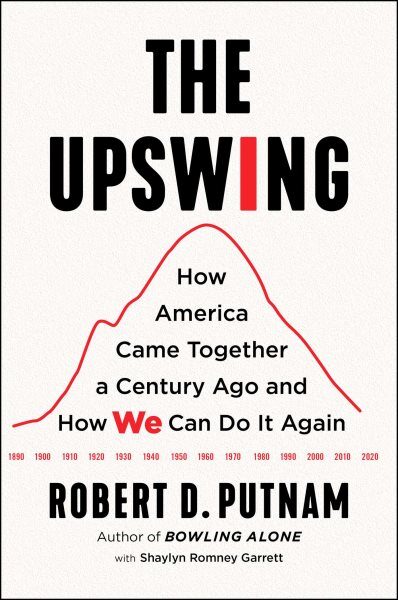
The Upswing

how America came together a century ago and how we can do it again

by Robert D. Putnam and Shaylyn Romney Garrett.

Publisher: Simon & Schuster

“An eminent political scientist’s brilliant synthesis of social and political trends over the past century that shows how we have gone from an individualistic society to a more communitarian society and then back again — and how we can use that experience to overcome once again the individualism that currently weakens our country”

We can’t go back to when things were “good.” But we can learn from when things ware “bad.” In the early 1900’s the Guilded Age of the robber barons, things were really bad for most US citizens; they feared for the end of democracy and the take-over by the oligarchs.

Buy

Interview: Robert Putnam Knows Why You’re Lonely


The 2023 Ithiel de Sola Pool Lecture by Robert D. Putnam
Sep 22, 2023


Join or Die — Trailer (2023)

The Documentary “Join or Die” (2023) is currently available on Netflix (2025-08-11)

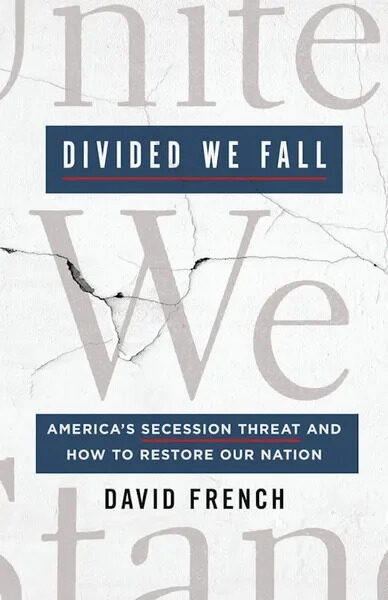
Divided We Fall

America’s Secession Threat and How to Restore Our Nation

by David French

Summary

Reestablishing national unity will require the bravery to commit ourselves to embracing qualities of kindness, decency, and grace towards those we disagree with ideologically. David French calls on all of us to demonstrate true tolerance so we can heal the American divide. If we want to remain united, we must learn to stand together again.

Continue reading Divided We Fall

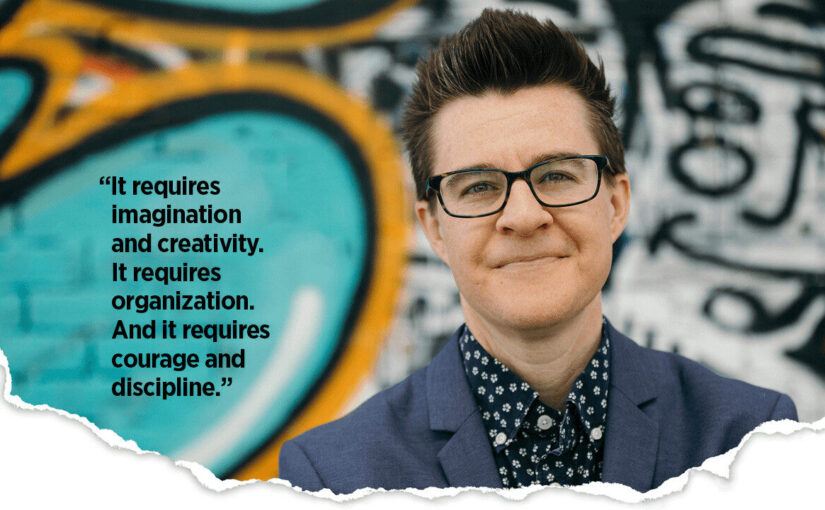
How to Citizen with Baratunde

By Baratunde Thurston

Recommended by: Bob

Here are some sources of ideas from a podcast by Baratunde Thurston, which began in 2020 and has four seasons of episodes. The overall theme is encouraging thinking about “citizen” as a verb. The four
pillars for doing this are:

  • To participate, not just vote, but to show up for each other and publicly participate by discussing concerns, debating policy choices, advocating, etc.
  • To invest in relationships, by deepening our interconnections with our community, family, neighbors, etc..
  • To understand power, by learning about the fluidity of power and the various ways we the people can use it for our collective benefit.
  • To value the collective, by working towards outcomes that benefit the many, not just the few.

The four seasons of episodes (ranging from 11 to 16 episodes each season) consist of interviews with folks who are thinking about and demonstrating democracy-building activities. It’s a wonderful resource for ideas. They include international, national, statewide, and local leaders.

Indivisible.org

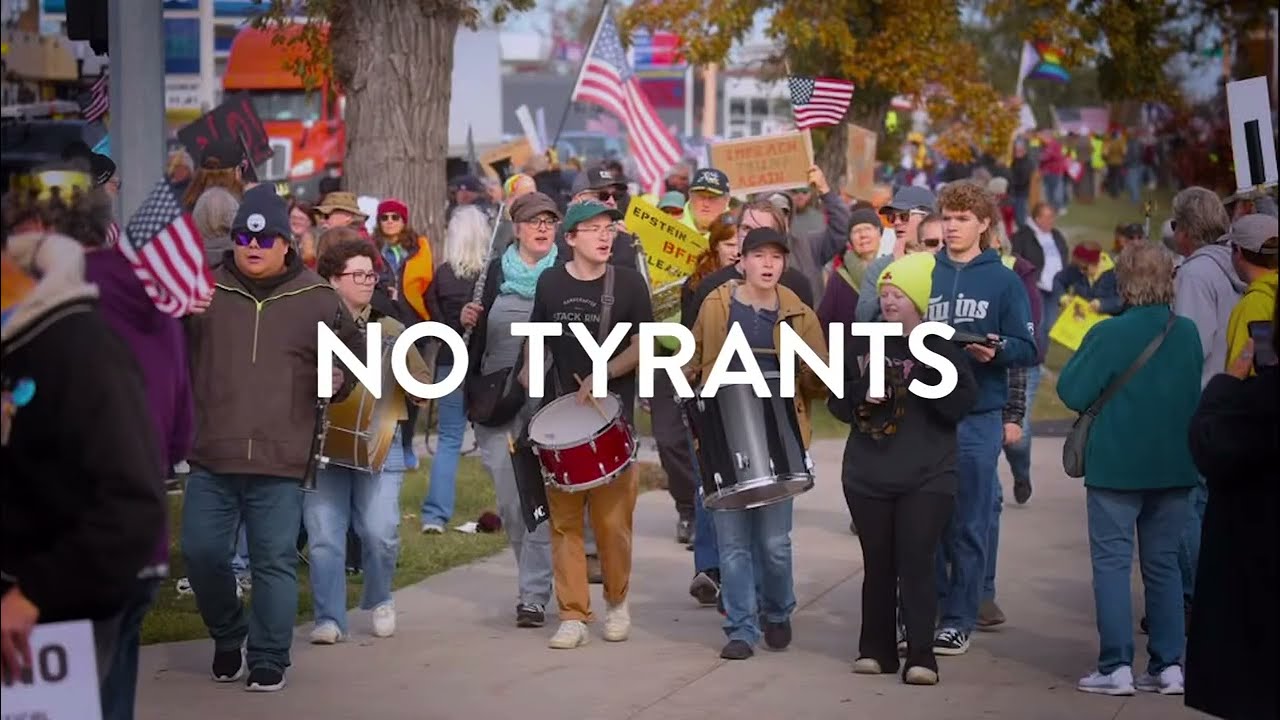
In America, we don’t do kings.

by Indivisible

We’re a grassroots movement of thousands of local Indivisible groups with a mission to elect progressive leaders, rebuild our democracy, and defeat the Trump agenda.

How we win

Defeating a multi-decade right-wing takeover of American government ain’t easy. But we’re here to win, and we have a plan. Here’s how we’re doing it:

We Are Indivisible. Our opponents depend on a divide and conquer strategy, so we treat an attack on one like an attack on all. We show up for each other, and particularly for those facing the brunt of rightwing ideologues’ attacks – often immigrants, people of color, and low-income people. We share a vision: a real democracy, of, by, and for everyone.

Strong Leaders, Strong Groups, Strong Movement. We build and sustain our movement’s power by helping individuals take leadership. They grow and lead local Indivisible groups, take independent action, and coordinate with their fellow local leaders. As a movement, our power comes from coordinated national campaigns where we act together, indivisible.

Inside/Outside Strategy. We understand systems of power – like how Congress operates – and we work inside them to get results. That complements our outside strategy of locally-based constituent pressure to demand elected leaders, regardless of political party, work for our democracy.

A Virtuous Cycle of Advocacy and Elections. We show up to advocate for policy wins in off-years and get out the vote in election years. These efforts reinforce each other to ensure our democracy works for all of us and that the people in power do too – or we will replace them with electeds who will.

Website

Indivisible’s YouTube Channel

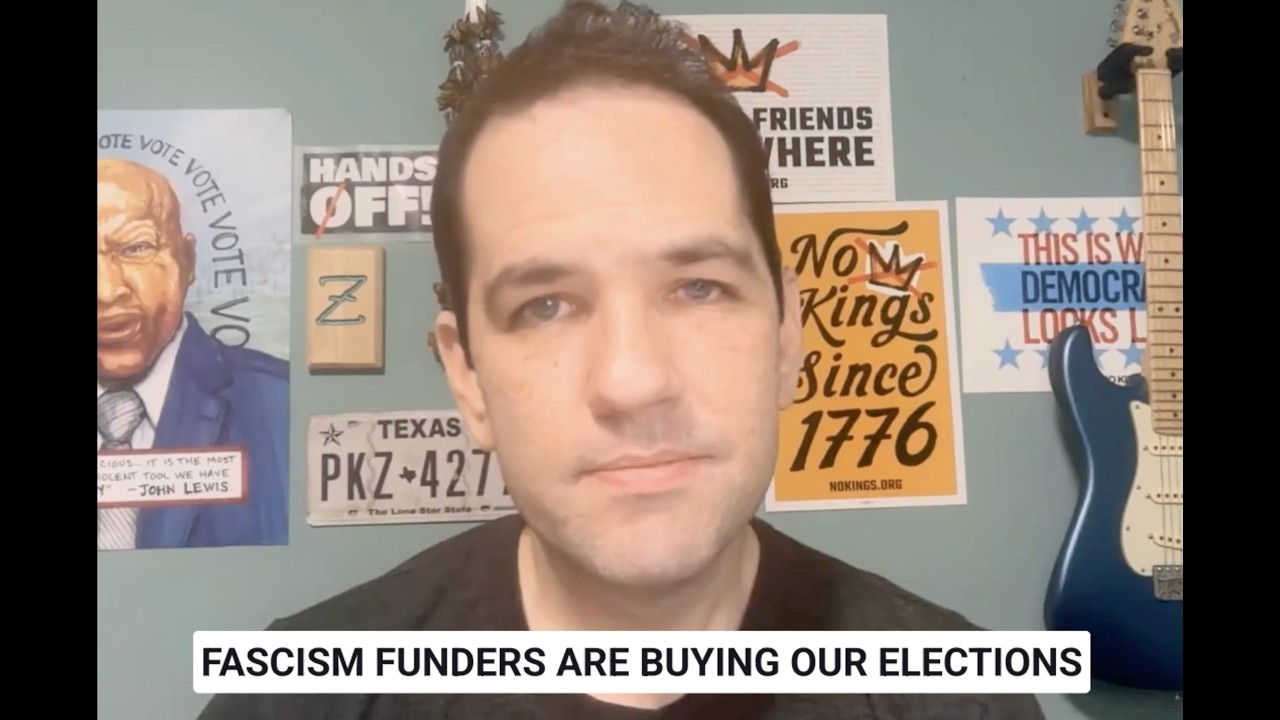
See the latest recordings of: “What’s the Plan? A Weekly Discussion with Leah and Ezra”

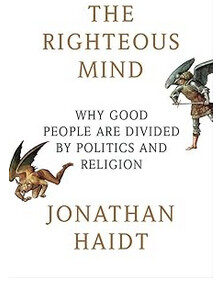
The Righteous Mind

Why Good People Are Divided by Politics and Religion

by Jonathan Haidt

Drawing on his twenty-five years of groundbreaking research on moral psychology, Jonathan Haidt shows how moral judgments arise not from reason but from gut feelings. He shows why liberals, conservatives, and libertarians have such different intuitions about right and wrong, and he shows why each side is actually right about many of its central concerns.

If you are not interested in reading the book, he has a TED talk that covers his main points. See:

Continue reading The Righteous Mind

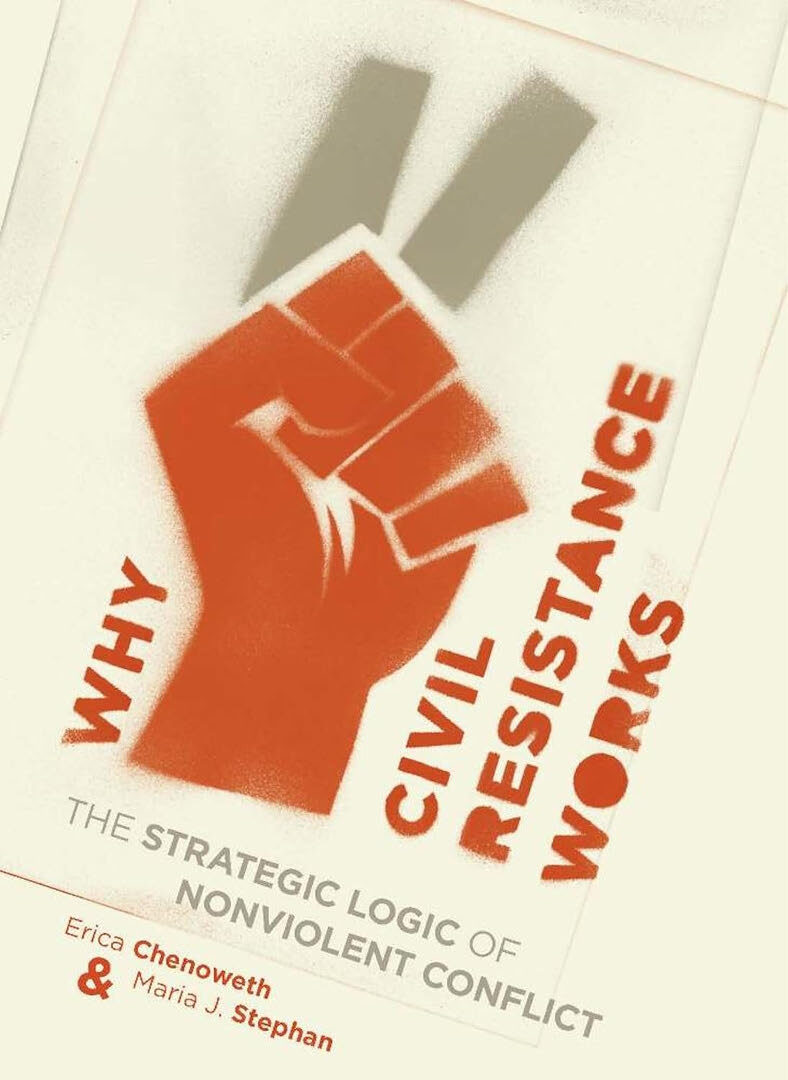
Why Civil Resistance Works

The Strategic Logic of Nonviolent Conflict

by Erica Chenoweth and Maria Stephan

Publisher: Columbia University Press

For more than a century, from 1900 to 2006, campaigns of nonviolent resistance were more than twice as effective as their violent counterparts in achieving their stated goals. By attracting impressive support from citizens, whose activism takes the form of protests, boycotts, civil disobedience, and other forms of nonviolent noncooperation, these efforts help separate regimes from their main sources of power and produce remarkable results, even in Iran, Burma, the Philippines, and the Palestinian Territories.

Combining statistical analysis with case studies of specific countries and territories, Erica Chenoweth and Maria J. Stephan detail the factors enabling such campaigns to succeed and, sometimes, causing them to fail. They find that nonviolent resistance presents fewer obstacles to moral and physical involvement and commitment, and that higher levels of participation contribute to enhanced resilience, greater opportunities for tactical innovation and civic disruption (and therefore less incentive for a regime to maintain its status quo), and shifts in loyalty among opponents’ erstwhile supporters, including members of the military establishment.

Buy

Strategizing For A Living Revolution

by George Lakey

Publisher: History As A Weapon

Recommended by: Bruce R.

This article is a comprehensive strategic framework for nonviolent revolution, combining historical case studies, practical organizing guidance, and theoretical insights about movement building.

Read Article

Archive

The Movement Action Plan

A Strategic Framework Describing The Eight Stages of Successful Social Movements

by Bill Moyer

Publisher: History Is A Weapon

Recommended by: BruceR

Within a few years after achieving the goals of “take-off”, every major social movement of the past twenty years has undergone a significant collapse, in which activists believed that their movements had failed, the power institutions were too powerful, and their own efforts were futile. This has happened even when movements were actually progressing reasonably well along the normal path taken by past successful movements!

The Movement Action Plan (MAP) was first published as the Fall 1986 edition of the Dandelion. Twelve-thousand copies were published and distributed. This is a revised edition of that article. People are invited to participate in the continuing development of MAP and help spread it to local groups.

Read Article

Archive