Peril

by Bob Woodward and Robert Costa

Publisher: Simon & Schuster

Woodward and Costa interviewed more than 200 people at the center of the turmoil, resulting in more than 6,000 pages of transcripts—and a spellbinding and definitive portrait of a nation on the brink. This classic study of Washington takes readers deep inside the Trump White House, the Biden White House, the 2020 campaign, and the Pentagon and Congress, with vivid, eyewitness accounts of what really happened.

Woodward and Costa on Washington Post Live

Read Review

Buy

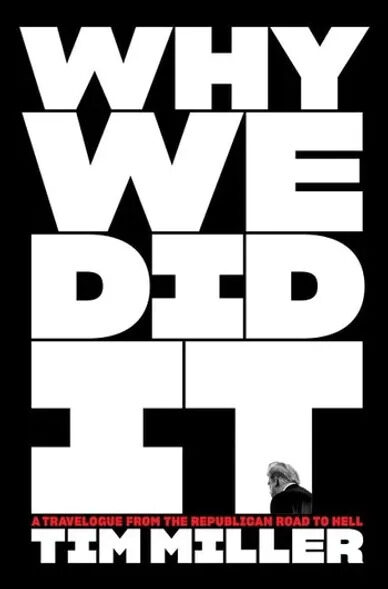
Why We Did It

A Travelogue From the Republican Road to Hell

by Tim Miller

Publisher: Harper Collins Publishers

Recommended by: Cindi Sears

In a bracingly honest reflection on both his own past work for the Republican Party and the contortions of his former peers in the GOP establishment, Tim Miller draws a straight line between the actions of the 2000s GOP to the Republican political class’s Trumpian takeover, including the horrors of January 6th.

From ruminations on the mental jujitsu that allowed him as a gay man to justify becoming a hitman for homophobes, to astonishingly raw interviews with former colleagues who jumped on the Trump Train, Miller diagrams the flattering and delusional stories GOP operatives tell themselves so they can sleep at night. With a humorous touch he reveals Reince Priebus’ neediness, Sean Spicer’s desperation, Elise Stefanik and Chris Christie’s raw ambition, and his close friends’ submission to a MAGA psychosis.

Why We Did It is a vital, darkly satirical warning that all the narcissistic justifications that got us to this place still thrive within the Republican party, which means they will continue to make the same mistakes and political calculations that got us here, with disastrous consequences for the nation

Read Review

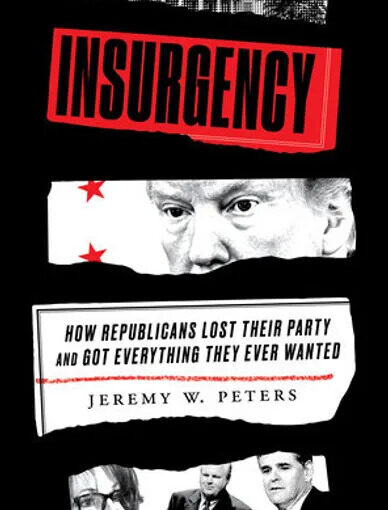
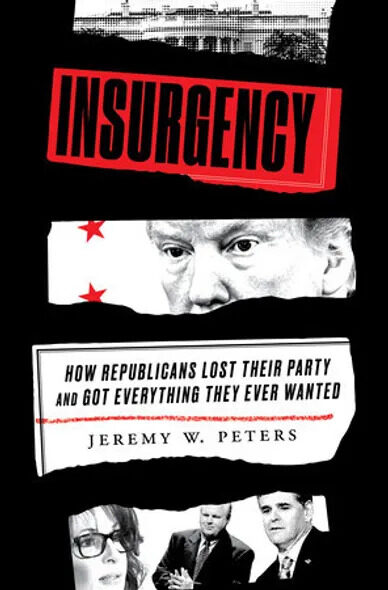
Insurgency

How Republicans Lost Their Party and Got Everything They Ever Wanted

by Jeremy W. Peters

Publisher: Random House Publishing House

NYTimes reporter, Jeremy W. Peters’ epic narrative chronicles the fracturing of the Republican Party. Insurgency is a fantasia-like story of a party establishment that believed it could control the dark energy it helped foment—right up until it suddenly couldn’t. How, Peters asks, did conservative values that Republicans claimed to cherish, like small government, fiscal responsibility, and morality get completely eroded?

Read Review

Buy

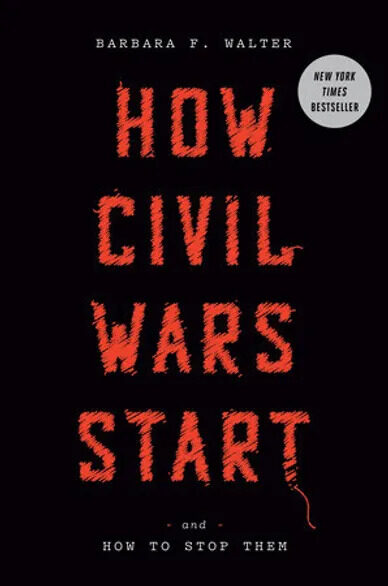
How Civil Wars Start

and How To Stop Them

by Barbara F. Walter

Publisher: Crown

Barbara F. Walter, a political science professor at U.C. San Diego, has spent over three decades studying civil conflict.  Over the last two decades, the number of active civil wars around the world has almost doubled. Walter reveals the warning signs—where wars tend to start, who initiates them, what triggers them—and why some countries tip over into conflict while others remain stable. Drawing on the latest international research and lessons from over twenty countries, Walter identifies the crucial risk factors, from democratic backsliding to factionalization and the politics of resentment. A civil war today won’t look like America in the 1860s, Russia in the 1920s, or Spain in the 1930s. It will begin with sporadic acts of violence and terror, accelerated by social media. It will sneak up on us and leave us wondering how we could have been so blind.

Read Review

Buy

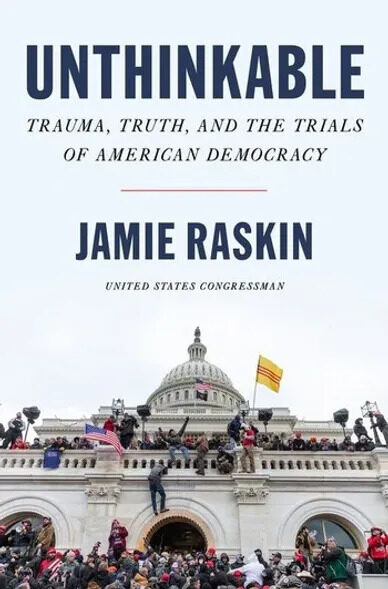
Unthinkable

Trauma, Truth and the Trials of American Democracy

by James Raskin

Publisher: Harper

In this searing memoir, Congressman Jamie Raskin tells the story of the forty-five days at the start of 2021 that permanently changed his life—and his family’s—as he confronted the painful loss of his son to suicide, lived through the violent insurrection in our nation’s Capital, and led the impeachment effort to hold President Trump accountable for inciting the political violence.

Jamie Raskin in conversation at The National Arts Club

Read Review

Buy

The Election Sabotage Scheme and How Congress Can Stop It

The Freedom to Vote Act can halt this growing antidemocratic threat.

by Will Wilder, Derek Tisler, Wendy R. Weiser

Publisher: Brennan Center for Justice

Essentially this article addresses laws and proposed legislation enabling partisan interference in election administration as part of a broader “election sabotage” or “election subversion” campaign, a national push to enable partisans to distort democratic outcomes.

Read Article

Laboratories of Autocracy

A Wake-Up Call From Behind The Lines

by David Pepper

Publisher: St. Helena Press

Recommended by: Cindi Sears

David Pepper shows that far more than the high-profile antics of national politicians and Trump himself, it’s anonymous, often corrupt politicians in statehouses across the country who pose the greatest dangers to American democracy. Amid all the chaos, these statehouses are hard at work, every day, hacking away at core principles and protections of our democratic system. And they’re getting more audacious every year.

Because these statehouses no longer operate as functioning democracies, these unknown politicians have all the incentive to keep doing greater damage, and can not be held accountable however extreme they get. This has driven steep declines in states like Ohio and others across the country. And collectively, it’s placed American democracy in its greatest peril since the dawn of the Jim Crow era.

But Pepper doesn’t stop there. He lays out a robust pro-democracy agenda outlining how everyone from elected officials to business leaders to everyday citizens can fight back.

Read Review

There’s Nothing For You Here

Finding Opportunity in the 21st Century

by Fiona Hill

Publisher: Mariner Books

A celebrated foreign-policy expert and key impeachment witness reveals how declining opportunity has set America on the grim path of modern Russia – and draws on her personal journey out of poverty, and her unique perspectives as a historian and policy maker, to show how we can return hope to our forgotten places.

Fiona Hill grew up in a world of terminal decay. The last of the local mines had closed, businesses were shuttering, and despair was etched in the faces around her. Her father urged her to get out of their blighted corner of northern England: “There is nothing for you here, pet,” he said.

The coal-miner’s daughter managed to go further than he ever could have dreamed. She studied in Moscow and at Harvard, became an American citizen, and served three U.S. Presidents. But in the heartlands of both Russia and the United States, she saw troubling reflections of her hometown and similar populist impulses. By the time she offered her brave testimony in the first impeachment inquiry of President Trump, Hill knew that the desperation of forgotten people was driving American politics over the brink—and that we were running out of time to save ourselves from Russia’s fate. In this powerful, deeply personal account, she shares what she has learned, and shows why expanding opportunity is the only long-term hope for our democracy.

Read Review

Buy

Authoritarian Nightmare

The Ongoing Threat of Trump's Followers / Trump and His Followers

by John W. Dean and Bob Altemeyer

Publisher: Melville House

John Dean, of Watergate fame, joined with Bob Altemeter, an expert on authoritarianism, to look at the entirety of the Trump phenomenon, using psychological and social science studies, as well as polling analyses, to understand Donald Trump’s followers. How did America end up with a leader who acts so crudely and despotically, and counter to our democratic principles? Why do his followers stick with him, even when he acts against their interests?

John Dean interview on Democracy Now

Read Review

Buy

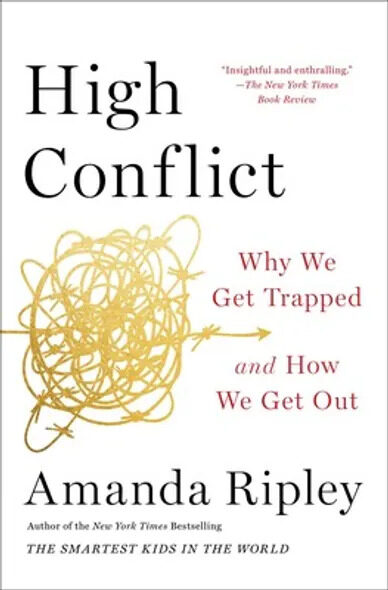
High Conflict

Why We Get Trapped and How We Get Out

by Amanda Ripley

Publisher: Simon and Schuster

Recommended by: Cindi, Bob & Linda

When we are baffled by the insanity of the “other side”—in our politics, at work, or at home—it’s because we aren’t seeing how the conflict itself has taken over. That’s what “high conflict” does. It’s the invisible hand of our time. And it’s different from the useful friction of “healthy conflict”. That’s good conflict, and it’s a necessary force that pushes us to be better people.

Read Review

Buy

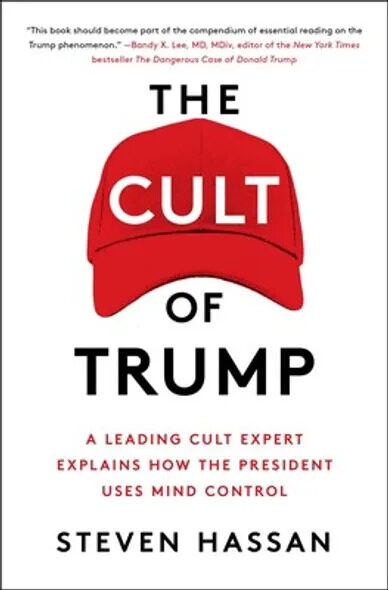
The Cult of Trump

A Leading Cult Expert Explains How the President Uses Mind Control

by Steve Hassan

Publisher: Free Press

Mind control and licensed mental health expert Steven Hassan draws parallels between our 45th president and people like Jim Jones, David Koresh, Ron Hubbard, and Sun Myung Moon, arguing that this presidency is in many ways like a destructive cult. He specifically details the ways in which people are influenced through an array of social psychology methods and how they become fiercely loyal and obedient.

Dr. Steven Hassan’s presentation to  Commonwealth Club of CA

Read Review

Buy

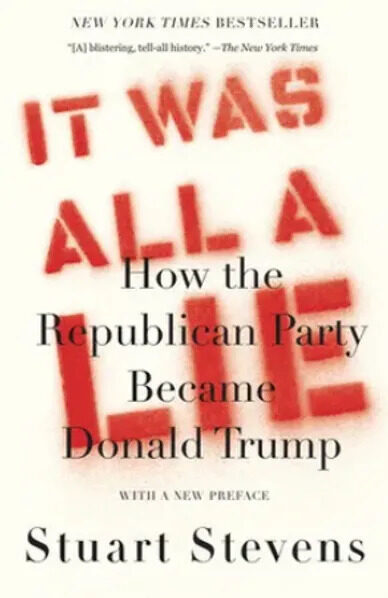
It Was All a Lie

How The Republican Party Became Donald Trump

by Stuart Stevens

Publisher: Knopf

Recommended by: Cindi S. and Steve G.

Written by Republican political consultant Stuart Stevens, this is a tell-all book about how the party he’s stood with for years spiraled out of control and lost the moral and political standpoints that once made it great. Unlike other books about Donald Trump, Stevens presents the 45th president of the United States as the inevitable result of the Republican Party’s failings, not its instigator.

Stuart Stevens spent decades electing Republicans at every level, from presidents to senators to local officials. He knows the GOP as intimately as anyone in America, and in this new book he offers a devastating portrait of a party that has lost its moral and political compass.

This is not a book about how Donald J. Trump hijacked the Republican Party and changed it into something else. Stevens shows how Trump is in fact the natural outcome of five decades of hypocrisy and self-delusion, dating all the way back to the civil rights legislation of the early 1960s. Stevens shows how racism has always lurked in the modern GOP’s DNA, from Goldwater’s opposition to desegregation to Ronald Reagan’s welfare queens and states’ rights rhetoric. He gives an insider’s account of the rank hypocrisy of the party’s claims to embody “family values,” and shows how the party’s vaunted commitment to fiscal responsibility has been a charade since the 1980s. When a party stands for nothing, he argues, it is only natural that it will be taken over by the loudest and angriest voices in the room.

It Was All a Lie is not just an indictment of the Republican Party, but a candid and often lacerating mea culpa. Stevens is not asking for pity or forgiveness; he is simply telling us what he has seen firsthand. He helped to create the modern party that kneels before a morally bankrupt con man and now he wants nothing more than to see what it has become burned to the ground.


Read Review

Buy

How to Have Impossible Conversations

A Very Practical Guide

by Peter Boghossian and James Lindsay

Publisher: Balance

 
From politics and religion to workplace negotiations, ace the high-stakes conversations in your life with this indispensable guide from a persuasion expert.

In our current political climate, it seems impossible to have a reasonable conversation with anyone who has a different opinion. Whether you’re online, in a classroom, an office, a town hall—or just hoping to get through a family dinner with a stubborn relative—dialogue shuts down when perspectives clash. Heated debates often lead to insults and shaming, blocking any possibility of productive discourse. Everyone seems to be on a hair trigger.

In How to Have Impossible Conversations, Peter Boghossian and James Lindsay guide you through the straightforward, practical, conversational techniques necessary for every successful conversationwhether the issue is climate change, religious faith, gender identity, race, poverty, immigration, or gun control. Boghossian and Lindsay teach the subtle art of instilling doubts and opening minds. They cover everything from learning the fundamentals for good conversations to achieving expert-level techniques to deal with hardliners and extremists. This book is the manual everyone needs to foster a climate of civility, connection, and empathy.

“This is a self-help book on how to argue effectively, conciliate, and gently persuade. The authors admit to getting it wrong in their own past conversations. One by one, I recognize the same mistakes in me. The world would be a better place if everyone read this book.”  —Richard Dawkins, author of Science in the Soul and Outgrowing God
 

Buy

A Summary of the Key Points

Seven Fundamentals of Good Conversations

  • Goals – Why are you engaged in this conversation?
  • Partnerships – Be partners, not advocates
  • Rapport – Develop and maintain a good connection
  • Listen – Listen more, talk less
  • Shoot the Messenger – Delivering “messages” doesn’t work, have a “conversation,” an exchange instead
  • Intentions – People have better intentions than you may think
  • Walk Away – Don’t push your conversational partner beyond their conflict zone

Beginner Level: Nine Ways to Start Changing Minds

  • Modeling – Model the behavior you want to see in others
  • Words – Define terms up front
  • Ask Questions – Focus on a specific question with genuine curiosity; avoid generalities, broad conclusions
  • Acknowledge Extremists – Point out and acknowledge unhelpful things people on your side have done
  • Navigating Social Media – Do not vent on social media
  • Don’t Blame, Do Discuss Contributions – Shift from “blaming” terms to “contribution” language,
    acknowledging things that got us to this unhappy place and emphasizing how to move forward
  • Focus on Epistemology – Figure out how people “know” what they claim to know, what’s the evidence
  • Learn – Learn what makes someone close-minded, what personal experiences have led them to a position
  • What NOT to Do (Reverse Applications) – A list of fundamental and basic conversational mistakes

Intermediate Level: Seven Ways to Improve Your Interventions

  • Let Friends Be Wrong – It’s okay if someone disagrees with you, even about a cherished conclusion
  • Build Golden Bridges – Find ways for your conversation partner to avoid social embarrassment if they
    change their mind
  • Language – Avoid “you,” switch to third person or collaborative language like “we” and “us”
  • Stuck? Reframe – Shift the conversation to keep it going smoothly or to get it back on track, use metaphors
  • Change Your Mind – Change your mind on the spot or be willing to reconsider
  • Introduce Scales – Use scales to gauge effective interventions, figure out how confident someone is in a
    belief, seeking places where they might be willing to reconsider, and put issues into perspective
  • Outsourcing – Turn to outside information to answer the question, “How do you know that?”

Five Advanced Skills for Contentious Conversations

  • Keep Rapoport’s Rules – Re-express, list points of agreement, mention what you learned, only then rebut
  • Avoid Facts – Bringing facts into a conversation requires considering timing and what counts as evidence
  • Seek Disconfirmation – How could that belief be incorrect?
  • Yes, and … — Eliminate the word “but” from your spoken vocabulary; affirm first, then add
  • Dealing with Anger – Know thyself; don’t escalate, monitor your emotions and take a pause if necessary

Six Expert Skills to Engage the Close-Minded

  • Synthesis – Recruit your partner to help refine and synthesize your positions
  • Help Vent Steam – Talk through emotional roadblocks
  • Altercasting – Cast your partner in a role that helps her think and behave differently
  • Hostage Negotiations – Use research-based ideas from hostage negotiations: mini-encouragers, mirroring, etc
  • Probe the Limits – Engage someone who professes a belief that can’t be lived, unmask disingenuous stmts.
  • Counter-Intervention Strategies – If someone is trying to intervene in your cognitive processes, go with it…

Master Level: Two Keys to Conversing

  • How to Converse with an Ideologue – Switch to moral epistemology, talk about values
  • Moral Reframing – Learn to speak moral dialects, study Jonathan Haidt’s moral foundations

On Tyranny

Twenty Lessons from the Twentieth Century

by Timothy Snyder

Publisher: Crown

Timothy Snyder provides a stark warning for the future of American democracy. Too easily we are ignoring the ways in which tyranny starts to eat away at democracy. As our political system faces new threats – not unlike those faced by democracies in the 20th century – we must look to the past to safeguard our future.

INTERVIEW: Listen to Professor Snyder discuss his book at Politics and Prose Bookstore

Read Review

Buy