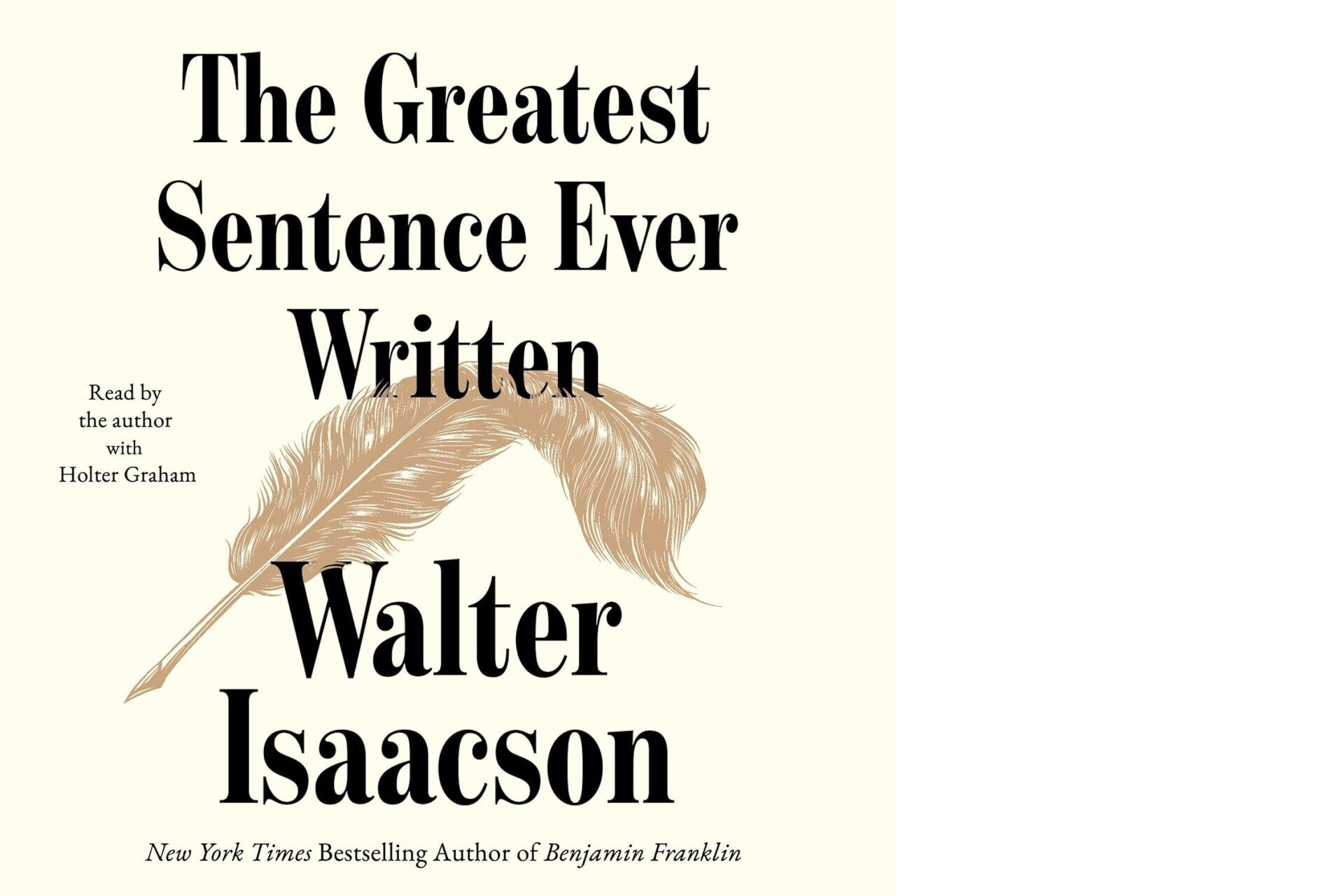
The Greatest Sentence Ever Written

by Walter Isaacson

Isaacson explores the origins of the second sentence of the Declaration of Independence:
“We hold these truths to be self-evident, that all men are created equal, that they are endowed by their Creator with certain unalienable Rights, that among these are Life, Liberty, and the pursuit of Happiness.”
• He breaks down the historical context, showing how Jefferson drafted it and Franklin and Adams edited it.
• The book highlights how those words shaped the American Dream and remain relevant in today’s polarized times.

Ali Velshi interviews Walter Isaacson

Publisher: ‎ Simon & Schuster

Thoughts on Aliens of Our Creation

Do they work for us, or for themselves?

By: Bruce Rafnel

Publisher: Substack, Authentic Community

Clearly, humans are causing climate change.

But we have more problems than warming the planet. Even if we control the temperature by reducing our CO2 emissions, there are many other ecological problems caused by humans: deforestation, desertification, disruption of water cycles, plastic pollution, insect decline, fishery collapses, and fuel resource depletion. The list goes on and on. “It is no accident that the ruins of the world’s oldest civilizations are mostly in deserts now. It wasn’t desert before that.”

Our human institutions are unwilling (or unable) to address these problems with real solutions. We created these institutions—corporations and governments, most notably—but we seem unable to control them. They have morphed into alien entities that now control us.

The smallest effective human-powered unit is a community, not an individual. However, tight, effective communities have been hobbled. It is time to relearn how to build communities, and then to do the work of taking back our government. At the same time, large organizations can be reformed or broken up, with non-violent actions, to remind them that they exist for humans, not themselves.

Photographic Evidence is Dead

Fake Image, Fake NEWS, Fake Trust.

By: Turtle Engineer (AKA: Bruce Rafnel)

Publisher: Medium, Slow Engineering

We have now witnessed the death of almost 200 years of photographic (and other recorded) evidence. Images, videos, and audio recordings can now be easily faked or altered in ways that cannot be detected. Digital technology has made this happen. Analog media is continuous, so subtle modifications can be noticed. However, digital media has discrete bits that are not dependent on the bits around them.

It is time to relearn what was so obvious to our ancestors: the SOURCE is more important than the content. “Do you trust or believe the source?” This can be a personal choice, but we no longer have the convenience of “socially accepted” sources.

Some technologies can “help” build trust, but they can all be compromised. We should never again put unconditional trust in any medium or technology.

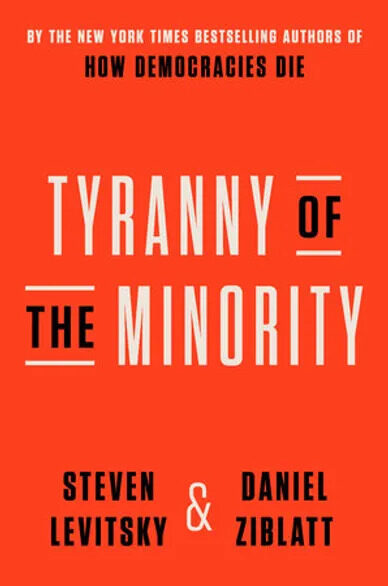
Tyranny of the Minority

Harvard professors Steven Levitsky and Daniel Ziblatt offer a coherent framework for understanding these volatile times. They draw on a wealth of examples—from 1930s France to present-day Thailand—to explain why and how political parties turn against democracy. They then show how our Constitution makes us uniquely vulnerable to attacks from within: It is a pernicious enabler of minority rule, allowing partisan minorities to consistently thwart and even rule over popular majorities. Most modern democracies—from Germany and Sweden to Argentina and New Zealand—have eliminated outdated institutions like elite upper chambers, indirect elections, and lifetime tenure for judges. The United States lags dangerously behind.

INTERVIEW: Levitsky and Ziblatt with journalist Tiziana Dearing at Harvard

Review

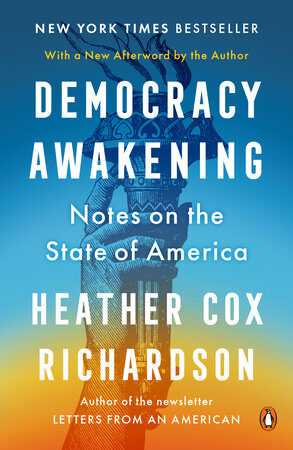
Democracy Awakening

Notes on the State of America

by Heather Cox Richardson

Publisher: Penguin Random House

At a time when the very foundations of American democracy seem under threat, the lessons of the past offer a road map for navigating a moment of political crisis. In Democracy Awakening, acclaimed historian Heather Cox Richardson delves into the tumultuous journey of American democracy, tracing the roots of Donald Trump’s “authoritarian experiment” to the earliest days of the republic. She examines the historical forces that have led to the current political climate, showing how modern conservatism has preyed upon a disaffected population, weaponizing language and promoting false history to consolidate power.

With remarkable clarity and the same accessible voice that brings millions to her newsletter, Letters from an American, Richardson wrangles a chaotic news feed into a story that pivots effortlessly from the Founders to the abolitionists to Nixon to the January 6 insurrection. An essential read for anyone concerned about the state of America, Democracy Awakening is more than a history book; it’s a call to action. Richardson reminds us that democracy requires constant vigilance and participation from all of us, showing how we, as a nation, can take the lessons of the past to secure a more just and equitable future.

Heather Cox Richardson | Democracy Awakening

Buy

Heather Cox Richardson

Letters from an American

Historians are fond of saying that the past doesn’t repeat itself; it rhymes.

To understand the present, we have to understand how we got here.

That’s where this newsletter comes in.

I’m a professor of American history. This is a chronicle of today’s political landscape, but because you can’t get a grip on today’s politics without an outline of America’s Constitution, and laws, and the economy, and social customs, this newsletter explores what it means, and what it has meant, to be an American.

These were the same questions a famous observer asked in a book of letters he published in 1782, the year before the Treaty of Paris ended the Revolutionary War.

Hector St. John de Crevecoeur called his book “Letters from an American Farmer.”

Like I say, history doesn’t repeat itself, but it sure rhymes.


Latest Posts

  • “What I saw in that room was one of the most troubling things I’ve seen in my time in public service,” Representative Jim Himes (D-CT), the top Democrat on the House Intelligence committee, said.
  • Republican Matt Van Epps won yesterday’s special election in Tennessee’s seventh congressional district, but Republicans aren’t celebrating triumphantly.
  • The news of last Friday, November 28, that Defense Secretary Pete Hegseth told a Joint Special Operations commander overseeing an attack on a small vessel carrying 11 people on September 2 to “kill everybody” is shaping up to be a fight over control of the United States government.
  • President Donald J.
  • On Friday evening, the Wall Street Journal published an article about the Trump administration’s negotiations with Russia over Ukraine that illuminated the administration’s approach to the world at home, as well as overseas.
  • In the wake of yesterday’s report from Alex Horton and Ellen Nakashima of the Washington Post that Defense Secretary Pete Hegseth ordered Special Operations to kill the survivors of a September 2 strike on a small boat off Venezuela, the Senate and the House Armed Services Committees have announced they intend to conduct “vigorous oversight” and “gather a full accounting” of the operation.
  • As Trump’s popularity continues to drop, the MAGA coalition shows signs of cracking, and Trump’s mental acuity slips, there is a frantic feel to the administration, as if Trump’s people are trying to grab all they can, while they can.
  • Happy Thanksgiving.

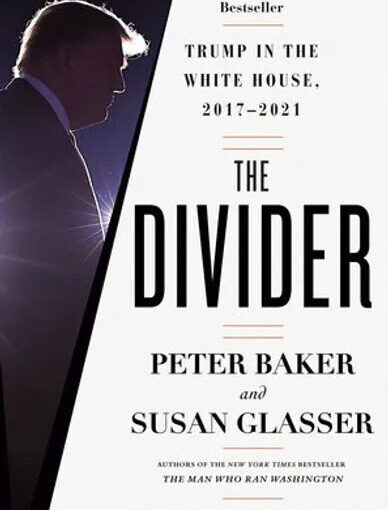
The Divider

Trump in the White House, 2017-2021

by Peter Baker and Susan Glasser

Publisher: Vintage

The Divider brings us into the Oval Office for countless scenes both tense and comical, revealing how close we got to nuclear war with North Korea, which cabinet members had a resignation pact, whether Trump asked Japan’s prime minister to nominate him for a Nobel Prize and much more. The book also explores the moral choices confronting those around Trump—how they justified working for a man they considered unfit for office, and where they drew their lines.

INTERVIEW: Susan Glasser and Peter Baker on C-SPAN

Review

Buy

Peril

by Bob Woodward and Robert Costa

Publisher: Simon & Schuster

Woodward and Costa interviewed more than 200 people at the center of the turmoil, resulting in more than 6,000 pages of transcripts—and a spellbinding and definitive portrait of a nation on the brink. This classic study of Washington takes readers deep inside the Trump White House, the Biden White House, the 2020 campaign, and the Pentagon and Congress, with vivid, eyewitness accounts of what really happened.

Woodward and Costa on Washington Post Live

Read Review

Buy

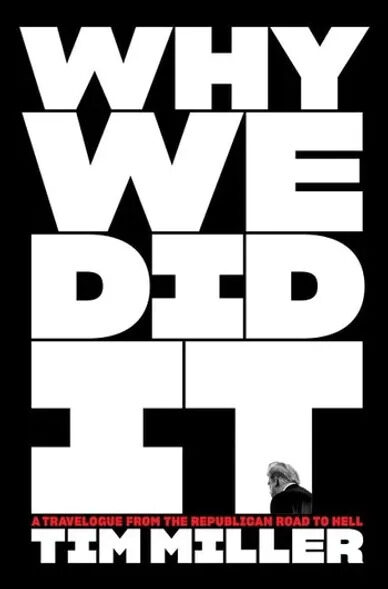
Why We Did It

A Travelogue From the Republican Road to Hell

by Tim Miller

Publisher: Harper Collins Publishers

Recommended by: Cindi Sears

In a bracingly honest reflection on both his own past work for the Republican Party and the contortions of his former peers in the GOP establishment, Tim Miller draws a straight line between the actions of the 2000s GOP to the Republican political class’s Trumpian takeover, including the horrors of January 6th.

From ruminations on the mental jujitsu that allowed him as a gay man to justify becoming a hitman for homophobes, to astonishingly raw interviews with former colleagues who jumped on the Trump Train, Miller diagrams the flattering and delusional stories GOP operatives tell themselves so they can sleep at night. With a humorous touch he reveals Reince Priebus’ neediness, Sean Spicer’s desperation, Elise Stefanik and Chris Christie’s raw ambition, and his close friends’ submission to a MAGA psychosis.

Why We Did It is a vital, darkly satirical warning that all the narcissistic justifications that got us to this place still thrive within the Republican party, which means they will continue to make the same mistakes and political calculations that got us here, with disastrous consequences for the nation

Read Review

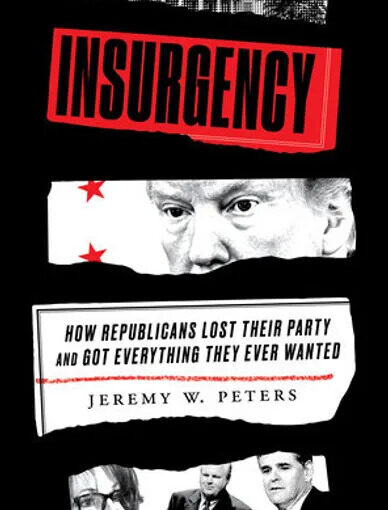
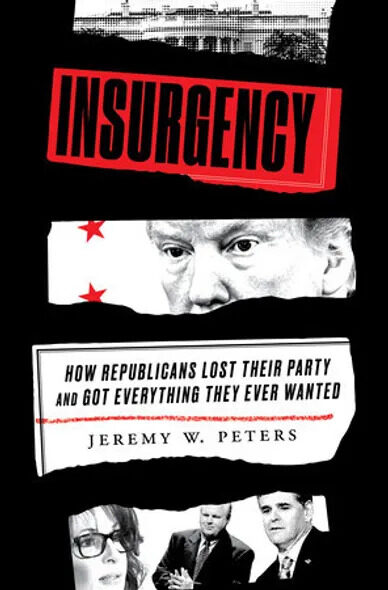
Insurgency

How Republicans Lost Their Party and Got Everything They Ever Wanted

by Jeremy W. Peters

Publisher: Random House Publishing House

NYTimes reporter, Jeremy W. Peters’ epic narrative chronicles the fracturing of the Republican Party. Insurgency is a fantasia-like story of a party establishment that believed it could control the dark energy it helped foment—right up until it suddenly couldn’t. How, Peters asks, did conservative values that Republicans claimed to cherish, like small government, fiscal responsibility, and morality get completely eroded?

Read Review

Buy

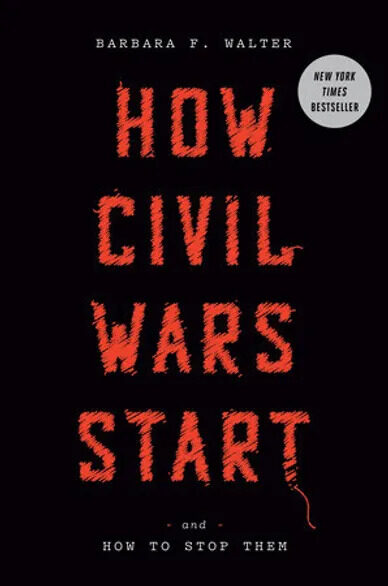
How Civil Wars Start

and How To Stop Them

by Barbara F. Walter

Publisher: Crown

Barbara F. Walter, a political science professor at U.C. San Diego, has spent over three decades studying civil conflict.  Over the last two decades, the number of active civil wars around the world has almost doubled. Walter reveals the warning signs—where wars tend to start, who initiates them, what triggers them—and why some countries tip over into conflict while others remain stable. Drawing on the latest international research and lessons from over twenty countries, Walter identifies the crucial risk factors, from democratic backsliding to factionalization and the politics of resentment. A civil war today won’t look like America in the 1860s, Russia in the 1920s, or Spain in the 1930s. It will begin with sporadic acts of violence and terror, accelerated by social media. It will sneak up on us and leave us wondering how we could have been so blind.

Read Review

Buy

Betrayal

The Final Act of the Trump Show

by Johnathan Karl

Publisher: Dutton

This is the explosive look at the aftermath of the 2020 election–and the January 6th uprising–from ABC News’ chief Washington correspondent, Jonathan Karl. Jonathan Karl, the reporter who has known Donald Trump longer than any other White House correspondent, Karl told the story of Trump’s rise in the New York Times bestseller Front Row at the Trump Show. Now he tells the story of Trump’s downfall, complete with riveting behind-the-scenes accounts of some of the darkest days in the history of the American presidency and packed with original reporting and on-the-record interviews with central figures in this drama who are telling their stories for the first time.


Buy

Corruptible

Who Gets Power and How It Changes Us

By: Brian Klaas

Publisher: Scribner

Recommended by: Bruce R.

Does power corrupt, or are corrupt people drawn to power? Are tyrants made or born? Are entrepreneurs who embezzle and cops who kill the result of poorly designed systems or are they just bad people? If you were suddenly thrust into a position of power, would you be able to resist the temptation to line your pockets or seek revenge against your enemies?

To answer these questions, Corruptible draws on over 500 interviews with some of the world’s top leaders—from the noblest to the dirtiest—including presidents and philanthropists as well as rebels, cultists, and dictators. Some of the fascinating insights include: how facial appearance determines who we pick as leaders, why narcissists make more money, why some people don’t want power at all and others are drawn to it out of a psychopathic impulse, and why being the “beta” (second in command) may actually be the optimal place for health and well-being.

Corruptible also features a wealth of counterintuitive examples from history and social science: you’ll meet the worst bioterrorist in American history, hit the slopes with a ski instructor who once ruled Iraq, and learn why the inability of chimpanzees to play baseball is central to the development of human hierarchies.

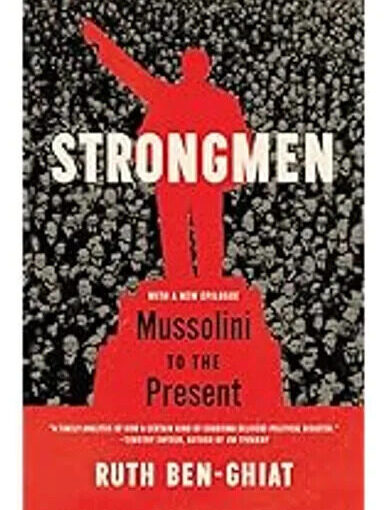
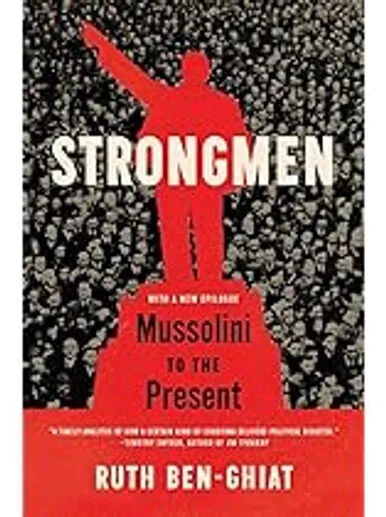
Strongmen

Mussolini to the Present

by Ruth Ben-Ghiat

Publisher: W. W. Norton & Company

Ruth Ben-Ghiat is the expert on the “strongman” playbook employed by authoritarian demagogues from Mussolini to Putin—enabling her to predict with uncanny accuracy the recent experience in America and Europe. In Strongmen, she lays bare the blueprint these leaders have followed over the past 100 years, and empowers us to recognize, resist, and prevent their disastrous rule in the future.

Read Review


Ruth Ben-Ghiat interviewed by Dean Peter Arnade at University of Hawai

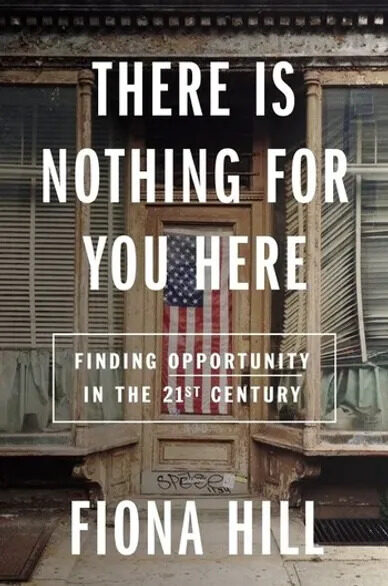
There’s Nothing For You Here

Finding Opportunity in the 21st Century

by Fiona Hill

Publisher: Mariner Books

A celebrated foreign-policy expert and key impeachment witness reveals how declining opportunity has set America on the grim path of modern Russia – and draws on her personal journey out of poverty, and her unique perspectives as a historian and policy maker, to show how we can return hope to our forgotten places.

Fiona Hill grew up in a world of terminal decay. The last of the local mines had closed, businesses were shuttering, and despair was etched in the faces around her. Her father urged her to get out of their blighted corner of northern England: “There is nothing for you here, pet,” he said.

The coal-miner’s daughter managed to go further than he ever could have dreamed. She studied in Moscow and at Harvard, became an American citizen, and served three U.S. Presidents. But in the heartlands of both Russia and the United States, she saw troubling reflections of her hometown and similar populist impulses. By the time she offered her brave testimony in the first impeachment inquiry of President Trump, Hill knew that the desperation of forgotten people was driving American politics over the brink—and that we were running out of time to save ourselves from Russia’s fate. In this powerful, deeply personal account, she shares what she has learned, and shows why expanding opportunity is the only long-term hope for our democracy.

Read Review

Buy

Twilight of Democracy

The Seductive Lure of Authoritarianism

By Anne Applebaum

Publisher: Vintage

Recommended by: Linda and Cindi

Despotic leaders do not rule alone; they rely on political allies, bureaucrats, and media figures to pave their way and support their rule. The authoritarian and nationalist parties that have arisen within modern democracies offer new paths to wealth or power for their adherents. 

Buy

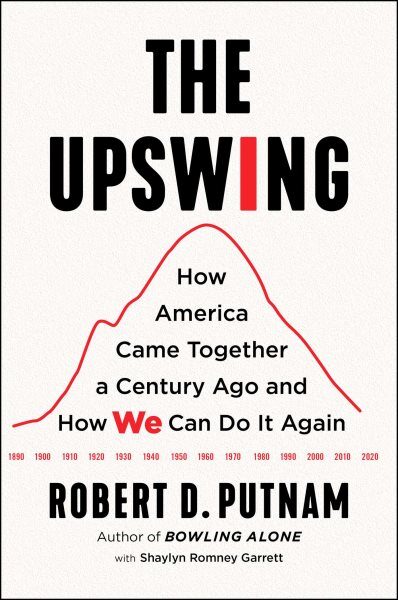
The Upswing

how America came together a century ago and how we can do it again

by Robert D. Putnam and Shaylyn Romney Garrett.

Publisher: Simon & Schuster

“An eminent political scientist’s brilliant synthesis of social and political trends over the past century that shows how we have gone from an individualistic society to a more communitarian society and then back again — and how we can use that experience to overcome once again the individualism that currently weakens our country”

We can’t go back to when things were “good.” But we can learn from when things ware “bad.” In the early 1900’s the Guilded Age of the robber barons, things were really bad for most US citizens; they feared for the end of democracy and the take-over by the oligarchs.

Buy

Interview: Robert Putnam Knows Why You’re Lonely


The 2023 Ithiel de Sola Pool Lecture by Robert D. Putnam
Sep 22, 2023


Join or Die — Trailer (2023)

The Documentary “Join or Die” (2023) is currently available on Netflix (2025-08-11)

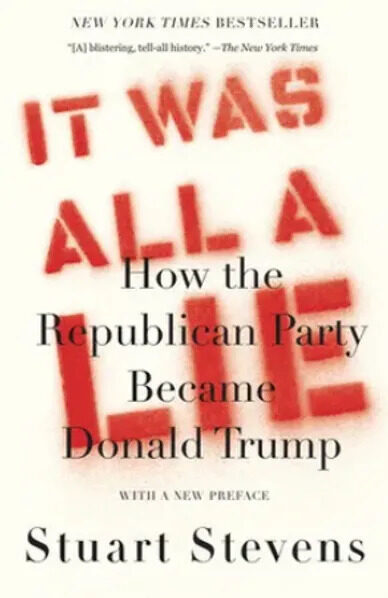
It Was All a Lie

How The Republican Party Became Donald Trump

by Stuart Stevens

Publisher: Knopf

Recommended by: Cindi S. and Steve G.

Written by Republican political consultant Stuart Stevens, this is a tell-all book about how the party he’s stood with for years spiraled out of control and lost the moral and political standpoints that once made it great. Unlike other books about Donald Trump, Stevens presents the 45th president of the United States as the inevitable result of the Republican Party’s failings, not its instigator.

Stuart Stevens spent decades electing Republicans at every level, from presidents to senators to local officials. He knows the GOP as intimately as anyone in America, and in this new book he offers a devastating portrait of a party that has lost its moral and political compass.

This is not a book about how Donald J. Trump hijacked the Republican Party and changed it into something else. Stevens shows how Trump is in fact the natural outcome of five decades of hypocrisy and self-delusion, dating all the way back to the civil rights legislation of the early 1960s. Stevens shows how racism has always lurked in the modern GOP’s DNA, from Goldwater’s opposition to desegregation to Ronald Reagan’s welfare queens and states’ rights rhetoric. He gives an insider’s account of the rank hypocrisy of the party’s claims to embody “family values,” and shows how the party’s vaunted commitment to fiscal responsibility has been a charade since the 1980s. When a party stands for nothing, he argues, it is only natural that it will be taken over by the loudest and angriest voices in the room.

It Was All a Lie is not just an indictment of the Republican Party, but a candid and often lacerating mea culpa. Stevens is not asking for pity or forgiveness; he is simply telling us what he has seen firsthand. He helped to create the modern party that kneels before a morally bankrupt con man and now he wants nothing more than to see what it has become burned to the ground.

Read Review

Buy

Strategizing For A Living Revolution

by George Lakey

Publisher: History As A Weapon

Recommended by: Bruce R.

This article is a comprehensive strategic framework for nonviolent revolution, combining historical case studies, practical organizing guidance, and theoretical insights about movement building.

Read Article

Archive

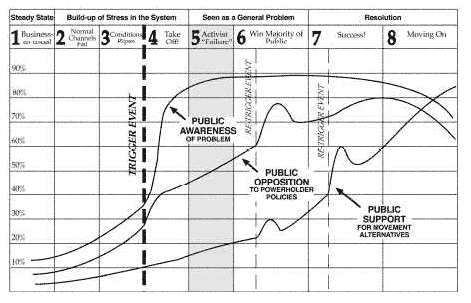
The Movement Action Plan

A Strategic Framework Describing The Eight Stages of Successful Social Movements

by Bill Moyer

Publisher: History Is A Weapon

Recommended by: BruceR

Within a few years after achieving the goals of “take-off”, every major social movement of the past twenty years has undergone a significant collapse, in which activists believed that their movements had failed, the power institutions were too powerful, and their own efforts were futile. This has happened even when movements were actually progressing reasonably well along the normal path taken by past successful movements!

The Movement Action Plan (MAP) was first published as the Fall 1986 edition of the Dandelion. Twelve-thousand copies were published and distributed. This is a revised edition of that article. People are invited to participate in the continuing development of MAP and help spread it to local groups.

Read Article

Archive