Heather Cox Richardson

Letters from an American

Historians are fond of saying that the past doesn’t repeat itself; it rhymes.

To understand the present, we have to understand how we got here.

That’s where this newsletter comes in.

I’m a professor of American history. This is a chronicle of today’s political landscape, but because you can’t get a grip on today’s politics without an outline of America’s Constitution, and laws, and the economy, and social customs, this newsletter explores what it means, and what it has meant, to be an American.

These were the same questions a famous observer asked in a book of letters he published in 1782, the year before the Treaty of Paris ended the Revolutionary War.

Hector St. John de Crevecoeur called his book “Letters from an American Farmer.”

Like I say, history doesn’t repeat itself, but it sure rhymes.


Latest Posts

  • “What I saw in that room was one of the most troubling things I’ve seen in my time in public service,” Representative Jim Himes (D-CT), the top Democrat on the House Intelligence committee, said.
  • Republican Matt Van Epps won yesterday’s special election in Tennessee’s seventh congressional district, but Republicans aren’t celebrating triumphantly.
  • The news of last Friday, November 28, that Defense Secretary Pete Hegseth told a Joint Special Operations commander overseeing an attack on a small vessel carrying 11 people on September 2 to “kill everybody” is shaping up to be a fight over control of the United States government.
  • President Donald J.
  • On Friday evening, the Wall Street Journal published an article about the Trump administration’s negotiations with Russia over Ukraine that illuminated the administration’s approach to the world at home, as well as overseas.
  • In the wake of yesterday’s report from Alex Horton and Ellen Nakashima of the Washington Post that Defense Secretary Pete Hegseth ordered Special Operations to kill the survivors of a September 2 strike on a small boat off Venezuela, the Senate and the House Armed Services Committees have announced they intend to conduct “vigorous oversight” and “gather a full accounting” of the operation.
  • As Trump’s popularity continues to drop, the MAGA coalition shows signs of cracking, and Trump’s mental acuity slips, there is a frantic feel to the administration, as if Trump’s people are trying to grab all they can, while they can.
  • Happy Thanksgiving.

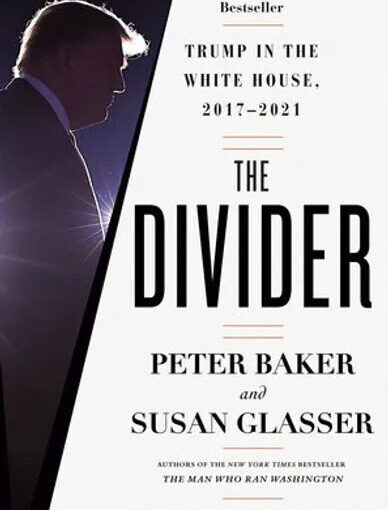
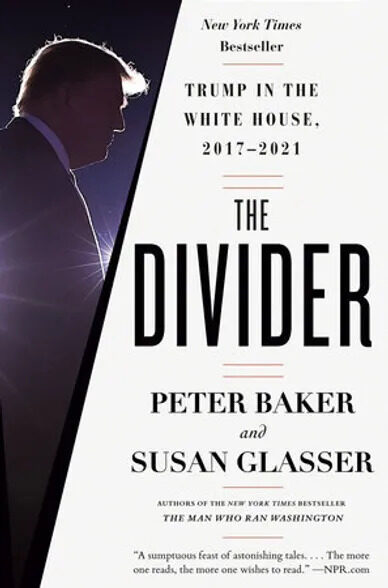
The Divider

Trump in the White House, 2017-2021

by Peter Baker and Susan Glasser

Publisher: Vintage

The Divider brings us into the Oval Office for countless scenes both tense and comical, revealing how close we got to nuclear war with North Korea, which cabinet members had a resignation pact, whether Trump asked Japan’s prime minister to nominate him for a Nobel Prize and much more. The book also explores the moral choices confronting those around Trump—how they justified working for a man they considered unfit for office, and where they drew their lines.

INTERVIEW: Susan Glasser and Peter Baker on C-SPAN

Review

Buy

Peril

by Bob Woodward and Robert Costa

Publisher: Simon & Schuster

Woodward and Costa interviewed more than 200 people at the center of the turmoil, resulting in more than 6,000 pages of transcripts—and a spellbinding and definitive portrait of a nation on the brink. This classic study of Washington takes readers deep inside the Trump White House, the Biden White House, the 2020 campaign, and the Pentagon and Congress, with vivid, eyewitness accounts of what really happened.

Woodward and Costa on Washington Post Live

Read Review

Buy

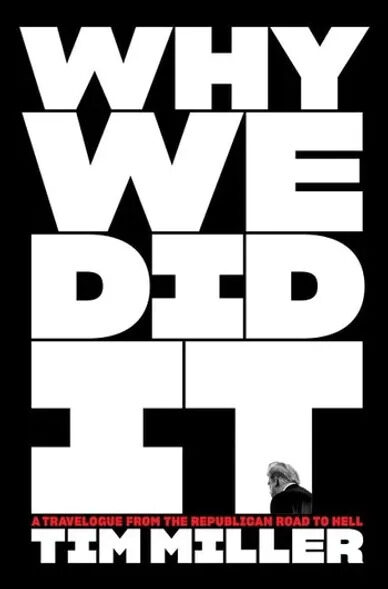
Why We Did It

A Travelogue From the Republican Road to Hell

by Tim Miller

Publisher: Harper Collins Publishers

Recommended by: Cindi Sears

In a bracingly honest reflection on both his own past work for the Republican Party and the contortions of his former peers in the GOP establishment, Tim Miller draws a straight line between the actions of the 2000s GOP to the Republican political class’s Trumpian takeover, including the horrors of January 6th.

From ruminations on the mental jujitsu that allowed him as a gay man to justify becoming a hitman for homophobes, to astonishingly raw interviews with former colleagues who jumped on the Trump Train, Miller diagrams the flattering and delusional stories GOP operatives tell themselves so they can sleep at night. With a humorous touch he reveals Reince Priebus’ neediness, Sean Spicer’s desperation, Elise Stefanik and Chris Christie’s raw ambition, and his close friends’ submission to a MAGA psychosis.

Why We Did It is a vital, darkly satirical warning that all the narcissistic justifications that got us to this place still thrive within the Republican party, which means they will continue to make the same mistakes and political calculations that got us here, with disastrous consequences for the nation

Read Review

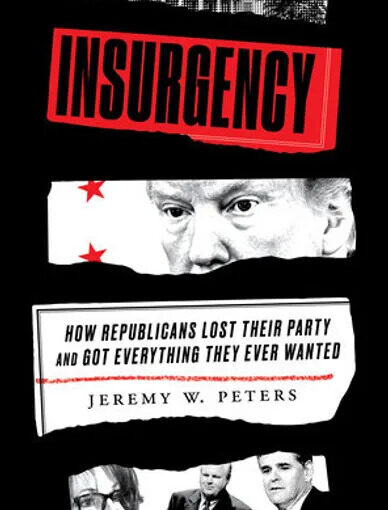
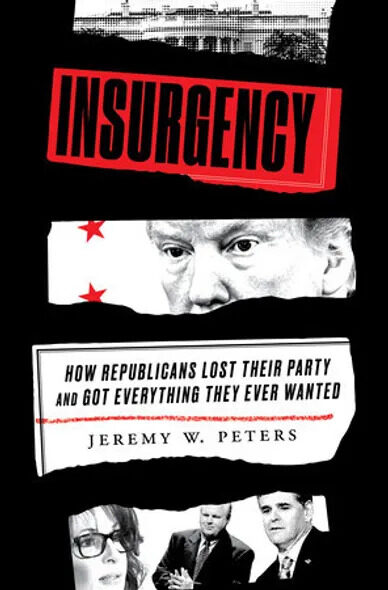
Insurgency

How Republicans Lost Their Party and Got Everything They Ever Wanted

by Jeremy W. Peters

Publisher: Random House Publishing House

NYTimes reporter, Jeremy W. Peters’ epic narrative chronicles the fracturing of the Republican Party. Insurgency is a fantasia-like story of a party establishment that believed it could control the dark energy it helped foment—right up until it suddenly couldn’t. How, Peters asks, did conservative values that Republicans claimed to cherish, like small government, fiscal responsibility, and morality get completely eroded?

Read Review

Buy

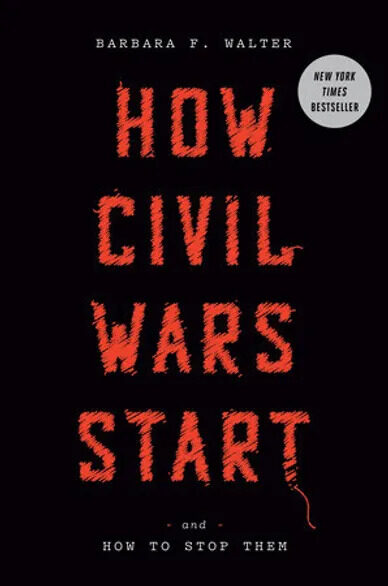
How Civil Wars Start

and How To Stop Them

by Barbara F. Walter

Publisher: Crown

Barbara F. Walter, a political science professor at U.C. San Diego, has spent over three decades studying civil conflict.  Over the last two decades, the number of active civil wars around the world has almost doubled. Walter reveals the warning signs—where wars tend to start, who initiates them, what triggers them—and why some countries tip over into conflict while others remain stable. Drawing on the latest international research and lessons from over twenty countries, Walter identifies the crucial risk factors, from democratic backsliding to factionalization and the politics of resentment. A civil war today won’t look like America in the 1860s, Russia in the 1920s, or Spain in the 1930s. It will begin with sporadic acts of violence and terror, accelerated by social media. It will sneak up on us and leave us wondering how we could have been so blind.

Read Review

Buy

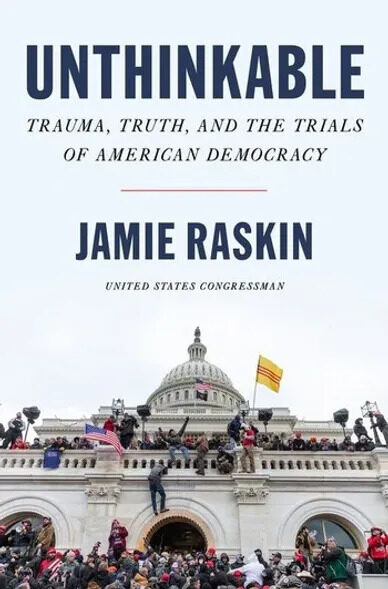
Unthinkable

Trauma, Truth and the Trials of American Democracy

by James Raskin

Publisher: Harper

In this searing memoir, Congressman Jamie Raskin tells the story of the forty-five days at the start of 2021 that permanently changed his life—and his family’s—as he confronted the painful loss of his son to suicide, lived through the violent insurrection in our nation’s Capital, and led the impeachment effort to hold President Trump accountable for inciting the political violence.

Jamie Raskin in conversation at The National Arts Club

Read Review

Buy

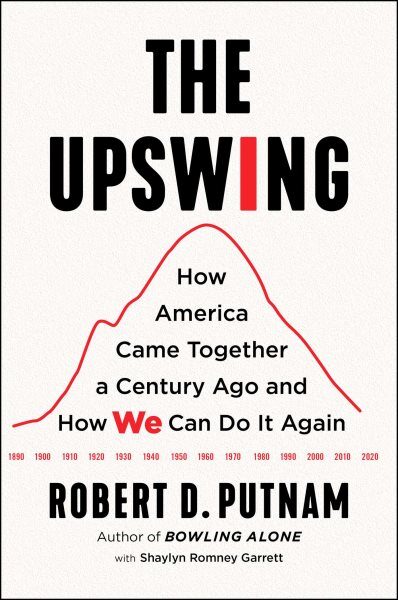
The Upswing

how America came together a century ago and how we can do it again

by Robert D. Putnam and Shaylyn Romney Garrett.

Publisher: Simon & Schuster

“An eminent political scientist’s brilliant synthesis of social and political trends over the past century that shows how we have gone from an individualistic society to a more communitarian society and then back again — and how we can use that experience to overcome once again the individualism that currently weakens our country”

We can’t go back to when things were “good.” But we can learn from when things ware “bad.” In the early 1900’s the Guilded Age of the robber barons, things were really bad for most US citizens; they feared for the end of democracy and the take-over by the oligarchs.

Buy

Interview: Robert Putnam Knows Why You’re Lonely


The 2023 Ithiel de Sola Pool Lecture by Robert D. Putnam
Sep 22, 2023


Join or Die — Trailer (2023)

The Documentary “Join or Die” (2023) is currently available on Netflix (2025-08-11)

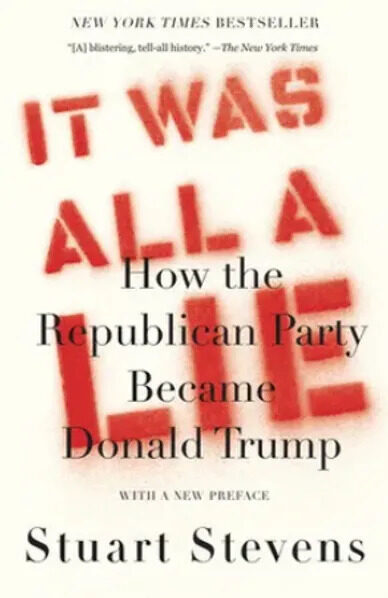
It Was All a Lie

How The Republican Party Became Donald Trump

by Stuart Stevens

Publisher: Knopf

Recommended by: Cindi S. and Steve G.

Written by Republican political consultant Stuart Stevens, this is a tell-all book about how the party he’s stood with for years spiraled out of control and lost the moral and political standpoints that once made it great. Unlike other books about Donald Trump, Stevens presents the 45th president of the United States as the inevitable result of the Republican Party’s failings, not its instigator.

Stuart Stevens spent decades electing Republicans at every level, from presidents to senators to local officials. He knows the GOP as intimately as anyone in America, and in this new book he offers a devastating portrait of a party that has lost its moral and political compass.

This is not a book about how Donald J. Trump hijacked the Republican Party and changed it into something else. Stevens shows how Trump is in fact the natural outcome of five decades of hypocrisy and self-delusion, dating all the way back to the civil rights legislation of the early 1960s. Stevens shows how racism has always lurked in the modern GOP’s DNA, from Goldwater’s opposition to desegregation to Ronald Reagan’s welfare queens and states’ rights rhetoric. He gives an insider’s account of the rank hypocrisy of the party’s claims to embody “family values,” and shows how the party’s vaunted commitment to fiscal responsibility has been a charade since the 1980s. When a party stands for nothing, he argues, it is only natural that it will be taken over by the loudest and angriest voices in the room.

It Was All a Lie is not just an indictment of the Republican Party, but a candid and often lacerating mea culpa. Stevens is not asking for pity or forgiveness; he is simply telling us what he has seen firsthand. He helped to create the modern party that kneels before a morally bankrupt con man and now he wants nothing more than to see what it has become burned to the ground.

Read Review

Buy

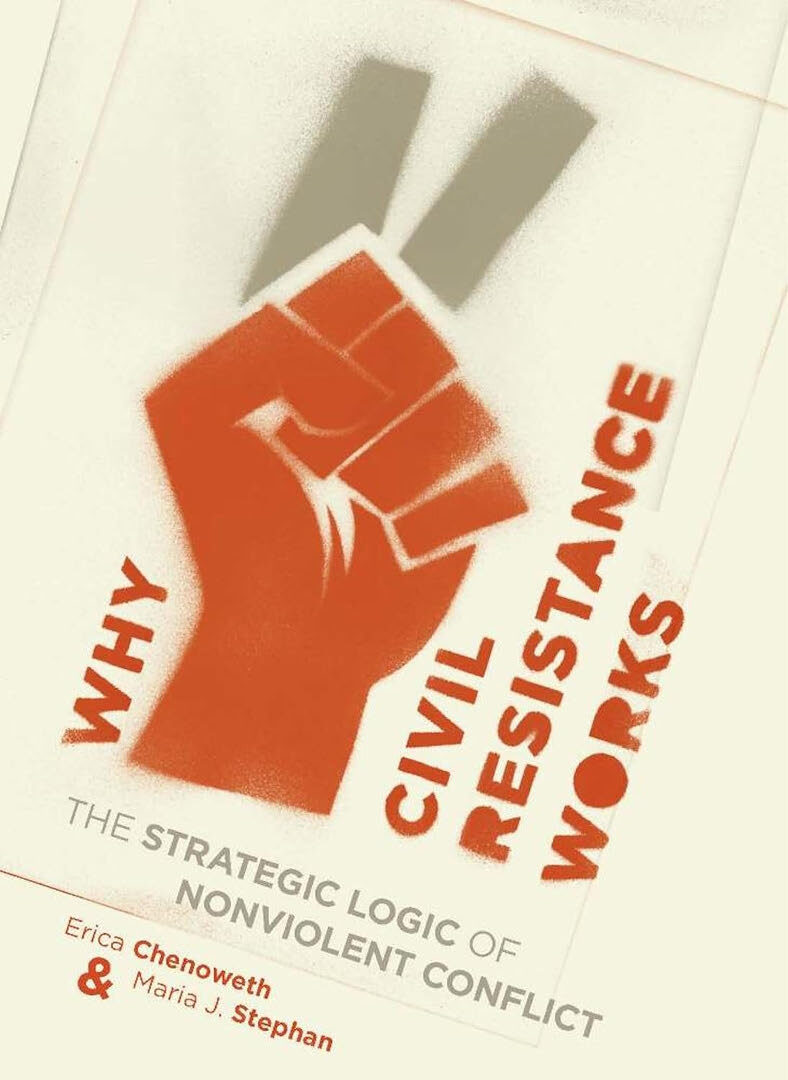
Why Civil Resistance Works

The Strategic Logic of Nonviolent Conflict

by Erica Chenoweth and Maria Stephan

Publisher: Columbia University Press

For more than a century, from 1900 to 2006, campaigns of nonviolent resistance were more than twice as effective as their violent counterparts in achieving their stated goals. By attracting impressive support from citizens, whose activism takes the form of protests, boycotts, civil disobedience, and other forms of nonviolent noncooperation, these efforts help separate regimes from their main sources of power and produce remarkable results, even in Iran, Burma, the Philippines, and the Palestinian Territories.

Combining statistical analysis with case studies of specific countries and territories, Erica Chenoweth and Maria J. Stephan detail the factors enabling such campaigns to succeed and, sometimes, causing them to fail. They find that nonviolent resistance presents fewer obstacles to moral and physical involvement and commitment, and that higher levels of participation contribute to enhanced resilience, greater opportunities for tactical innovation and civic disruption (and therefore less incentive for a regime to maintain its status quo), and shifts in loyalty among opponents’ erstwhile supporters, including members of the military establishment.

Buy

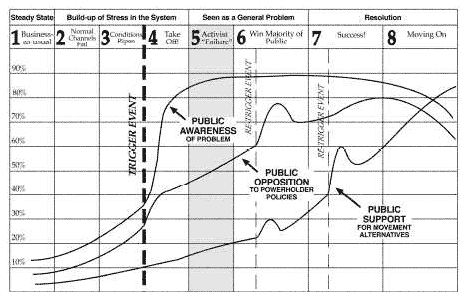
The Movement Action Plan

A Strategic Framework Describing The Eight Stages of Successful Social Movements

by Bill Moyer

Publisher: History Is A Weapon

Recommended by: BruceR

Within a few years after achieving the goals of “take-off”, every major social movement of the past twenty years has undergone a significant collapse, in which activists believed that their movements had failed, the power institutions were too powerful, and their own efforts were futile. This has happened even when movements were actually progressing reasonably well along the normal path taken by past successful movements!

The Movement Action Plan (MAP) was first published as the Fall 1986 edition of the Dandelion. Twelve-thousand copies were published and distributed. This is a revised edition of that article. People are invited to participate in the continuing development of MAP and help spread it to local groups.

Read Article

Archive