Frame Lab advises calling Trump a loser, a fraud, or a betrayer of trust. A dictator creates an image of power, whereas a loser is a label no strict father/wannabe dictator will admit.
Based on decades of research from Columbia University Professor and Starts With Us Expert-in-Residence Peter T. Coleman, Ph.D., the Finding The Way Out Challenge is designed to help shape new habits and norms for political tolerance and courageous compassion. Think of it as a personalized boot camp for building a healthier national culture and repairing broken relationships across differences.
We live in a world where everyone has an opinion on everything, and far too many of those opinions are formed in about three seconds based on a headline or a tweet. That’s not thinking—that’s reacting. Real thinking, the kind that actually helps you understand complicated issues instead of just picking a side, takes more… The post The Missing Tool for Tackling Tough Problems: Value-Based Analysis appeared first on Builders.
The power of flexible thinking—and how to practice it daily We rarely find solutions by winning an argument. It comes from finding the thin strip of common ground where people with different beliefs decide to work together anyway. We saw this firsthand in our Citizen Solutions session in Austin, Texas. Participants came from very different… The post The Future Belongs to People Who Can Change Their Minds appeared first on Builders.
As Texas settles into one of its coldest stretches of the year, Texans are once again nervously eyeing their thermostats and wondering if the grid will withstand the rest of the winter. In February 2021, Winter Storm Uri showed just how bad grid failure can get. Millions of Texans lost power when temperatures dropped, and… The post Texas Fixed Its Power Grid. Now a New Threat Is Testing It. appeared first on Builders.
Satisfaction with democracy is deep in the hole. Only 34% of Americans are satisfied with how democracy is working in the U.S., according to a 2025 Gallup poll. Overall, Americans’ satisfaction with democracy has been in steady decline from its peak of 60% in the mid-1980s. This persistent disillusionment has given rise to the idea… The post Here’s Why Only One-Third Of Americans Think Democracy Is Working in the U.S. appeared first on Builders.
Your year-end gift helps turn common ground into real-world change—equipping Builders across the country to replace division with solutions. Is it just me, or did 2025 feel like 3 years compressed into one? As I look at the remaining days on the calendar, I am struck by the sweeping changes, from a new administration right… The post The Moment Is Urgent. The Future Is Ours to Build. appeared first on Builders.
Our story begins in 2016 with two groups starting independently of one another — on opposite coasts of the United States. Coincidentally, both founders chose the same name, “Crossing Party Lines.” Their shared vision led them to create a volunteer platform to unite Americans through warm and engaging conversations. Prompted by a time of unprecedented political polarization, these two visionaries, their energetic team of volunteers, and over 3,000 CPL members are uniting America one conversation at a time. Donations to Crossing Party Lines, Inc. are 501(c)3) tax-deductible.
Social media doesn’t have to be a source of stress, division, or misinformation — but only if we curate it intentionally. By following voices that promote clarity, compassion, and critical thinking, your feed can become a space for growth, not outrage. In this post, we’re sharing 5 Instagram accounts that will help you scroll smarter and engage with more purpose online. The post Curate a Better Feed: 5 Instagram Accounts That Help You Think Clearly in a Noisy World first appeared on Crossing Party Lines.
As we approach the Fourth of July, we’re called to reflect not just on freedom and independence, but on how we live those values every day. In a nation built on life, liberty, and the pursuit of happiness, how often do we pause to ask ourselves: What do these ideals mean to me? Our new Executive Director invites us to consider our privileges, responsibilities, and the legacy we’re shaping for future generations. The post Life, liberty and the pursuit of happiness…. first appeared on Crossing Party Lines.
I recently joined 500+ orgs in the Listen First Coalition’s mission to heal divides through deep listening. With @CrossingPartyLines, I’m learning how empathy, training, and community help us disagree better and grow together. 💬 #ListenFirst #CrossingPartyLines The post New Job, New Understandings first appeared on Crossing Party Lines.
At Crossing Party Lines (CPL), we believe that respectful dialogue across political differences is essential to a healthy democracy. But as polarization deepens and democratic trust erodes, we’ve realized something important: We can’t do this work alone. The post How We Can Heal America Together first appeared on Crossing Party Lines.
Just as Crossing Party Lines believes seeing issues from multiple perspectives is a gift that is necessary for a strong democracy, we also see reducing toxic polarization and political violence as a challenge we must address from as many angles as possible. That's why we are so proud to be part of the Oregon Jewish Community's (OJCF) Impact Together Program. The post Let’s Make an Impact Together! first appeared on Crossing Party Lines.
Braver Angels is leading the nation’s largest cross-partisan, volunteer-led movement to bridge the political divide. Through community gatherings, real debates, and grassroots leaders working together, we’re offering America what it needs to overcome the bitterness of our partisan divide. Donations to Braver Angels are 501(c)3 tax deductible
EDITOR'S NOTE : The local chapter of Braver Angels wrote this open letter to Pennsylvania Sens. The post Civic group asks leaders to lead | Press Enterprise Online appeared first on Braver Angels.
West Central Illinois Braver Angels co-organizers David Pittman, left, and Bill Poorman stand alongside the WCBU banner in the station's main studio. The post Organizers launch Peoria-based Braver Angels chapter to 'disagree better' and ease political tension appeared first on Braver Angels.
Discover how the Braver Angels National Convention in Gettysburg transformed attendees' perspectives on political polarization in the United … The post My new friend Eve – Concord Monitor appeared first on Braver Angels.
After attending the Braver Angels meeting last Tuesday, Jan. 13, I came away feeling anxious about what I heard and saw. The post Braver Angels meeting included anxiety-inducing encounter | Letters To Editor | wyomingnews.com appeared first on Braver Angels.
Braver Angels to host discussion on military in law enforcement. Jan 22, 2026; Jan 22, 2026 Updated 10 hrs ago; Comments · Facebook · Twitter … The post Braver Angels to host discussion on military in law enforcement – Wyoming Tribune Eagle appeared first on Braver Angels.
Braver Angels to host discussion on military in law enforcement · Aeronautics Commission awards contract for crack sealing at airports · Victim … The post 100 lb. punching bag w/stand, 1963 | Miscellaneous | wyomingnews.com appeared first on Braver Angels.
This event invites voices into a shared space where the goal isn't to win, but to understand. Using the Braver Angels debate format, participants … The post UMW Public Square Debate » Events at Mary Wash appeared first on Braver Angels.
Sibling Cities USA facilitates cross-regional pairings of US cities to build deep relationships. IPV member, Bob Barrett, participated in the historic inaugural sibling cities pairing of Palo Alto, California and Bloomington, Indiana.
LRC connects people across divides – politics, age, gender, race, nationality, and more – through guided conversations proven to build understanding and transform communities.
IPV is just getting started with Living Room Conversations. If you are interested in joining us for a conversation, please get in touch. Donations to Living Room Conversations are 501(c)3) tax-deductible.
Everyone in our democracy must be able to speak their minds about public issues. Speaking up needs to be safe, responsible, respectful and free. This includes airing differences, supplying facts, and explaining opinions and options.
Even in conversations with people with whom we seem to agree, it’s important to air differences. This can be challenging, yet it’s worth it because we can learn from each other.
Conversations with others who have very different perspectives, or whose views seem to be underinformed or based on inaccurate information, or different values, can be much harder.
Basic Guidelines:
Be curious and listen to understand.
Show respect and suspend judgment.
Note any common ground as well as any differences.
Be authentic and welcome that from others.
Be purposeful and to the point.
Own and guide the conversation.
How can we effectively navigate these varied circumstances? Here are five suggestions:
It’s good to have a goal. You might want to learn about others’ perspectives and how they came to them. You might want to express your own views and be taken seriously. It’s best to be civil and constructive. If there’s a downward spiral, it’s OK to take a time out.
Establish a personal connection. Tell stories from your life and ask about theirs; look for common themes. Ask, “I wonder…?” or “I’m curious about…” Note opportunities to bond and connect over shared experiences and interests. You also show respect when you ask: “What am I missing on this topic? How can I learn something more about this?”
When something you disagree about comes up, you might ask: How did you develop that viewpoint? What is your source of information? What experiences shape your opinion? Focus on personal stories and look for areas you have in common. You might discuss values (e.g., caring, fairness, freedom, equality before the law, honesty). Or you might explore overlaps in specific situations. In what circumstances might one value take precedence? Why? We have a lot to learn from each other.
Another approach is to get down to brass tacks and ask about democracy. Taking a suggestion from the book, How to Have Impossible Conversations: A Very Practical Guide, by Peter Boghossian and James Lindsay, you might pose a simple poll to them: on a scale of 1 to 10, with one being “I have no concerns about American democracy at all” and 10 being “American democracy is at the most serious risk in its history,” what number would you choose? Why? What might cause you to change your mind? There could be genuine curiosity about their explanations without having to agree with their viewpoints.
Find ways to work together on a project of mutual interest. Schools? Performing Arts? Open Space? Fire Safety? This can demonstrate that democracy (e.g., disagreeing respectfully, setting rules and establishing fair processes, listening actively, etc.) can help produce wiser, fairer, more lasting, and more efficient outcomes.
Don’t Coerce. Listen First!
Beyond Conflict Institute reports “people perceive that the other side disagrees with them far more than is actually the case.”
Why We Fight About Morality and Politics and How to Find Common Ground
By Kurt Gray
Publisher: Pantheon
It’s easy to assume that liberals and conservatives have radically different moral foundations. In Outraged, Kurt Gray showcases the latest science to demonstrate that we all have the same moral mind—that everyone’s moral judgments stem from feeling threatened or vulnerable to harm.
We all care about protecting ourselves and the vulnerable. Conflict arises, however, when we have different perceptions of harm. We get outraged when we disagree about who the “real” victim is, whether we’re talking about political issues, fights with our in-laws, or arguments on the playground.
In this fascinating and insightful tour of our moral minds, Gray tackles popular myths that prevent us from understanding ourselves and those around us. While it is commonly believed that our ancestors were apex predators, Gray argues that for the majority of our evolutionary history, humans were more hunted than hunter. This explains why our minds are hard-wired to perceive threats, and provides surprising insights on the scientific origins of our values and beliefs. Though we might think ourselves driven by objective reasoning, Gray unveils new research that finds our moral judgments are based on gut feelings rather than rational thought, and presents a compelling reminder that we are more alike than we might think.
Drawing on groundbreaking research, Gray provides a captivating new explanation for our moral outrage, and unpacks how to best bridge divides. If you want to understand the morals of the “other side,” ask yourself a simple question—what harms do they see?
Imagine living the life you want to lead, not the one you’re willing to accept. This profound but practical book offers clear steps to stop people pleasing and start living your truth.
“A powerful book. If you’ve ever compromised your principles to please others, Defy will give you the will—and skill—to stand up for yourself.”—Adam Grant, #1 New York Times bestselling author of Think Again
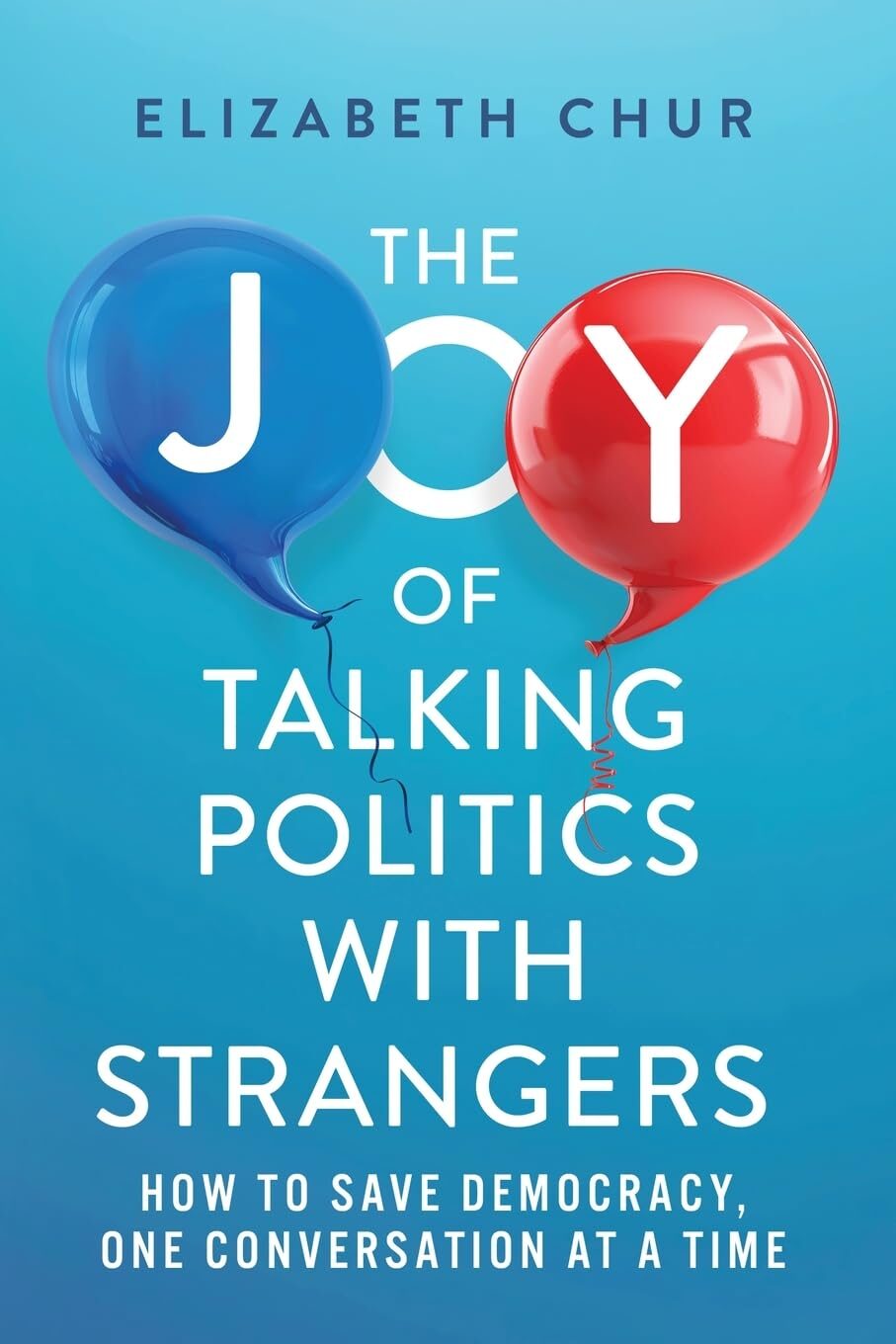
Elections are decided on front porches and phone calls across the country, one voter at a time. The Joy of Talking Politics with Strangers is a comprehensive guidebook that helps volunteers connect one-on-one with voters – our most powerful tool for winning elections. These conversations can also spark unexpected moments of empathy and even kinship with our fellow Americans.
After 2016, volunteer Elizabeth Chur realized it’s up to ordinary citizens to protect our democracy. She started learning Spanish, began phone banking, and canvassed in California’s Central Valley, home to some of the nation’s most contested swing districts. By talking with over 1,000 people, she discovered how to forge meaningful connections with the hardest-to-reach voters, including:
Young people
Latinos
People who say, “I don’t vote.”
Filled with uplifting stories and practical tips, this inspiring book helps you earn people’s trust – and their votes. It demonstrates how taking positive action builds community and creates hope. Whether you’re a first-time volunteer or seasoned activist, The Joy of Talking Politics with Strangers shows you how to engage more effectively with voters and win elections.
Frame Lab advises responding to the special council report of Biden’s classified documents investigation by pointing out that Biden was cleared while Trump is still facing indictments.
“The best way for the media to sell newspapers and clicks is to give Republicans what they want to hear, which drives liberals to hate reading, hate sharing, and even hate subscribing. By rebutting them, [we] spread and strengthen them. That’s how our brains work.”
“Consider the phrase “tax relief.” The world “relief” frames the word “tax” as an affliction or form of suffering. We generally need “relief” from things that are painful or unpleasant…Another example: Consider the phrase “forced birth.” It frames abortion bans with a negative word, “forced,” which frames abortion bans as aggressively stripping women of their freedom.” Moral Warfare 101: Frames and Your Brain, Frame Lab, February 5, 2024
“…when environmental issues are reframed in terms of the conservative value of purity – emphasizing the importance of keeping our forests, drinking water, and skies pure – conservatives are much more likely to support this cause.
Republican governors in 15 red states have refused to participate in this summer’s federal free lunch program, denying food to approximately 8 million kids.
Frame Lab advisesresponding without mentioning welfare states or calling Republicans scrooges. Say instead, “Tate Reeves [Republican Governor of Mississippi] doesn’t want these kids to succeed. He doesn’t want them to have the same freedom as his kids enjoy. This isn’t just about punishing poor kids for being poor. It’s about taking away their opportunities.”
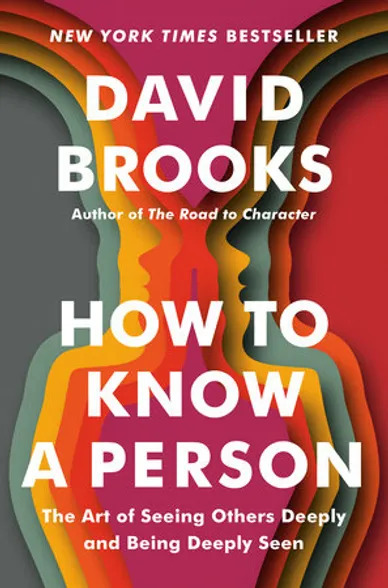
The Art of Seeing Others Deeply and Being Deeply Seen
by David Brooks
Summary
Recommended by Bob
Driven by his trademark sense of curiosity and his determination to grow as a person, David Brooks draws from the fields of psychology and neuroscience and from the worlds of theater, philosophy, history, and education to present a welcoming, hopeful, integrated approach to human connection. How to Know a Person helps readers become more understanding and considerate toward others, and to find the joy that comes from being seen. Along the way it offers a possible remedy for a society that is riven by fragmentation, hostility, and misperception.
SWING LEFT PENINSULA created these engaging videos to help spread the word effectively that things are better when Democrats are in office AND to counter MAGA Republicans’ anti-democracy messages.
To Muffle the MAGAphone:
Avoid amplifying MAGA messages.
Amplify pro-Democracy messages.
Don’t Repeat Disinformation – What’s the best thing to do when encountering MAGA disinformation? NOTHING!
Ignore DogWhistles – Ever wonder why MAGA Republicans repeat certain words and phrases? Hint: Dog whistles
Stay United! – Why do MAGA Republicans spend so much time attacking an ever-growing list of others?
Frame It Our Way! – We need to avoid repeating MAGA GOP frames, even to refute them. Talk about the good stuff – what we need for all Americans to thrive.
Share Effectively – What makes an effective message? Lead with shared values. Identify who stands in the way of those values and why. End with your vision for a better future.
A Message from Galvanize Action about a huge block of persuadable voters!
“White women are the largest voting bloc in this country and will be for decades to come. They account for 38% of the national vote share and 43% of the vote share across Galvanize Action’s priority states. Within this voting bloc, we’ve identified 44,093,812 moderate women who are not ideologically entrenched, meaning they are open to new ideas and perspectives and movable on key issues such as reproductive freedom, healthcare, gender equity, climate, and the economy.”
Galvanize Action has a fabulous interactive messaging worksheet we can all use!
Galvanize Action says, “We’ll share with you exactly how to create a message that meets people at their values and how to turn those into an effective ad. Our interactive worksheet will guide you through the process with prompts about your target audience and the issue you want to move them on. You’ll walk away with customized advice!”
From politics and religion to workplace negotiations, ace the high-stakes conversations in your life with this indispensable guide from a persuasion expert.
In our current political climate, it seems impossible to have a reasonable conversation with anyone who has a different opinion. Whether you’re online, in a classroom, an office, a town hall—or just hoping to get through a family dinner with a stubborn relative—dialogue shuts down when perspectives clash. Heated debates often lead to insults and shaming, blocking any possibility of productive discourse. Everyone seems to be on a hair trigger.
In How to Have Impossible Conversations, Peter Boghossian and James Lindsay guide you through the straightforward, practical, conversational techniques necessary for every successful conversation—whether the issue is climate change, religious faith, gender identity, race, poverty, immigration, or gun control. Boghossian and Lindsay teach the subtle art of instilling doubts and opening minds. They cover everything from learning the fundamentals for good conversations to achieving expert-level techniques to deal with hardliners and extremists. This book is the manual everyone needs to foster a climate of civility, connection, and empathy.
“This is a self-help book on how to argue effectively, conciliate, and gently persuade. The authors admit to getting it wrong in their own past conversations. One by one, I recognize the same mistakes in me. The world would be a better place if everyone read this book.” —Richard Dawkins, author of Science in the Soul and Outgrowing God
Shoot the Messenger – Delivering “messages” doesn’t work, have a “conversation,” an exchange instead
Intentions – People have better intentions than you may think
Walk Away – Don’t push your conversational partner beyond their conflict zone
Beginner Level: Nine Ways to Start Changing Minds
Modeling – Model the behavior you want to see in others
Words – Define terms up front
Ask Questions – Focus on a specific question with genuine curiosity; avoid generalities, broad conclusions
Acknowledge Extremists – Point out and acknowledge unhelpful things people on your side have done
Navigating Social Media – Do not vent on social media
Don’t Blame, Do Discuss Contributions – Shift from “blaming” terms to “contribution” language, acknowledging things that got us to this unhappy place and emphasizing how to move forward
Focus on Epistemology – Figure out how people “know” what they claim to know, what’s the evidence
Learn – Learn what makes someone close-minded, what personal experiences have led them to a position
What NOT to Do (Reverse Applications) – A list of fundamental and basic conversational mistakes
Intermediate Level: Seven Ways to Improve Your Interventions
Let Friends Be Wrong – It’s okay if someone disagrees with you, even about a cherished conclusion
Build Golden Bridges – Find ways for your conversation partner to avoid social embarrassment if they change their mind
Language – Avoid “you,” switch to third person or collaborative language like “we” and “us”
Stuck? Reframe – Shift the conversation to keep it going smoothly or to get it back on track, use metaphors
Change Your Mind – Change your mind on the spot or be willing to reconsider
Introduce Scales – Use scales to gauge effective interventions, figure out how confident someone is in a belief, seeking places where they might be willing to reconsider, and put issues into perspective
Outsourcing – Turn to outside information to answer the question, “How do you know that?”
Five Advanced Skills for Contentious Conversations
Keep Rapoport’s Rules – Re-express, list points of agreement, mention what you learned, only then rebut
Avoid Facts – Bringing facts into a conversation requires considering timing and what counts as evidence
Seek Disconfirmation – How could that belief be incorrect?
Yes, and … — Eliminate the word “but” from your spoken vocabulary; affirm first, then add
Dealing with Anger – Know thyself; don’t escalate, monitor your emotions and take a pause if necessary
Six Expert Skills to Engage the Close-Minded
Synthesis – Recruit your partner to help refine and synthesize your positions
Help Vent Steam – Talk through emotional roadblocks
Altercasting – Cast your partner in a role that helps her think and behave differently
Hostage Negotiations – Use research-based ideas from hostage negotiations: mini-encouragers, mirroring, etc
Probe the Limits – Engage someone who professes a belief that can’t be lived, unmask disingenuous stmts.
Counter-Intervention Strategies – If someone is trying to intervene in your cognitive processes, go with it…
Master Level: Two Keys to Conversing
How to Converse with an Ideologue – Switch to moral epistemology, talk about values
Moral Reframing – Learn to speak moral dialects, study Jonathan Haidt’s moral foundations