Beyond Left & Right

Making Sense of Politics in a World of Increasing Misinformation and Manipulation

by Lorenzo Burton

Tired of the endless division, misinformation, and manipulation in today’s political climate?
Beyond Left & Right cuts through the noise to reveal how political systems truly function—and how to recognize when we’re being misled by those in power. In a world where confusion and bias are often used as tools of control, it helps you think more clearly, question more deeply, and see through the fog to understand what’s really going on.

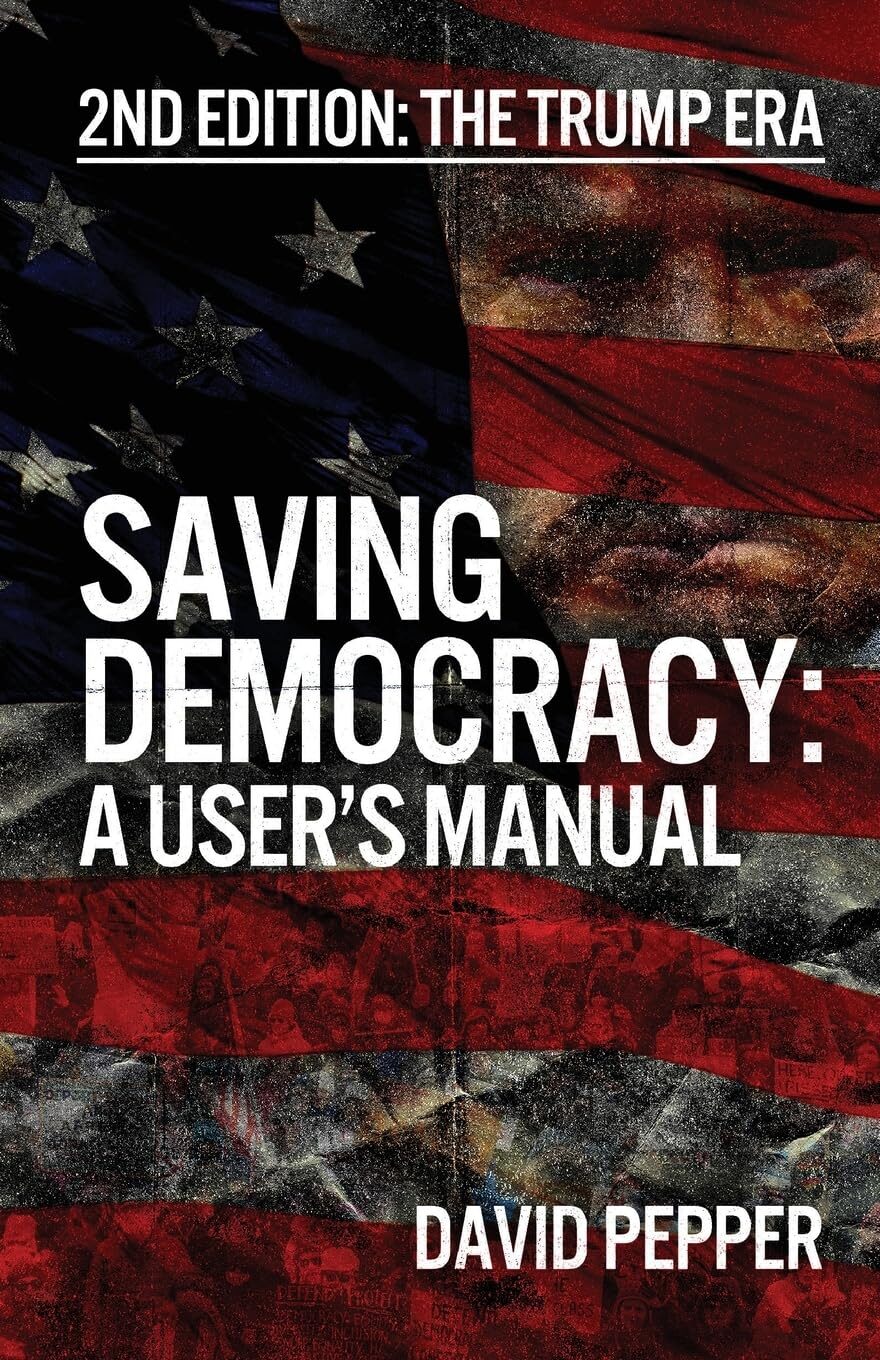
Saving Democracy

A User's Manual for Every American: 2nd Edition: The Trump Era

by David Pepper

Publisher: St. Helena Press

Recommended by: Steve G.

Saving Democracy is that rare book that doesn’t simply diagnose the crisis our democracy faces, and the broader strategies that we must take to fight back…but it breaks it all down so that every reader understands the role she or he can play in their own lives.

Buy

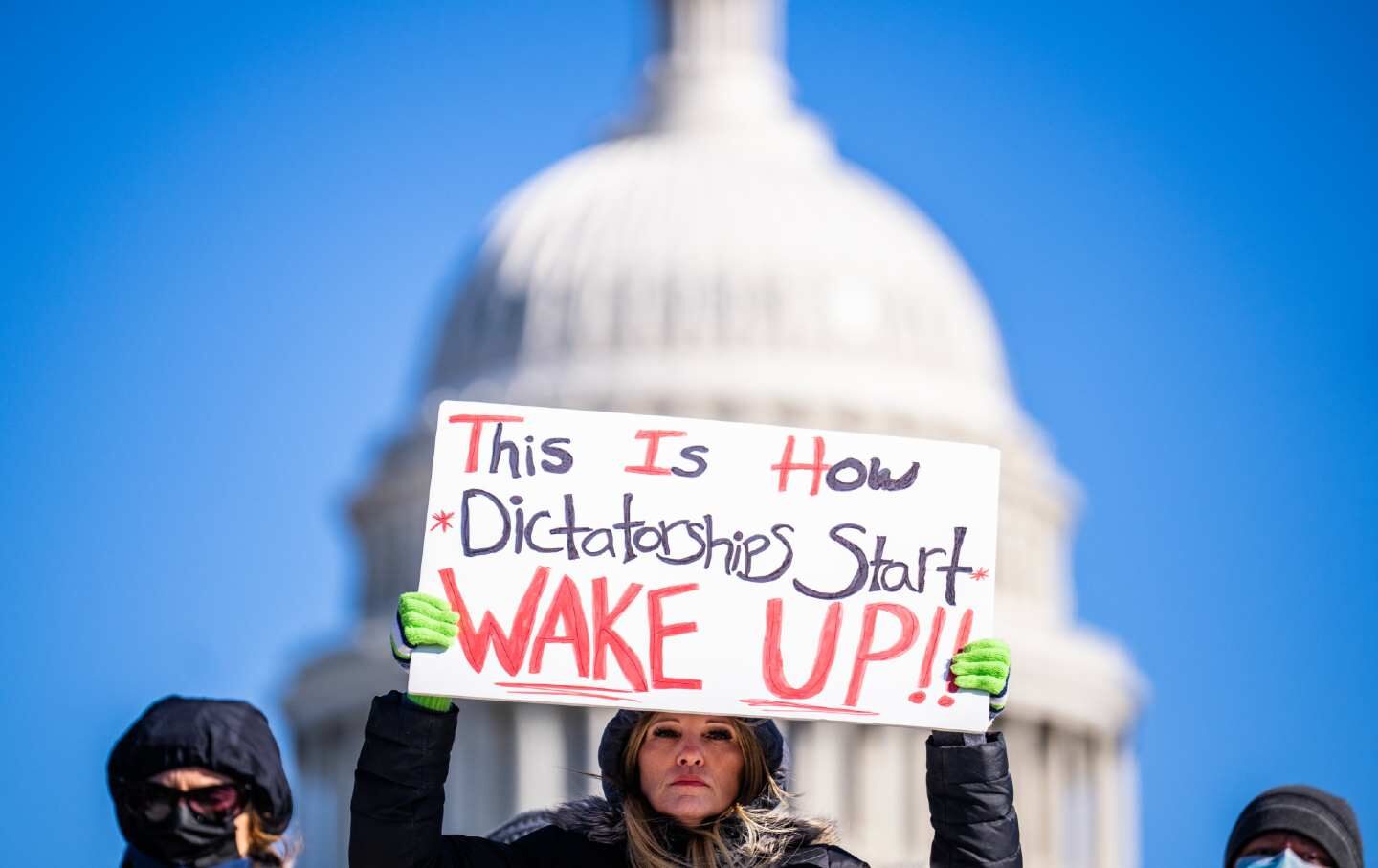
How to Spot Deliberately Misleading -DISINFORMATION

by Indivisible PV

CHECK THE SOURCE

Use reputable sources such as established news organizations, academic institutions, and government agencies. Be wary of sources that are unfamiliar or have a history of spreading false information.

VERIFY THE INFORMATION

Before sharing information, check to see if it has been reported by multiple sources. If not, it may be false or misleading.

LOOK FOR EVIDENCE

Disinformation often lacks evidence or relies on weak or misleading evidence. Look for sources that provide strong evidence to support their claims.

BE SKEPTICAL OF EMOTIONAL APPEALS

Disinformation often uses emotional appeals to manipulate people. Be wary of information that tries to appeal to your emotions rather than your reason.

BE AWARE OF YOUR OWN BIASES

We all have biases that can affect how we interpret information. Be aware of your own biases and try to approach information with an open mind.

THINK CRITICALLY

Ask questions, look for evidence, and consider alternative explanations.

Check Facts @:

Thoughts on Aliens of Our Creation

Do they work for us, or for themselves?

By: Bruce Rafnel

Publisher: Substack, Authentic Community

Clearly, humans are causing climate change.

But we have more problems than warming the planet. Even if we control the temperature by reducing our CO2 emissions, there are many other ecological problems caused by humans: deforestation, desertification, disruption of water cycles, plastic pollution, insect decline, fishery collapses, and fuel resource depletion. The list goes on and on. “It is no accident that the ruins of the world’s oldest civilizations are mostly in deserts now. It wasn’t desert before that.”

Our human institutions are unwilling (or unable) to address these problems with real solutions. We created these institutions—corporations and governments, most notably—but we seem unable to control them. They have morphed into alien entities that now control us.

The smallest effective human-powered unit is a community, not an individual. However, tight, effective communities have been hobbled. It is time to relearn how to build communities, and then to do the work of taking back our government. At the same time, large organizations can be reformed or broken up, with non-violent actions, to remind them that they exist for humans, not themselves.

4 tips for developing critical thinking skills

By: Steve Pearlman, Ph.D

Publisher: TEDx Talks, TEDxCapeMay

“Critical thinking” increasingly stands as the most sought-after skill that has long been too fleeting to define. Employers rate it as a pinnacle skill, but one of which they see too little, and educators claim to teach it, but over half of Millennials recently failed a simple Mindedge critical thinking test. So, what is critical thinking? Analysis? Information literacy? Thinking outside the box? Informal logic? Problem-solving? Evaluating data? Decision science? What if all of our efforts to define critical thinking as above have been the core problem with teaching it?

What if, instead of using our brains to devise conceptions of critical thinking, we eliminated the noise and revolutionized a way to teach people how to think better by tracing critical thinking back to its core evolutionary survival mechanisms?

What are the basic survival skills for all organisms?

  1. Perceive their environment
  2. Sense danger vs. reward
  3. Decide between danger and reward
  4. Act on the decision

In Trump’s Alternate Reality, Lies and Distortions Drive Change

Condoms for Gaza? Ukraine started the war with Russia? The president’s manipulations of the truth lay the groundwork for radical change.

by Peter Baker

Publisher: The New York Times

Mr. Trump has long been unfettered by truth when it comes to boasting about his record and tearing down his enemies. But what were dubbed “alternative facts” in his first term have quickly become a whole alternative reality in his second to lay the groundwork for radical change as he moves to aggressively reshape America and the world.

Read Article

How to Organize Our Way Out of the Trump-Musk Putsch

A plan to harness grassroots energy—and to hold Democratic leaders accountable.

by Ezra Levin, Leah Greenberg

Summary

Indivisible founders, Ezra Levin and Leah Greenberg, wrote this inspiring article for The Nation. Reviewed by Rachael Maddow.

Continue reading How to Organize Our Way Out of the Trump-Musk Putsch

Photographic Evidence is Dead

Fake Image, Fake NEWS, Fake Trust.

By: Turtle Engineer (AKA: Bruce Rafnel)

Publisher: Medium, Slow Engineering

We have now witnessed the death of almost 200 years of photographic (and other recorded) evidence. Images, videos, and audio recordings can now be easily faked or altered in ways that cannot be detected. Digital technology has made this happen. Analog media is continuous, so subtle modifications can be noticed. However, digital media has discrete bits that are not dependent on the bits around them.

It is time to relearn what was so obvious to our ancestors: the SOURCE is more important than the content. “Do you trust or believe the source?” This can be a personal choice, but we no longer have the convenience of “socially accepted” sources.

Some technologies can “help” build trust, but they can all be compromised. We should never again put unconditional trust in any medium or technology.

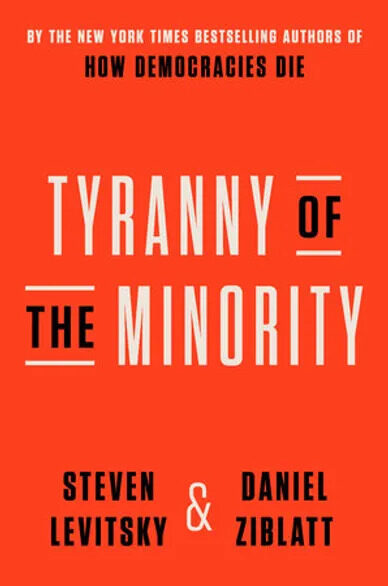
Tyranny of the Minority

Harvard professors Steven Levitsky and Daniel Ziblatt offer a coherent framework for understanding these volatile times. They draw on a wealth of examples—from 1930s France to present-day Thailand—to explain why and how political parties turn against democracy. They then show how our Constitution makes us uniquely vulnerable to attacks from within: It is a pernicious enabler of minority rule, allowing partisan minorities to consistently thwart and even rule over popular majorities. Most modern democracies—from Germany and Sweden to Argentina and New Zealand—have eliminated outdated institutions like elite upper chambers, indirect elections, and lifetime tenure for judges. The United States lags dangerously behind.

INTERVIEW: Levitsky and Ziblatt with journalist Tiziana Dearing at Harvard

Review

Why do we celebrate incompetent leaders?

By: Martin Gutmann

Publisher: TEDxTalks, TEDxBerlin

Recommended by: Bruce R.

The evidence is clear that boring management matters.“–Raffaella Sadun

Leader selection mistake: People often pick leaders because they make for a good “story.” Excellent leaders have boring stories because they have avoided the conflicts that make for a good story.

We see leadership potential in people who:

  • speak more (regardless of what they say)
  • appear confident (regardless of competence)
  • are perpetually busy (regardless of what they’re doing)

“since we reward people who are good in crises (and ignore people who are such good manager that there are very few crises), [people] soon learn to seek out (or reframe situations as) crises.”–Keith Grint

Corruptible

Who Gets Power and How It Changes Us

By: Brian Klaas

Publisher: Scribner

Recommended by: Bruce R.

Does power corrupt, or are corrupt people drawn to power? Are tyrants made or born? Are entrepreneurs who embezzle and cops who kill the result of poorly designed systems or are they just bad people? If you were suddenly thrust into a position of power, would you be able to resist the temptation to line your pockets or seek revenge against your enemies?

To answer these questions, Corruptible draws on over 500 interviews with some of the world’s top leaders—from the noblest to the dirtiest—including presidents and philanthropists as well as rebels, cultists, and dictators. Some of the fascinating insights include: how facial appearance determines who we pick as leaders, why narcissists make more money, why some people don’t want power at all and others are drawn to it out of a psychopathic impulse, and why being the “beta” (second in command) may actually be the optimal place for health and well-being.

Corruptible also features a wealth of counterintuitive examples from history and social science: you’ll meet the worst bioterrorist in American history, hit the slopes with a ski instructor who once ruled Iraq, and learn why the inability of chimpanzees to play baseball is central to the development of human hierarchies.

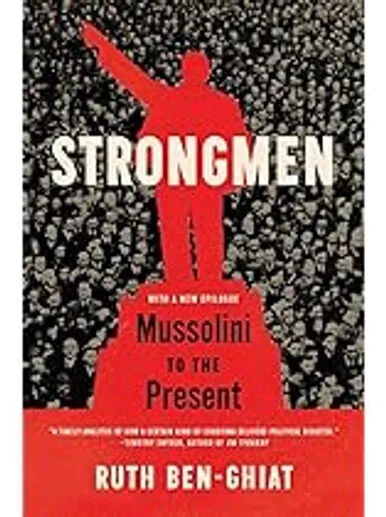
Strongmen

Mussolini to the Present

by Ruth Ben-Ghiat

Publisher: W. W. Norton & Company

Ruth Ben-Ghiat is the expert on the “strongman” playbook employed by authoritarian demagogues from Mussolini to Putin—enabling her to predict with uncanny accuracy the recent experience in America and Europe. In Strongmen, she lays bare the blueprint these leaders have followed over the past 100 years, and empowers us to recognize, resist, and prevent their disastrous rule in the future.

Read Review


Ruth Ben-Ghiat interviewed by Dean Peter Arnade at University of Hawai

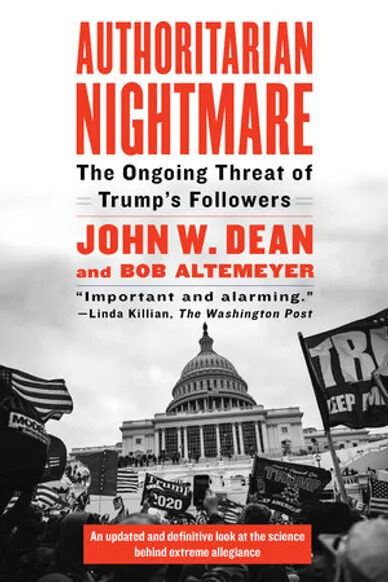
Authoritarian Nightmare

The Ongoing Threat of Trump's Followers / Trump and His Followers

by John W. Dean and Bob Altemeyer

Publisher: Melville House

John Dean, of Watergate fame, joined with Bob Altemeter, an expert on authoritarianism, to look at the entirety of the Trump phenomenon, using psychological and social science studies, as well as polling analyses, to understand Donald Trump’s followers. How did America end up with a leader who acts so crudely and despotically, and counter to our democratic principles? Why do his followers stick with him, even when he acts against their interests?

John Dean interview on Democracy Now

Read Review

Buy

How to recognize disinformation and how to stop it

Deb Lavoy explains how we fall for disinformation and how to train ourselves to avoid falling for it. (11 min.)

Deb Lavoy is on a mission to eradicate disinformation. As a former software engineer and digital marketer, she recognized the established social media marketing techniques that disinformation perpetrators appropriating to manipulate us into believing falsehoods. This talk provides tips on recognizing these tricks and how to counter them. Deb Lavoy is on a mission to eradicate disinformation. Her experience in software engineering and marketing, gave her a unique perspective on the rise of disinformation in 2016: the perpetrators were maliciously appropriating tried and tested digital marketing techniques. Deb founded the nonprofit Reality Team in response.

Reality Team drowns out the lies perpetrated over social media with simply stated truths, and arms people with tools and information to join the fight. The organization builds campaigns that change the ratio of truthful to untruthful information on social media feeds and provides tools and techniques to make it easier to tell the difference.

Divided We Fall

America’s Secession Threat and How to Restore Our Nation

by David French

Summary

Reestablishing national unity will require the bravery to commit ourselves to embracing qualities of kindness, decency, and grace towards those we disagree with ideologically. David French calls on all of us to demonstrate true tolerance so we can heal the American divide. If we want to remain united, we must learn to stand together again.

Continue reading Divided We Fall