The ONE THING You Can Do to Fight Fascism RIGHT NOW

by Elizabeth Cronise McLaughlin

Publisher: The Ripple Effect Institute

Recommended by: Bruce R.

If it feels like America is sliding deeper into darkness—with voter suppression, book bans, gag orders, and fear spreading daily—you’re not alone. The truth is, fascism thrives when good people hesitate, but democracy grows stronger when ordinary people take action. You don’t need the full roadmap to change the world; you just need to take the next best step. Even the smallest action—whether it’s organizing in your community, speaking out at a school board meeting, or showing up for your neighbors—can disrupt authoritarianism and build momentum for lasting change. In this video, I’ll share why action is the antidote to despair and how you can start making a difference today, no matter your resources or time. History shows us that small acts, multiplied by thousands, topple regimes and create movements. Don’t wait for the “perfect” moment or the “perfect” leader—your courage matters now.

A FREE GUIDE FOR PROGRESSIVE LEADERS READY TO CREATE LASTING IMPACT

How to Lead Change Without Burning Out

READ MY ESSAYS ON POLITICS AND ACTIVISM ON SUBSTACK

Stop ICE Raids Alert Network

Nation-Wide Mobile Alert System

by Sherman Austin

The Stop ICE Raids Alert Network lets you send and receive mobile alerts about nearby ICE activity whenever and wherever it occurs.

No downloadable app required. StopICE works with technology already built into your phone. Send and receive mobile alerts via text message, or at stopice.net, from any mobile device with a tap of a button.

Continue reading Stop ICE Raids Alert Network

Thoughts on Aliens of Our Creation

Do they work for us, or for themselves?

By: Bruce Rafnel

Publisher: Substack, Authentic Community

Clearly, humans are causing climate change.

But we have more problems than warming the planet. Even if we control the temperature by reducing our CO2 emissions, there are many other ecological problems caused by humans: deforestation, desertification, disruption of water cycles, plastic pollution, insect decline, fishery collapses, and fuel resource depletion. The list goes on and on. “It is no accident that the ruins of the world’s oldest civilizations are mostly in deserts now. It wasn’t desert before that.”

Our human institutions are unwilling (or unable) to address these problems with real solutions. We created these institutions—corporations and governments, most notably—but we seem unable to control them. They have morphed into alien entities that now control us.

The smallest effective human-powered unit is a community, not an individual. However, tight, effective communities have been hobbled. It is time to relearn how to build communities, and then to do the work of taking back our government. At the same time, large organizations can be reformed or broken up, with non-violent actions, to remind them that they exist for humans, not themselves.


Authentic Community feed

Some Actions That Are Not Protesting or Voting

Some examples:

ANTI-CRIMINALIZATION

COMMUNITY DEFENSE/MIGRANT JUSTICE

(Archive Link)

This came from the Mutula Aid 101 course.

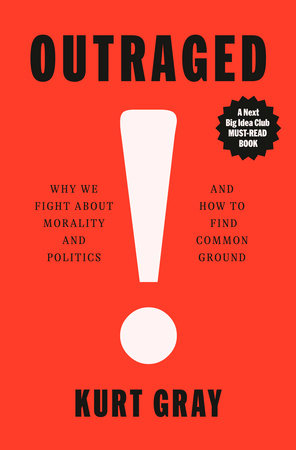
Outraged

Why We Fight About Morality and Politics and How to Find Common Ground

By Kurt Gray

Publisher: Pantheon

It’s easy to assume that liberals and conservatives have radically different moral foundations. In Outraged, Kurt Gray showcases the latest science to demonstrate that we all have the same moral mind—that everyone’s moral judgments stem from feeling threatened or vulnerable to harm.

We all care about protecting ourselves and the vulnerable. Conflict arises, however, when we have different perceptions of harm. We get outraged when we disagree about who the “real” victim is, whether we’re talking about political issues, fights with our in-laws, or arguments on the playground.

In this fascinating and insightful tour of our moral minds, Gray tackles popular myths that prevent us from understanding ourselves and those around us. While it is commonly believed that our ancestors were apex predators, Gray argues that for the majority of our evolutionary history, humans were more hunted than hunter. This explains why our minds are hard-wired to perceive threats, and provides surprising insights on the scientific origins of our values and beliefs. Though we might think ourselves driven by objective reasoning, Gray unveils new research that finds our moral judgments are based on gut feelings rather than rational thought, and presents a compelling reminder that we are more alike than we might think.

Drawing on groundbreaking research, Gray provides a captivating new explanation for our moral outrage, and unpacks how to best bridge divides. If you want to understand the morals of the “other side,” ask yourself a simple question—what harms do they see?