
Keep Your Guard Up

Know Your Rights

By ACLU

Last month, the Bay Area braced for a surge of National Guard soldiers and federal immigration agents. Although Trump ultimately called off the troops, in the short time Border Patrol officers were here, they fired flash-bang grenades at peaceful community members and shot a pastor in the face with a pepper ball. The unprovoked violence was a chilling glimpse of how future immigration raids could unfold here. That’s why we can’t become complacent.

Be prepared and know your rights in case federal agents show up anywhere in our region:

This is from the ACLU’s Know Your Rights page.

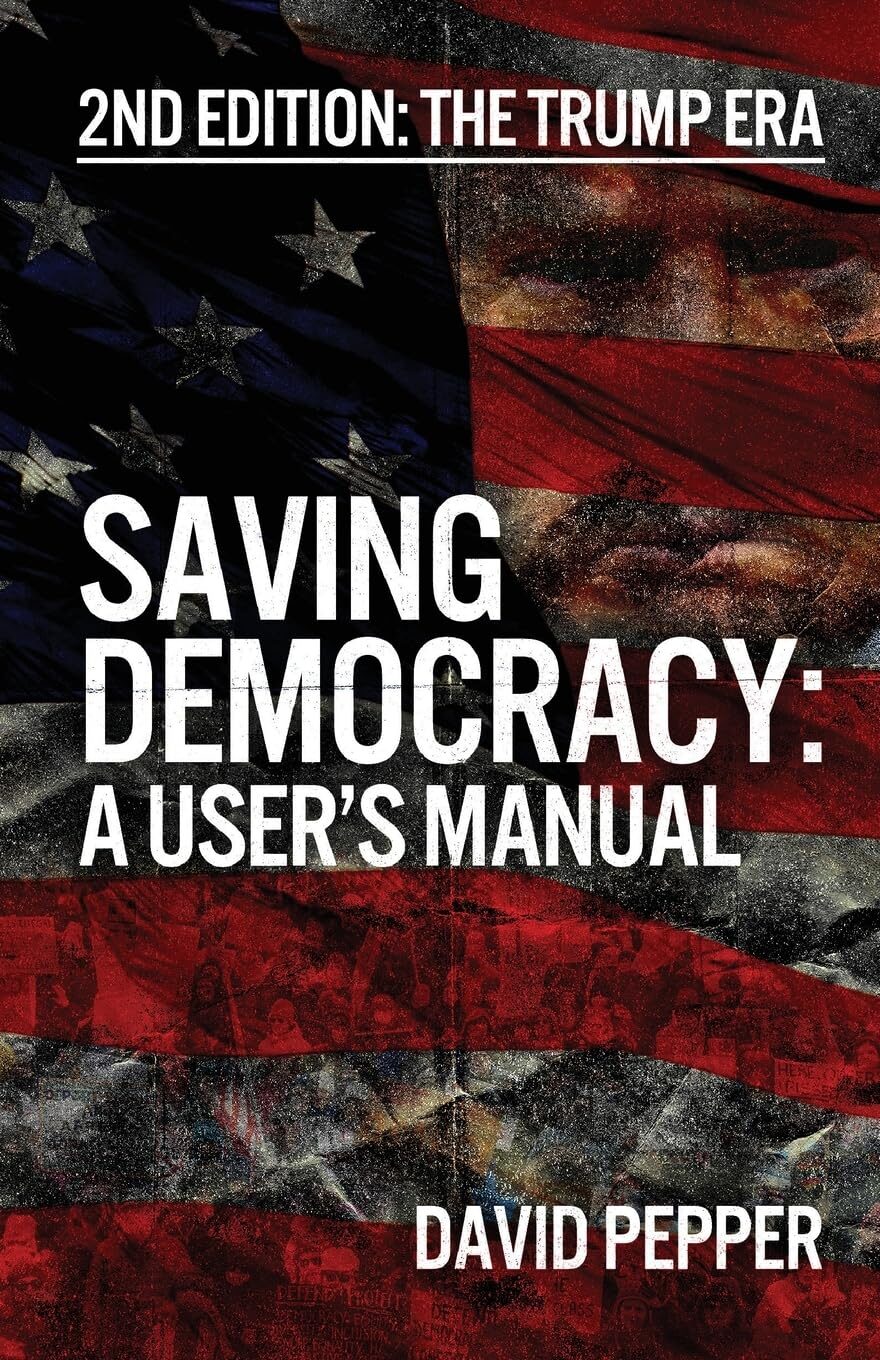
Saving Democracy

A User's Manual for Every American: 2nd Edition: The Trump Era

by David Pepper

Publisher: St. Helena Press

Recommended by: Steve G.

Saving Democracy is that rare book that doesn’t simply diagnose the crisis our democracy faces, and the broader strategies that we must take to fight back…but it breaks it all down so that every reader understands the role she or he can play in their own lives.

Buy

Thoughts on Aliens of Our Creation

Do they work for us, or for themselves?

By: Bruce Rafnel

Publisher: Substack, Authentic Community

Clearly, humans are causing climate change.

But we have more problems than warming the planet. Even if we control the temperature by reducing our CO2 emissions, there are many other ecological problems caused by humans: deforestation, desertification, disruption of water cycles, plastic pollution, insect decline, fishery collapses, and fuel resource depletion. The list goes on and on. “It is no accident that the ruins of the world’s oldest civilizations are mostly in deserts now. It wasn’t desert before that.”

Our human institutions are unwilling (or unable) to address these problems with real solutions. We created these institutions—corporations and governments, most notably—but we seem unable to control them. They have morphed into alien entities that now control us.

The smallest effective human-powered unit is a community, not an individual. However, tight, effective communities have been hobbled. It is time to relearn how to build communities, and then to do the work of taking back our government. At the same time, large organizations can be reformed or broken up, with non-violent actions, to remind them that they exist for humans, not themselves.


Authentic Community feed

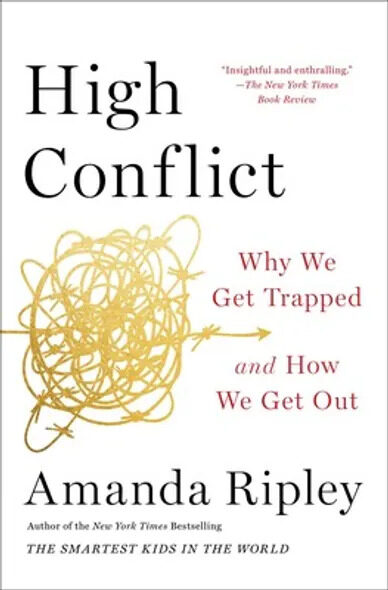
High Conflict

Why We Get Trapped and How We Get Out

by Amanda Ripley

Publisher: Simon and Schuster

Recommended by: Cindi, Bob & Linda

When we are baffled by the insanity of the “other side”—in our politics, at work, or at home—it’s because we aren’t seeing how the conflict itself has taken over. That’s what “high conflict” does. It’s the invisible hand of our time. And it’s different from the useful friction of “healthy conflict”. That’s good conflict, and it’s a necessary force that pushes us to be better people.

Read Review

Buy

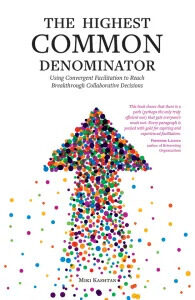
The Highest Common Denominator

Using Convergent Facilitation to Reach Breakthrough Collaborative Decisions

by Miki Kashtan

Miki introduces a novel decision-making process called Convergent Facilitation that builds trust from the beginning, surfaces concerns and addresses them, and turns conflicts into creative dilemmas that groups feel energized to solve together. This highly effective process has been used successfully around the world to resolve problems and teach people how to collaborate without sacrificing productivity.

Continue reading The Highest Common Denominator

How to Have Impossible Conversations

A Very Practical Guide

by Peter Boghossian and James Lindsay

Publisher: Balance

 
From politics and religion to workplace negotiations, ace the high-stakes conversations in your life with this indispensable guide from a persuasion expert.

In our current political climate, it seems impossible to have a reasonable conversation with anyone who has a different opinion. Whether you’re online, in a classroom, an office, a town hall—or just hoping to get through a family dinner with a stubborn relative—dialogue shuts down when perspectives clash. Heated debates often lead to insults and shaming, blocking any possibility of productive discourse. Everyone seems to be on a hair trigger.

In How to Have Impossible Conversations, Peter Boghossian and James Lindsay guide you through the straightforward, practical, conversational techniques necessary for every successful conversationwhether the issue is climate change, religious faith, gender identity, race, poverty, immigration, or gun control. Boghossian and Lindsay teach the subtle art of instilling doubts and opening minds. They cover everything from learning the fundamentals for good conversations to achieving expert-level techniques to deal with hardliners and extremists. This book is the manual everyone needs to foster a climate of civility, connection, and empathy.

“This is a self-help book on how to argue effectively, conciliate, and gently persuade. The authors admit to getting it wrong in their own past conversations. One by one, I recognize the same mistakes in me. The world would be a better place if everyone read this book.”  —Richard Dawkins, author of Science in the Soul and Outgrowing God
 

Buy

A Summary of the Key Points

Seven Fundamentals of Good Conversations

  • Goals – Why are you engaged in this conversation?
  • Partnerships – Be partners, not advocates
  • Rapport – Develop and maintain a good connection
  • Listen – Listen more, talk less
  • Shoot the Messenger – Delivering “messages” doesn’t work, have a “conversation,” an exchange instead
  • Intentions – People have better intentions than you may think
  • Walk Away – Don’t push your conversational partner beyond their conflict zone

Beginner Level: Nine Ways to Start Changing Minds

  • Modeling – Model the behavior you want to see in others
  • Words – Define terms up front
  • Ask Questions – Focus on a specific question with genuine curiosity; avoid generalities, broad conclusions
  • Acknowledge Extremists – Point out and acknowledge unhelpful things people on your side have done
  • Navigating Social Media – Do not vent on social media
  • Don’t Blame, Do Discuss Contributions – Shift from “blaming” terms to “contribution” language,
    acknowledging things that got us to this unhappy place and emphasizing how to move forward
  • Focus on Epistemology – Figure out how people “know” what they claim to know, what’s the evidence
  • Learn – Learn what makes someone close-minded, what personal experiences have led them to a position
  • What NOT to Do (Reverse Applications) – A list of fundamental and basic conversational mistakes

Intermediate Level: Seven Ways to Improve Your Interventions

  • Let Friends Be Wrong – It’s okay if someone disagrees with you, even about a cherished conclusion
  • Build Golden Bridges – Find ways for your conversation partner to avoid social embarrassment if they
    change their mind
  • Language – Avoid “you,” switch to third person or collaborative language like “we” and “us”
  • Stuck? Reframe – Shift the conversation to keep it going smoothly or to get it back on track, use metaphors
  • Change Your Mind – Change your mind on the spot or be willing to reconsider
  • Introduce Scales – Use scales to gauge effective interventions, figure out how confident someone is in a
    belief, seeking places where they might be willing to reconsider, and put issues into perspective
  • Outsourcing – Turn to outside information to answer the question, “How do you know that?”

Five Advanced Skills for Contentious Conversations

  • Keep Rapoport’s Rules – Re-express, list points of agreement, mention what you learned, only then rebut
  • Avoid Facts – Bringing facts into a conversation requires considering timing and what counts as evidence
  • Seek Disconfirmation – How could that belief be incorrect?
  • Yes, and … — Eliminate the word “but” from your spoken vocabulary; affirm first, then add
  • Dealing with Anger – Know thyself; don’t escalate, monitor your emotions and take a pause if necessary

Six Expert Skills to Engage the Close-Minded

  • Synthesis – Recruit your partner to help refine and synthesize your positions
  • Help Vent Steam – Talk through emotional roadblocks
  • Altercasting – Cast your partner in a role that helps her think and behave differently
  • Hostage Negotiations – Use research-based ideas from hostage negotiations: mini-encouragers, mirroring, etc
  • Probe the Limits – Engage someone who professes a belief that can’t be lived, unmask disingenuous stmts.
  • Counter-Intervention Strategies – If someone is trying to intervene in your cognitive processes, go with it…

Master Level: Two Keys to Conversing

  • How to Converse with an Ideologue – Switch to moral epistemology, talk about values
  • Moral Reframing – Learn to speak moral dialects, study Jonathan Haidt’s moral foundations

Strategizing For A Living Revolution

by George Lakey

Publisher: History As A Weapon

Recommended by: Bruce R.

This article is a comprehensive strategic framework for nonviolent revolution, combining historical case studies, practical organizing guidance, and theoretical insights about movement building.

Read Article

Archive