
Keep Your Guard Up

Know Your Rights

By ACLU

Last month, the Bay Area braced for a surge of National Guard soldiers and federal immigration agents. Although Trump ultimately called off the troops, in the short time Border Patrol officers were here, they fired flash-bang grenades at peaceful community members and shot a pastor in the face with a pepper ball. The unprovoked violence was a chilling glimpse of how future immigration raids could unfold here. That’s why we can’t become complacent.

Be prepared and know your rights in case federal agents show up anywhere in our region:

This is from the ACLU’s Know Your Rights page.

How To Not Lose Your Sh!t

by Katie Paris and LaFonda Cousin

Publisher: Red Wine and Blue

Let’s be honest: this year has been a bit of a dumpster fire. Here at Red Wine & Blue, we’ve been hearing women in our community say they’re not sure how to make a difference — at least, not without totally losing their shit.

So we decided to tackle that question head-on with a brand-new podcast. It’s simply called How To Not Lose Your Sh!t and it’s hosted by our very own Katie Paris and LaFonda Cousin.

Katie, our founder, has worked in political organizing for most of her career. LaFonda, our Chief People Officer, is a wellness expert and yoga teacher on a mission to reimagine self-care. Every week, they’ll talk to experts and everyday women who are getting involved, building community, and feeling better in the process.

You can listen to our first episode with special guest Heather Cox Richardson on October 1st, with new episodes every Wednesday after that. If you’re already subscribed to the Red Wine & Blue podcast in your podcast player, you’ll automatically see new episodes each week here in your feed.

There are a lot of political podcasts out there already, and a lot of mental health and self-care shows too. What we want to do is reject that binary and explore how getting involved can actually be a form of not only caring for your community, but also yourself. We can’t wait for you to join us on a journey through self-care, politics, community, and tackling this difficult moment… together.

The ONE THING You Can Do to Fight Fascism RIGHT NOW

by Elizabeth Cronise McLaughlin

Publisher: The Ripple Effect Institute

Recommended by: Bruce R.

If it feels like America is sliding deeper into darkness—with voter suppression, book bans, gag orders, and fear spreading daily—you’re not alone. The truth is, fascism thrives when good people hesitate, but democracy grows stronger when ordinary people take action. You don’t need the full roadmap to change the world; you just need to take the next best step. Even the smallest action—whether it’s organizing in your community, speaking out at a school board meeting, or showing up for your neighbors—can disrupt authoritarianism and build momentum for lasting change. In this video, I’ll share why action is the antidote to despair and how you can start making a difference today, no matter your resources or time. History shows us that small acts, multiplied by thousands, topple regimes and create movements. Don’t wait for the “perfect” moment or the “perfect” leader—your courage matters now.

A FREE GUIDE FOR PROGRESSIVE LEADERS READY TO CREATE LASTING IMPACT

How to Lead Change Without Burning Out

READ MY ESSAYS ON POLITICS AND ACTIVISM ON SUBSTACK

Stop ICE Raids Alert Network

Nation-Wide Mobile Alert System

by Sherman Austin

The Stop ICE Raids Alert Network lets you send and receive mobile alerts about nearby ICE activity whenever and wherever it occurs.

No downloadable app required. StopICE works with technology already built into your phone. Send and receive mobile alerts via text message, or at stopice.net, from any mobile device with a tap of a button.

Continue reading Stop ICE Raids Alert Network

Noncooperation & Targeting Pillars of Support

This handout describes some of the Pillars of Support.

Each time a pillar institution yields to or supports the regime, the regime grows stronger. In contrast, noncooperation — refusing to do what is expected, disrupting the normal course of events, and withdrawing support from unjust or illegal policies — weakens the regime and creates cracks in its foundation of power.

PDF Handout

How to Spot Deliberately Misleading -DISINFORMATION

by Indivisible PV

CHECK THE SOURCE

Use reputable sources such as established news organizations, academic institutions, and government agencies. Be wary of sources that are unfamiliar or have a history of spreading false information.

VERIFY THE INFORMATION

Before sharing information, check to see if it has been reported by multiple sources. If not, it may be false or misleading.

LOOK FOR EVIDENCE

Disinformation often lacks evidence or relies on weak or misleading evidence. Look for sources that provide strong evidence to support their claims.

BE SKEPTICAL OF EMOTIONAL APPEALS

Disinformation often uses emotional appeals to manipulate people. Be wary of information that tries to appeal to your emotions rather than your reason.

BE AWARE OF YOUR OWN BIASES

We all have biases that can affect how we interpret information. Be aware of your own biases and try to approach information with an open mind.

THINK CRITICALLY

Ask questions, look for evidence, and consider alternative explanations.

Check Facts @:

Thoughts on Aliens of Our Creation

Do they work for us, or for themselves?

By: Bruce Rafnel

Publisher: Substack, Authentic Community

Clearly, humans are causing climate change.

But we have more problems than warming the planet. Even if we control the temperature by reducing our CO2 emissions, there are many other ecological problems caused by humans: deforestation, desertification, disruption of water cycles, plastic pollution, insect decline, fishery collapses, and fuel resource depletion. The list goes on and on. “It is no accident that the ruins of the world’s oldest civilizations are mostly in deserts now. It wasn’t desert before that.”

Our human institutions are unwilling (or unable) to address these problems with real solutions. We created these institutions—corporations and governments, most notably—but we seem unable to control them. They have morphed into alien entities that now control us.

The smallest effective human-powered unit is a community, not an individual. However, tight, effective communities have been hobbled. It is time to relearn how to build communities, and then to do the work of taking back our government. At the same time, large organizations can be reformed or broken up, with non-violent actions, to remind them that they exist for humans, not themselves.


Authentic Community feed

Some Actions That Are Not Protesting or Voting

Some examples:

ANTI-CRIMINALIZATION

COMMUNITY DEFENSE/MIGRANT JUSTICE

(Archive Link)

This came from the Mutula Aid 101 course.

Defy

The Power of No In a World That Demands Yes

by Sunita Sah

Publisher: Random House

Imagine living the life you want to lead, not the one you’re willing to accept. This profound but practical book offers clear steps to stop people pleasing and start living your truth.

“A powerful book. If you’ve ever compromised your principles to please others, Defy will give you the will—and skill—to stand up for yourself.”—Adam Grant, #1 New York Times bestselling author of Think Again

Buy

Photographic Evidence is Dead

Fake Image, Fake NEWS, Fake Trust.

By: Turtle Engineer (AKA: Bruce Rafnel)

Publisher: Medium, Slow Engineering

We have now witnessed the death of almost 200 years of photographic (and other recorded) evidence. Images, videos, and audio recordings can now be easily faked or altered in ways that cannot be detected. Digital technology has made this happen. Analog media is continuous, so subtle modifications can be noticed. However, digital media has discrete bits that are not dependent on the bits around them.

It is time to relearn what was so obvious to our ancestors: the SOURCE is more important than the content. “Do you trust or believe the source?” This can be a personal choice, but we no longer have the convenience of “socially accepted” sources.

Some technologies can “help” build trust, but they can all be compromised. We should never again put unconditional trust in any medium or technology.

The Joy of Talking Politics With Strangers

How to save democracy one conversation at a time

by Elizabeth Chur

Publisher: Talk with Voters Publishing

Elections are decided on front porches and phone calls across the country, one voter at a time. The Joy of Talking Politics with Strangers is a comprehensive guidebook that helps volunteers connect one-on-one with voters – our most powerful tool for winning elections. These conversations can also spark unexpected moments of empathy and even kinship with our fellow Americans.
 

After 2016, volunteer Elizabeth Chur realized it’s up to ordinary citizens to protect our democracy. She started learning Spanish, began phone banking, and canvassed in California’s Central Valley, home to some of the nation’s most contested swing districts. By talking with over 1,000 people, she discovered how to forge meaningful connections with the hardest-to-reach voters, including:

  • Young people
  • Latinos
  • People who say, “I don’t vote.”

Filled with uplifting stories and practical tips, this inspiring book helps you earn people’s trust – and their votes. It demonstrates how taking positive action builds community and creates hope. Whether you’re a first-time volunteer or seasoned activist, The Joy of Talking Politics with Strangers shows you how to engage more effectively with voters and win elections.


Buy

Always ‘Reframe’ Republican Talking Points

NEVER REPEAT LANGUAGE REPUBLICANS USE

“Consider the phrase “tax relief.” The world “relief” frames the word “tax” as an affliction or form of suffering. We generally need “relief” from things that are painful or unpleasant…Another example: Consider the phrase “forced birth.” It frames abortion bans with a negative word, “forced,” which frames abortion bans as aggressively stripping women of their freedom.”  Moral Warfare 101: Frames and Your Brain, Frame Lab, February 5, 2024 

“…when environmental issues are reframed in terms of the conservative value of purity – emphasizing the importance of keeping our forests, drinking water, and skies pure – conservatives are much more likely to support this cause.  

The power of framing: It’s not what you say, it’s how you say it

The Guardian, July 20, 2017

Climate change? Global warming?

“David Fenton, a longtime PR specialist for progressive causes…urges the climate community to speak of pollution – a word everyone gets – and to settle on the image of a ‘blanket of pollution trapping heat on Earth’. Every oil and gas emission makes that blanket thicker – and all that trapped heat helps cause floods and start fires, he says.” As heat records break, the climate movement has the right answers – but the words are all wrong The Guardian, July 14, 2023

Frame Lab explains:

“Much of politics is a struggle to define how certain key words are framed — words like ‘tax,’ ‘freedom,’ ‘rights’ and ‘truth.’ 

“If you oppose an issue, you must try to frame it in negative terms. If you support an issue, you must try to frame it positively.”

Cognitive scientist Dr. George Lakoff and journalist Gil Duran share their political messaging expertise at  

Frame Lab on Substack.

Latest Frame Lab Articles

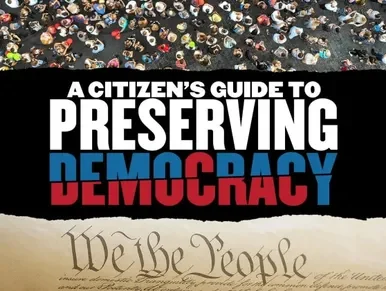
A Citizen’s Guide to Preserving Democracy

by PBS

With American democracy under threat, diplomat Dr. Richard Haass outlines ten habits to help citizens preserve democracy. Haass also explores real-life examples of Americans who are working towards strengthening democracy and renewing the spirit of a more informed and engaged citizenry. Premiered January 2, 2024 on PBS.

Watch the Video

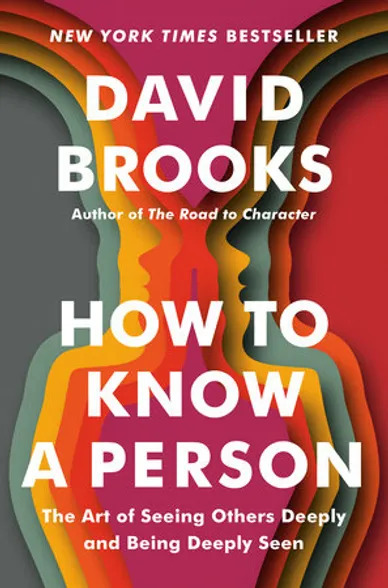
How to Know a Person

The Art of Seeing Others Deeply and Being Deeply Seen

by David Brooks

Summary

Recommended by Bob

Driven by his trademark sense of curiosity and his determination to grow as a person, David Brooks draws from the fields of psychology and neuroscience and from the worlds of theater, philosophy, history, and education to present a welcoming, hopeful, integrated approach to human connection. How to Know a Person helps readers become more understanding and considerate toward others, and to find the joy that comes from being seen. Along the way it offers a possible remedy for a society that is riven by fragmentation, hostility, and misperception.

Continue reading How to Know a Person

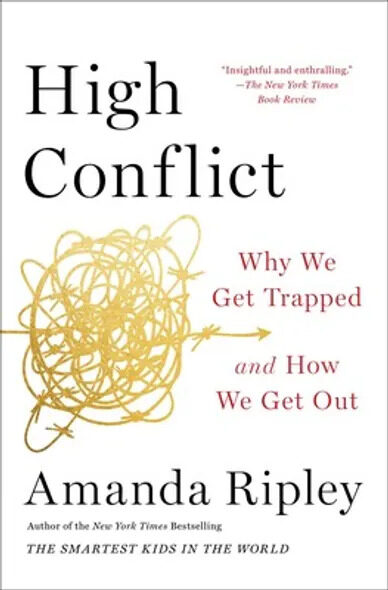
High Conflict

Why We Get Trapped and How We Get Out

by Amanda Ripley

Publisher: Simon and Schuster

Recommended by: Cindi, Bob & Linda

When we are baffled by the insanity of the “other side”—in our politics, at work, or at home—it’s because we aren’t seeing how the conflict itself has taken over. That’s what “high conflict” does. It’s the invisible hand of our time. And it’s different from the useful friction of “healthy conflict”. That’s good conflict, and it’s a necessary force that pushes us to be better people.

Read Review

Buy

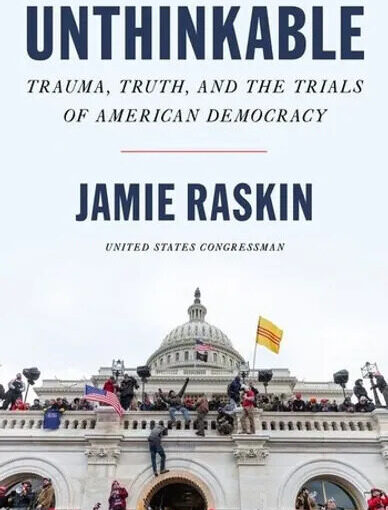
Unthinkable

Trauma, Truth and the Trials of American Democracy

by James Raskin

Publisher: Harper

In this searing memoir, Congressman Jamie Raskin tells the story of the forty-five days at the start of 2021 that permanently changed his life—and his family’s—as he confronted the painful loss of his son to suicide, lived through the violent insurrection in our nation’s Capital, and led the impeachment effort to hold President Trump accountable for inciting the political violence.

Jamie Raskin in conversation at The National Arts Club

Read Review

Buy

The Art & Science of Persuasion Playbook

A Message from Galvanize Action about a huge block of persuadable voters!

“White women are the largest voting bloc in this country and will be for decades to come. They account for 38% of the national vote share and 43% of the vote share across Galvanize Action’s priority states. Within this voting bloc, we’ve identified 44,093,812 moderate women who are not ideologically entrenched, meaning they are open to new ideas and perspectives and movable on key issues such as reproductive freedom, healthcare, gender equity, climate, and the economy.”

Galvanize Action has a fabulous interactive messaging worksheet we can all use!

Galvanize Action says, “We’ll share with you exactly how to create a message that meets people at their values and how to turn those into an effective ad. Our interactive worksheet will guide you through the process with prompts about your target audience and the issue you want to move them on. You’ll walk away with customized advice!”

How to Citizen with Baratunde

By Baratunde Thurston

Recommended by: Bob

Here are some sources of ideas from a podcast by Baratunde Thurston, which began in 2020 and has four seasons of episodes. The overall theme is encouraging thinking about “citizen” as a verb. The four
pillars for doing this are:

  • To participate, not just vote, but to show up for each other and publicly participate by discussing concerns, debating policy choices, advocating, etc.
  • To invest in relationships, by deepening our interconnections with our community, family, neighbors, etc..
  • To understand power, by learning about the fluidity of power and the various ways we the people can use it for our collective benefit.
  • To value the collective, by working towards outcomes that benefit the many, not just the few.

The four seasons of episodes (ranging from 11 to 16 episodes each season) consist of interviews with folks who are thinking about and demonstrating democracy-building activities. It’s a wonderful resource for ideas. They include international, national, statewide, and local leaders.

How to Have Impossible Conversations

A Very Practical Guide

by Peter Boghossian and James Lindsay

Publisher: Balance

 
From politics and religion to workplace negotiations, ace the high-stakes conversations in your life with this indispensable guide from a persuasion expert.

In our current political climate, it seems impossible to have a reasonable conversation with anyone who has a different opinion. Whether you’re online, in a classroom, an office, a town hall—or just hoping to get through a family dinner with a stubborn relative—dialogue shuts down when perspectives clash. Heated debates often lead to insults and shaming, blocking any possibility of productive discourse. Everyone seems to be on a hair trigger.

In How to Have Impossible Conversations, Peter Boghossian and James Lindsay guide you through the straightforward, practical, conversational techniques necessary for every successful conversationwhether the issue is climate change, religious faith, gender identity, race, poverty, immigration, or gun control. Boghossian and Lindsay teach the subtle art of instilling doubts and opening minds. They cover everything from learning the fundamentals for good conversations to achieving expert-level techniques to deal with hardliners and extremists. This book is the manual everyone needs to foster a climate of civility, connection, and empathy.

“This is a self-help book on how to argue effectively, conciliate, and gently persuade. The authors admit to getting it wrong in their own past conversations. One by one, I recognize the same mistakes in me. The world would be a better place if everyone read this book.”  —Richard Dawkins, author of Science in the Soul and Outgrowing God
 

Buy

A Summary of the Key Points

Seven Fundamentals of Good Conversations

  • Goals – Why are you engaged in this conversation?
  • Partnerships – Be partners, not advocates
  • Rapport – Develop and maintain a good connection
  • Listen – Listen more, talk less
  • Shoot the Messenger – Delivering “messages” doesn’t work, have a “conversation,” an exchange instead
  • Intentions – People have better intentions than you may think
  • Walk Away – Don’t push your conversational partner beyond their conflict zone

Beginner Level: Nine Ways to Start Changing Minds

  • Modeling – Model the behavior you want to see in others
  • Words – Define terms up front
  • Ask Questions – Focus on a specific question with genuine curiosity; avoid generalities, broad conclusions
  • Acknowledge Extremists – Point out and acknowledge unhelpful things people on your side have done
  • Navigating Social Media – Do not vent on social media
  • Don’t Blame, Do Discuss Contributions – Shift from “blaming” terms to “contribution” language,
    acknowledging things that got us to this unhappy place and emphasizing how to move forward
  • Focus on Epistemology – Figure out how people “know” what they claim to know, what’s the evidence
  • Learn – Learn what makes someone close-minded, what personal experiences have led them to a position
  • What NOT to Do (Reverse Applications) – A list of fundamental and basic conversational mistakes

Intermediate Level: Seven Ways to Improve Your Interventions

  • Let Friends Be Wrong – It’s okay if someone disagrees with you, even about a cherished conclusion
  • Build Golden Bridges – Find ways for your conversation partner to avoid social embarrassment if they
    change their mind
  • Language – Avoid “you,” switch to third person or collaborative language like “we” and “us”
  • Stuck? Reframe – Shift the conversation to keep it going smoothly or to get it back on track, use metaphors
  • Change Your Mind – Change your mind on the spot or be willing to reconsider
  • Introduce Scales – Use scales to gauge effective interventions, figure out how confident someone is in a
    belief, seeking places where they might be willing to reconsider, and put issues into perspective
  • Outsourcing – Turn to outside information to answer the question, “How do you know that?”

Five Advanced Skills for Contentious Conversations

  • Keep Rapoport’s Rules – Re-express, list points of agreement, mention what you learned, only then rebut
  • Avoid Facts – Bringing facts into a conversation requires considering timing and what counts as evidence
  • Seek Disconfirmation – How could that belief be incorrect?
  • Yes, and … — Eliminate the word “but” from your spoken vocabulary; affirm first, then add
  • Dealing with Anger – Know thyself; don’t escalate, monitor your emotions and take a pause if necessary

Six Expert Skills to Engage the Close-Minded

  • Synthesis – Recruit your partner to help refine and synthesize your positions
  • Help Vent Steam – Talk through emotional roadblocks
  • Altercasting – Cast your partner in a role that helps her think and behave differently
  • Hostage Negotiations – Use research-based ideas from hostage negotiations: mini-encouragers, mirroring, etc
  • Probe the Limits – Engage someone who professes a belief that can’t be lived, unmask disingenuous stmts.
  • Counter-Intervention Strategies – If someone is trying to intervene in your cognitive processes, go with it…

Master Level: Two Keys to Conversing

  • How to Converse with an Ideologue – Switch to moral epistemology, talk about values
  • Moral Reframing – Learn to speak moral dialects, study Jonathan Haidt’s moral foundations

Indivisible.org

In America, we don’t do kings.

by Indivisible

We’re a grassroots movement of thousands of local Indivisible groups with a mission to elect progressive leaders, rebuild our democracy, and defeat the Trump agenda.

How we win

Defeating a multi-decade right-wing takeover of American government ain’t easy. But we’re here to win, and we have a plan. Here’s how we’re doing it:

We Are Indivisible. Our opponents depend on a divide and conquer strategy, so we treat an attack on one like an attack on all. We show up for each other, and particularly for those facing the brunt of rightwing ideologues’ attacks – often immigrants, people of color, and low-income people. We share a vision: a real democracy, of, by, and for everyone.

Strong Leaders, Strong Groups, Strong Movement. We build and sustain our movement’s power by helping individuals take leadership. They grow and lead local Indivisible groups, take independent action, and coordinate with their fellow local leaders. As a movement, our power comes from coordinated national campaigns where we act together, indivisible.

Inside/Outside Strategy. We understand systems of power – like how Congress operates – and we work inside them to get results. That complements our outside strategy of locally-based constituent pressure to demand elected leaders, regardless of political party, work for our democracy.

A Virtuous Cycle of Advocacy and Elections. We show up to advocate for policy wins in off-years and get out the vote in election years. These efforts reinforce each other to ensure our democracy works for all of us and that the people in power do too – or we will replace them with electeds who will.

Indivisible’s Website

Indivisible’s LinkTree

Indivisible’s YouTube Channel