The Shadow President

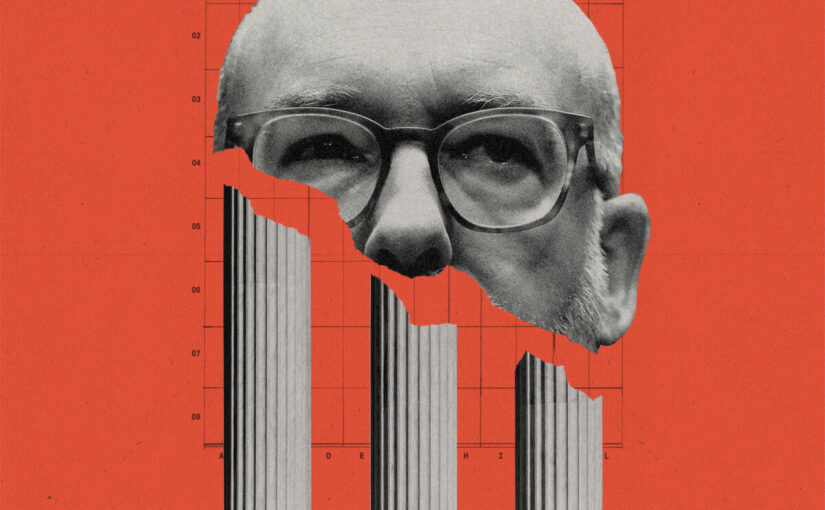
How Russell Vought became Trump's Shadow President

by Andy Kroll

Publisher: ProPublica

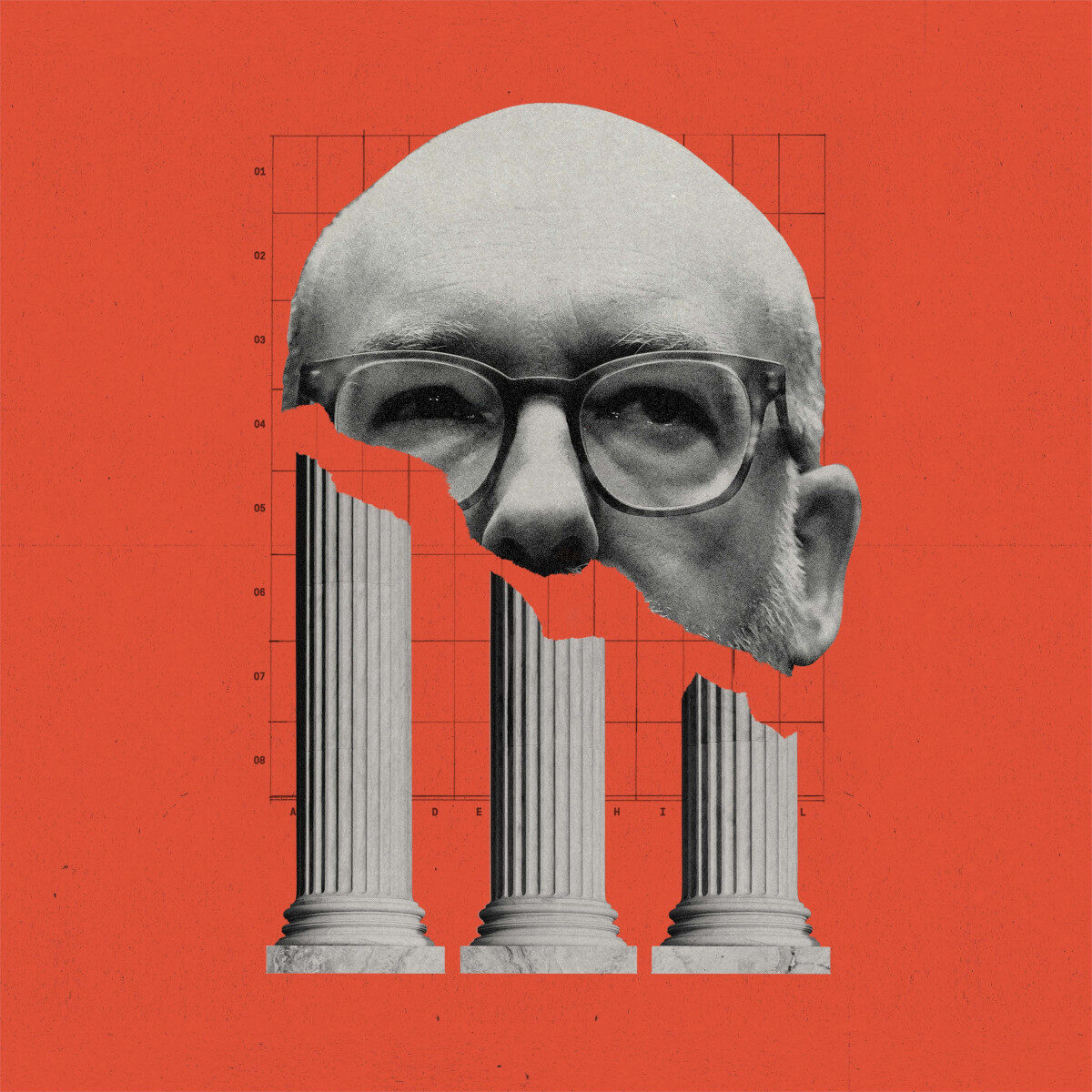
From the wholesale gutting of federal agencies to the ongoing government shutdown, Russell Vought has drawn the road map for Trump’s second term. Vought has consolidated power to an extent that insiders say they feel like “he is the commander in chief.”

What Vought has done in the nine months since Trump took office goes much further than slashing foreign aid. Relying on an expansive theory of presidential power and a willingness to test the rule of law, he has frozen vast sums of federal spending, terminated tens of thousands of federal workers and, in a few cases, brought entire agencies to a standstill. In early October, after Senate Democrats refused to vote for a budget resolution without additional health care protections, effectively shutting down the government, Vought became the face of the White House’s response. On the second day of the closure, Trump shared an AI-generated video that depicted his budget director — who, by then, had threatened mass firings across the federal workforce and paused or canceled $26 billion in funding for infrastructure and clean-­energy projects in blue states — as the Grim Reaper of Washington, D.C. “We work for the president of the United States,” a senior agency official who regularly deals with the OMB told me. But right now “it feels like we work for Russ Vought. He has centralized decision-­making power to an extent that he is the commander in chief.”
(Archive)

Watch: “We Want the Bureaucrats to Be Traumatically Affected”

Trump’s Power & the Rule of Law (full documentary) | FRONTLINE

FRONTLINE goes inside the showdown between U.S. President Donald Trump and the courts over presidential power.

President Donald Trump’s allies, opponents and experts talk about how he is testing the extent of his power, the legal pushback and the impact on the rule of law.

Continue reading Trump’s Power & the Rule of Law (full documentary) | FRONTLINE

White Rural Rage

The Threat to American Democracy

by Tom Schaller and Paul Waldman

Publisher: Random House Trade Paperbacks

In White Rural Rage, Tom Schaller and Paul Waldman explore why rural Whites have failed to reap the benefits from their outsize political power and why, as a result, they are the most likely group to abandon democratic norms and traditions. Their rage—stoked daily by Republican politicians and the conservative media—now poses an existential threat to the United States.

INTERVIEW: Tom Schaller and Paul Waldman talk to Matt Lewis Media

Washington Post – Review

Buy

Prequel

An American Fight Against Fascism

By Rachel Maddow

Inspired by her research for the hit podcast Ultra, Rachel Maddow charts the rise of a wild American strain of authoritarianism that has been alive on the far-right edge of our politics for the better part of a century. Before and even after our troops had begun fighting abroad in World War II, a clandestine network flooded the country with disinformation aimed at sapping the strength of the U.S. war effort and persuading Americans that our natural alliance was with the Axis, not against it. It was a sophisticated and shockingly well-funded campaign to undermine democratic institutions, promote antisemitism, and destroy citizens’ confidence in their elected leaders, with the ultimate goal of overthrowing the U.S. government and installing authoritarian rule.

Continue reading Prequel

Of Men and Boys

Why the Modern Male Is Struggling, Why It Matters, and What to Do about It

by Richard V. Reeves

Publisher: Brookings Institution Press

Recommended by: Bob B.

“The problem with men is typically framed as a problem of men,” writes Reeves. “It is men who must be fixed, one man or boy at a time. This individualist approach is wrong.” Instead, he maintains there are structural problems, societal issues, that need to be addressed if men are not to become ever more lost, defeated and angry.

Review

Laboratories of Autocracy

A Wake-Up Call From Behind The Lines

by David Pepper

Publisher: St. Helena Press

Recommended by: Cindi Sears

David Pepper shows that far more than the high-profile antics of national politicians and Trump himself, it’s anonymous, often corrupt politicians in statehouses across the country who pose the greatest dangers to American democracy. Amid all the chaos, these statehouses are hard at work, every day, hacking away at core principles and protections of our democratic system. And they’re getting more audacious every year.

Because these statehouses no longer operate as functioning democracies, these unknown politicians have all the incentive to keep doing greater damage, and can not be held accountable however extreme they get. This has driven steep declines in states like Ohio and others across the country. And collectively, it’s placed American democracy in its greatest peril since the dawn of the Jim Crow era.

But Pepper doesn’t stop there. He lays out a robust pro-democracy agenda outlining how everyone from elected officials to business leaders to everyday citizens can fight back.

Read Review

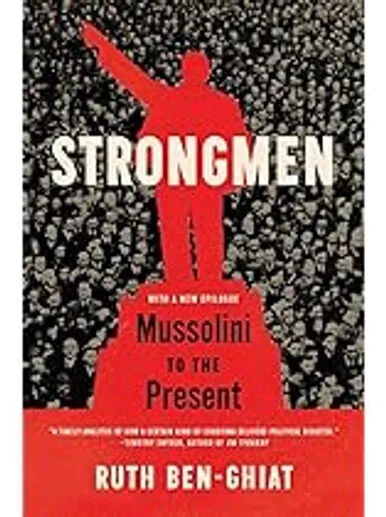
Strongmen

Mussolini to the Present

by Ruth Ben-Ghiat

Publisher: W. W. Norton & Company

Ruth Ben-Ghiat is the expert on the “strongman” playbook employed by authoritarian demagogues from Mussolini to Putin—enabling her to predict with uncanny accuracy the recent experience in America and Europe. In Strongmen, she lays bare the blueprint these leaders have followed over the past 100 years, and empowers us to recognize, resist, and prevent their disastrous rule in the future.

Read Review


Ruth Ben-Ghiat interviewed by Dean Peter Arnade at University of Hawai

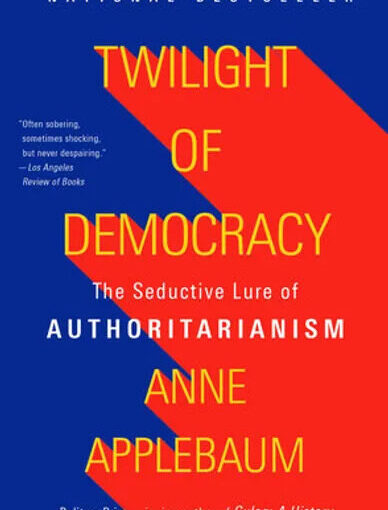
Twilight of Democracy

The Seductive Lure of Authoritarianism

By Anne Applebaum

Publisher: Vintage

Recommended by: Linda and Cindi

Despotic leaders do not rule alone; they rely on political allies, bureaucrats, and media figures to pave their way and support their rule. The authoritarian and nationalist parties that have arisen within modern democracies offer new paths to wealth or power for their adherents. 

Buy

High Conflict

Why We Get Trapped and How We Get Out

by Amanda Ripley

Publisher: Simon and Schuster

Recommended by: Cindi, Bob & Linda

When we are baffled by the insanity of the “other side”—in our politics, at work, or at home—it’s because we aren’t seeing how the conflict itself has taken over. That’s what “high conflict” does. It’s the invisible hand of our time. And it’s different from the useful friction of “healthy conflict”. That’s good conflict, and it’s a necessary force that pushes us to be better people.

Read Review

Buy

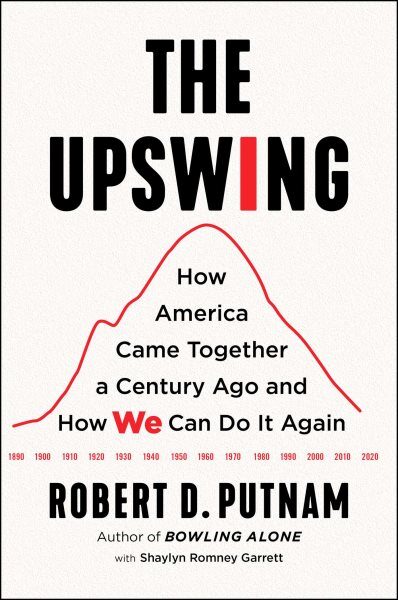
The Upswing

how America came together a century ago and how we can do it again

by Robert D. Putnam and Shaylyn Romney Garrett.

Publisher: Simon & Schuster

“An eminent political scientist’s brilliant synthesis of social and political trends over the past century that shows how we have gone from an individualistic society to a more communitarian society and then back again — and how we can use that experience to overcome once again the individualism that currently weakens our country”

We can’t go back to when things were “good.” But we can learn from when things ware “bad.” In the early 1900’s the Guilded Age of the robber barons, things were really bad for most US citizens; they feared for the end of democracy and the take-over by the oligarchs.

Buy

Interview: Robert Putnam Knows Why You’re Lonely


The 2023 Ithiel de Sola Pool Lecture by Robert D. Putnam
Sep 22, 2023


Join or Die — Trailer (2023)

The Documentary “Join or Die” (2023) is currently available on Netflix (2025-08-11)

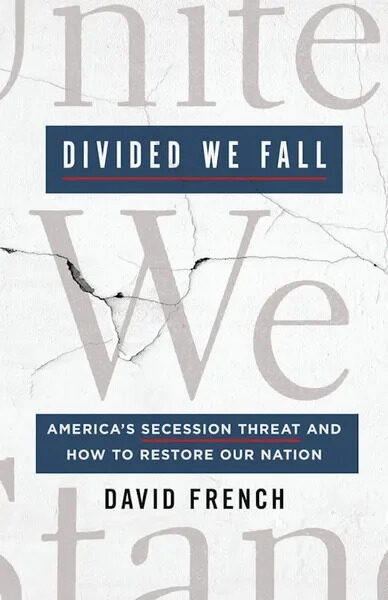
Divided We Fall

America’s Secession Threat and How to Restore Our Nation

by David French

Summary

Reestablishing national unity will require the bravery to commit ourselves to embracing qualities of kindness, decency, and grace towards those we disagree with ideologically. David French calls on all of us to demonstrate true tolerance so we can heal the American divide. If we want to remain united, we must learn to stand together again.

Continue reading Divided We Fall

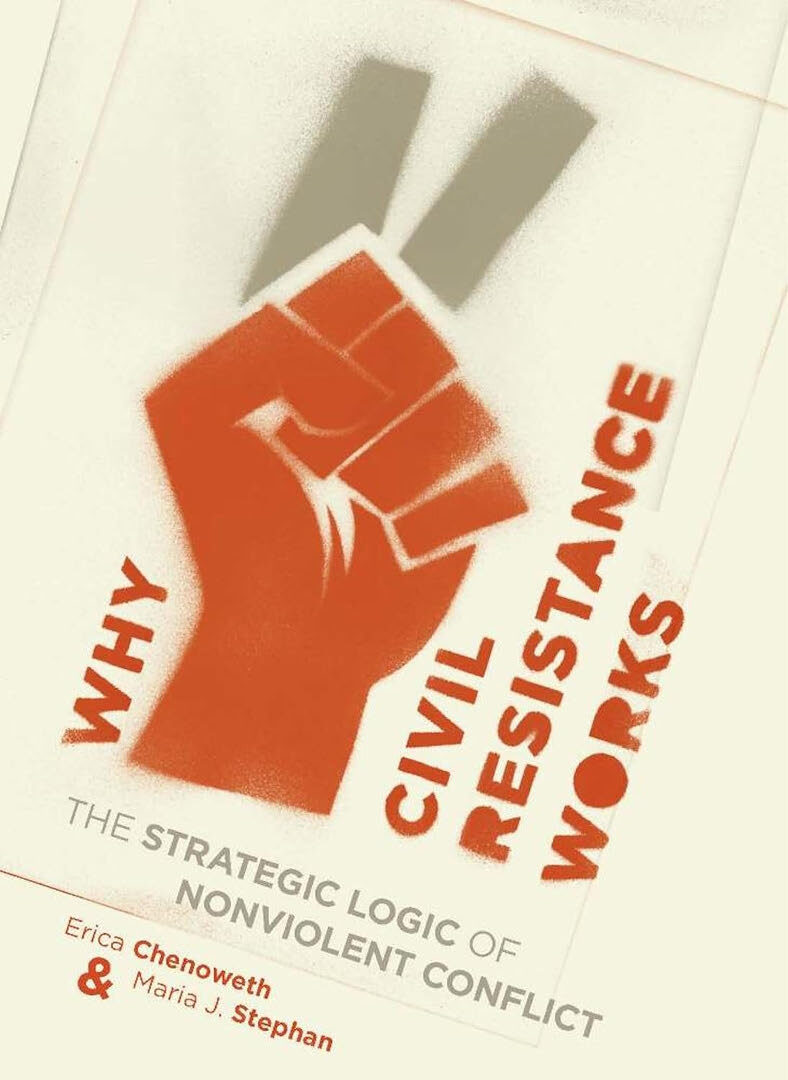
Why Civil Resistance Works

The Strategic Logic of Nonviolent Conflict

by Erica Chenoweth and Maria Stephan

Publisher: Columbia University Press

For more than a century, from 1900 to 2006, campaigns of nonviolent resistance were more than twice as effective as their violent counterparts in achieving their stated goals. By attracting impressive support from citizens, whose activism takes the form of protests, boycotts, civil disobedience, and other forms of nonviolent noncooperation, these efforts help separate regimes from their main sources of power and produce remarkable results, even in Iran, Burma, the Philippines, and the Palestinian Territories.

Combining statistical analysis with case studies of specific countries and territories, Erica Chenoweth and Maria J. Stephan detail the factors enabling such campaigns to succeed and, sometimes, causing them to fail. They find that nonviolent resistance presents fewer obstacles to moral and physical involvement and commitment, and that higher levels of participation contribute to enhanced resilience, greater opportunities for tactical innovation and civic disruption (and therefore less incentive for a regime to maintain its status quo), and shifts in loyalty among opponents’ erstwhile supporters, including members of the military establishment.

Buy