
Gov. J.B. Pritzker: “Tyranny requires your fear, your silence, and your compliance. Democracy requires your courage”
Resources

Some Actions That Are Not Protesting or Voting
Some examples:
ANTI-CRIMINALIZATION
- Film the police AKA copwatch.
- Monitor court cases [courtwatching and participatory defense hubs]
- Financially and emotionally support detained and incarcerated people
- Start or join a jail support project and here’s a jail support zine.
- Consider jury nullification.
- Signal-boost & support prison strikes and abolition efforts.
- Advocate for incarcerated trans prisoners.
COMMUNITY DEFENSE/MIGRANT JUSTICE
- Sign the Solidarity Pledge.
- Learn about and practice community self-defense.
- Learn about Community Defense Zones and also check out this excellent resource Defend and Recruit for learning about creating rapid response networks.Learn about deportation defense through this new resource by Make The Road and this one by Mijente.
This came from the Mutula Aid 101 course.
How to Organize Our Way Out of the Trump-Musk Putsch
A plan to harness grassroots energy—and to hold Democratic leaders accountable.
by Ezra Levin, Leah Greenberg
Summary
Indivisible founders, Ezra Levin and Leah Greenberg, wrote this inspiring article for The Nation. Reviewed by Rachael Maddow.
Continue reading How to Organize Our Way Out of the Trump-Musk Putsch
505001
50501 is a peaceful movement. Violence of any kind will not be tolerated.
50501 is a national movement made up of everyday Americans
who stand for democracy, and who stand against the authoritarian
actions of the Trump Administration. The name 50501 stands for
50 States, 50 Protests, 1 Movement.
The 50501 movement is a grassroots effort, meaning it’s
powered by everyday people, not by politicians or political parties.
Most of the work happens at the local level, where volunteers
in local city or state groups organize protests, advertise events,
and handle logistics. These local groups are the lifeblood of the
movement and exist both online and in-person.
In addition to local level organizing, national coordination
between 50501 groups allows us to establish cohesive messaging,
decide dates of action, and share resources. This coordination is
decentralized, therefore, 50501 has no true leadership
Newsfeed
- Washington, D.C. — The 50501 movement condemns the United States and Israel’s war of aggression against Iran and demands that Congress pass the Iran War Powers Resolution to block further unconstitutional strikes. As the 50501 movement stands in solidarity with the Iranian people against authoritarianism and imperialism, we are working with MoveOn and Win Without War to organize the Iran in Focus: Stop Trump’s War mass call TODAY, March 2nd, at 7 PM ET.
- As the No Kings Coalition continues its nationwide digital organizing effort to push back against the growing authoritarian actions of the Trump administration, organizers of the next March 28th mass mobilization have revealed the initial event map, with over 1,000 locally organized events already confirmed, including a flagship gathering in the Twin Cities, with thousands more anticipated across the country leading up to the day of action.
- As Trump’s Fascist Administration kidnaps our neighbors, takes away our healthcare, and covers up a billionaire sex trafficking ring, Americans come together to demand their elected officials take action.
- At hundreds of events across the country, protestors demanded that Congress block DHS funding until ICE & CBP are removed from local communities, that justice is pursued for the victims of ICE’s reign of terror, & for the abolition of ICE, dismantling of DHS, & accountability of complicit officials for their crimes against the American people. The ICE Out of Everywhere National Day of Action, spearheaded by the 50501 Movement & the Women’s March, was a follow-up to the National Shutdown on 1/30.
- FOR IMMEDIATE RELEASE January 30, 2026 *Interviews Available Contact: press@fiftyfifty.one Minneapolis, MN – Today and tomorrow, people are coming together in hundreds of cities across the United States and the United Kingdom to demand ICE off our streets, as part of the National Shutdown today, January 30th, and the ICE Out of Everywhere National Day of Action Saturday, January 31st . The need for immediate action could not be more clear: the cold-blooded executions of Alex Pretti and…
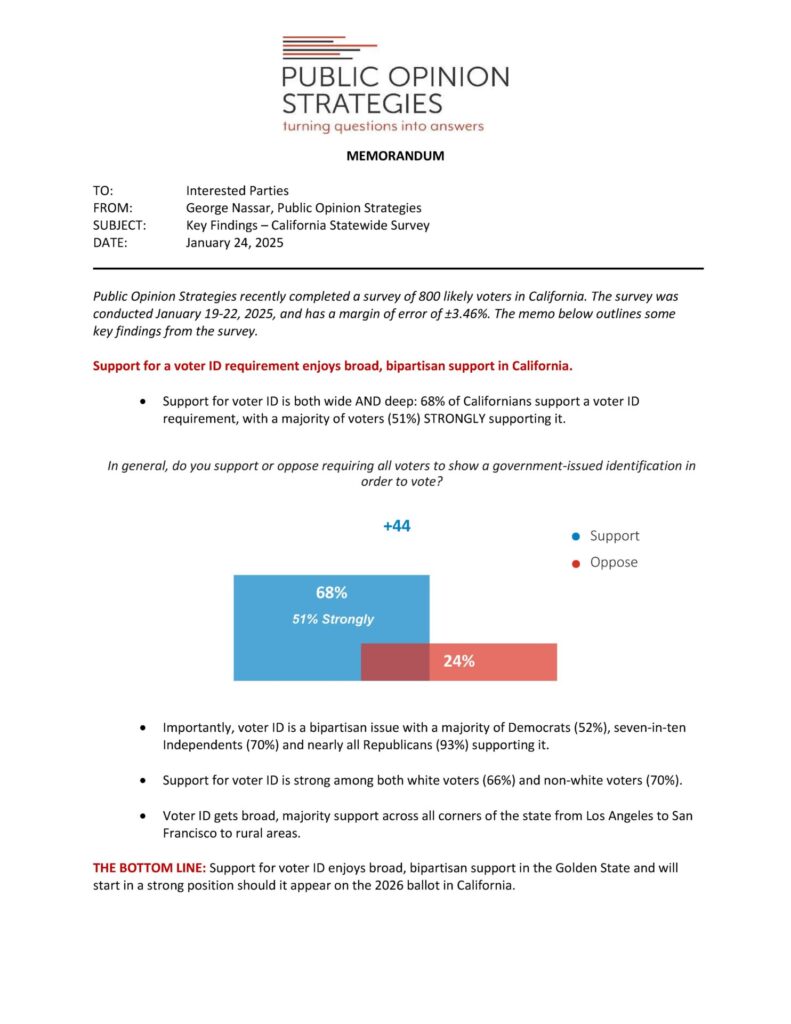
Voter ID Requirement CA Poll
Public Opinion Strategies recently completed a survey of 800 likely voters in California. The survey was conducted January 19-22, 2025, and has a margin of error of ±3.46%. The memo below outlines some key findings from the survey.
Support for a voter ID requirement enjoys broad, bipartisan support in California.
- Support for voter ID is both wide AND deep: 68% of Californians support a voter ID requirement, with a majority of voters (51%) STRONGLY supporting it.
Trump Administration Litigation Tracker
This project includes two tables that follow legal challenges to the actions from the Trump administration: the Lawfare Litigation Tracker and the Alien Enemies Act Proclamation: State of Play table.
Publisher: Lawfare
Recommended by: Bruce R.
The Litigation Tracker table tracks legal challenges to the Trump administration’s executive actions that deal with national security issues, as well as cases on behalf of the Trump administration to enforce them. You can sort the table by clicking the column titles and query keywords using the search box in the top left of the table. The table has the case name, what executive action is being challenged, the status of the case, and a summary of the litigation being brought. View an explanation of the statuses below.
The Alien Enemies Act Proclamation: State of Play table tracks the ongoing litigation challenging deportations under President Trump’s invocation of the Alien Enemies Act.
The Lawfare Litigation Tracker Includes:
- 239 active cases challenging Trump administration actions (this numbers consider a suit filed in district court and appeals that arise from the original suit as one case)
- 21 suits by the Trump administration challenging state or local laws
- 17 Supreme Court stays or orders to vacate lower court orders
- 1 Supreme Court affirmation of a lower court order
- 8 suits where judges ruled for the federal government in a summary judgment or by dismissing a suit
- 9 suits where judges ruled against the federal government in a summary judgment or permanent injunction
- 6 criminal prosecutions by the Department of Justice (Rep. McIver, former FBI Director James Comey, former National Security Advisor John Bolton, Kilmar Abrego Garcia, New York Attorney General Letitia James, and Congressional candidate Katherine Abughazaleh)
Outraged
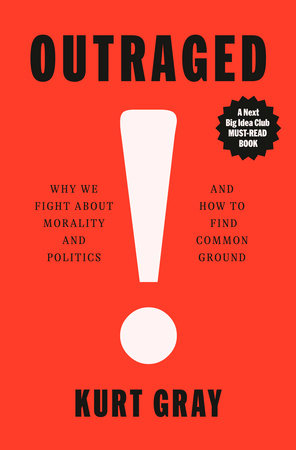
Why We Fight About Morality and Politics and How to Find Common Ground
By Kurt Gray
Publisher: Pantheon
It’s easy to assume that liberals and conservatives have radically different moral foundations. In Outraged, Kurt Gray showcases the latest science to demonstrate that we all have the same moral mind—that everyone’s moral judgments stem from feeling threatened or vulnerable to harm.
We all care about protecting ourselves and the vulnerable. Conflict arises, however, when we have different perceptions of harm. We get outraged when we disagree about who the “real” victim is, whether we’re talking about political issues, fights with our in-laws, or arguments on the playground.
In this fascinating and insightful tour of our moral minds, Gray tackles popular myths that prevent us from understanding ourselves and those around us. While it is commonly believed that our ancestors were apex predators, Gray argues that for the majority of our evolutionary history, humans were more hunted than hunter. This explains why our minds are hard-wired to perceive threats, and provides surprising insights on the scientific origins of our values and beliefs. Though we might think ourselves driven by objective reasoning, Gray unveils new research that finds our moral judgments are based on gut feelings rather than rational thought, and presents a compelling reminder that we are more alike than we might think.
Drawing on groundbreaking research, Gray provides a captivating new explanation for our moral outrage, and unpacks how to best bridge divides. If you want to understand the morals of the “other side,” ask yourself a simple question—what harms do they see?
Defy
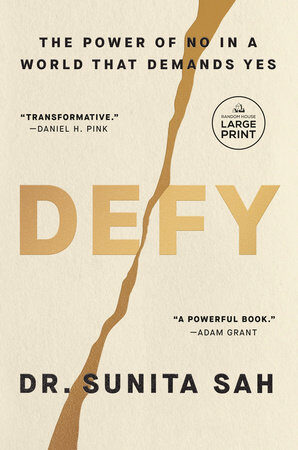
The Power of No In a World That Demands Yes
by Sunita Sah
Publisher: Random House
Imagine living the life you want to lead, not the one you’re willing to accept. This profound but practical book offers clear steps to stop people pleasing and start living your truth.
“A powerful book. If you’ve ever compromised your principles to please others, Defy will give you the will—and skill—to stand up for yourself.”—Adam Grant, #1 New York Times bestselling author of Think Again
Buy
Today’s Edition Newsletter, Robert B. Hubbell

A reflection on today’s news through the lens of hope.
By Robert B. Hubbell
Recommended by Bob.
Article Feed
- March 27, 2026
- March 26, 2026
- March 25, 2026
- March 25, 2026
- March 24, 2026
- March 23, 2026.
- A reflection on today's news through the lens of hope.
- A recording from Robert B. Hubbell's live video
- March 21, 2026
- March 21, 2026
- March 20, 2026
- March 19, 2026
- March 18, 2026
- March 17, 2026
- March 16, 2026
Indivisible Mid-Peninsula
Be a part of the movement to restore democracy in our country
Community Organized Activism
Indivisible Mid-Peninsula is the local branch of Indivisible, encompassing the area between Menlo Park and Belmont on the San Francisco Peninsula. We welcome members from other areas as well! Our mission is to:
- Find ways to resist and slow the MAGA agenda
- encourage and exert pressure on our local, state, and national elected officials to promote social justice and resist Trumpism
- Unify and support communities under threat
- Build a powerful grassroots movement to achieve electoral victories in 2026 and beyond
Our goal is to create a community in which pro-democracy advocates find opportunities to engage and have an impact at whatever level works for them. We’re committed to taking action that will lead to a more perfect union, where “justice for all” is more than a platitude.
We meet as a community on the 4th Wednesday of the month to learn ways to be effective in supporting those targeted by Trump’s policies and determine the most impactful actions we can take in our fight for democracy.
Newsfeed
- Former California State Senator Joe Simitian shares his 13 tips for successful advocacy. The world is a busy place, so knowing what you want to communicate and how to best get your ideas or messages implemented are crucial for success. These tips can be used not only in politics, but in everyday interactions at work and with family. Former Senator Simitian is a longtime California leader, policy maker and champion of community-powered democracy. He's served in the CA State Senate and the Santa Clara County Board of Supervisors among many other endeavors. He's known for his deep listening, pragmatic policy […]
- In this episode, Pao Ortega, a reset mind, body, and energy coach, shares her journey from overcoming depression to helping others reclaim their energy and emotional freedom. She introduces her 123 Pao Formula, which emphasizes the importance of mindset, movement, and nutrition in achieving well-being. The conversation explores practical tools for managing stress and anxiety, the science behind breathwork, and the significance of creating effective routines for a balanced life. Pao emphasizes that healing is possible and encourages listeners to take charge of their mental health through self-care and community support.
- In this episode we talk with Susan Austin and Maren Stever from Indivisible Mid-Peninsula about the pillars of authoritarianism and how to protect democracy by taking action to topple those pillars. They discuss the One Million Rising initiative, which aims to mobilize communities against authoritarianism. Topics include the importance of sustained action, the authoritarian playbook, and how individuals can contribute to a collective resistance. The conversation emphasizes the need for community support, the significance of the 3.5% rule in mobilizing the population, and practical strategies for grassroots activism. The episode concludes with a call to action for listeners to engage […]
- In this episode of the Courage is Contagious podcast, host Carla Pursnani discusses the concept of the courage gap as introduced by Margie Warrell in her book, 'The Courage Gap.' She outlines five powerful steps to take courageous action, emphasizing the importance of focusing on what one wants rather than what one fears, re-scripting mental narratives, and embracing discomfort. Carla shares relatable examples to illustrate how individuals can transform fear into courage and highlights that courage is a skill that can be developed through practice. The episode concludes with a challenge for listeners to take small steps towards courage in […]
- In this episode of the Courage is Contagious podcast, host Carla engages with community leaders Deb and Michelle to discuss the critical implications of Prop 50, a ballot initiative aimed at countering Republican redistricting efforts in California. The conversation explores the necessity of Prop 50, its key features, and the potential consequences of its rejection. The guests emphasize the importance of community engagement, voter participation, and the role of independent redistricting commissions in preserving democracy. They also address criticisms of Prop 50 and advocate for a fair voting system that empowers citizens. "It levels the playing field." "The vote is […]
Podcasts
- Former California State Senator Joe Simitian shares his 13 tips for successful advocacy. The world is a busy place, so knowing what you want to communicate and how to best get your ideas or messages implemented are crucial for success. These tips can be used not only in politics, but in everyday interactions at work […]
- In this episode Carla and retired lawyer and current voting rights activist Diane Savage discuss the complexities of voter suppression in the U.S., focusing on the implications of a smokescreen act, the SAVE Act. They discuss how the proposed measures would disproportionately affect marginalized communities, the challenges faced in voter registration, and the importance of […]
- In this episode of the Courage is Courageous podcast, host Carla Pursnani and Senior Civil Rights attorney Jessica Plitt talk about the critical role of the Office for Civil Rights (OCR) in education, particularly for students with disabilities. They highlight the impact of recent cuts to the OCR, which have severely limited its ability to […]
- In this episode host Carla Pursnani engages in a profound conversation about democracy, civic responsibility, and the American dream with an anonymous guest who shares her personal journey as an immigrant. Our guest has chosen anonymity due to the ongoing hostilities immigrants are facing in 2025 America. The discussion highlights the importance of civic engagement, […]
- In this episode, host Carla Pursnani talks with Kim Gandy, MD, PhD. Kim is a physician, scientist, entrepreneur, and advocate for academic integrity. She’s the Founder and CEO of Play-it-Health. She received her MD from Northwestern University – The Feinberg School of Medicine and her PhD in immunology from Stanford University. Please donate to help […]
- In this episode, Carla and Jacki Yahn talk with author Elizabeth Chur as she discusses her journey into activism and the importance of engaging in political conversations. Elizabeth emphasizes the joy of talking politics with strangers and the critical role of listening in fostering democracy. Through personal anecdotes and insights from her book, she highlights […]
- In this episode of the Courage is Contagious podcast, host Carla engages with community leaders Deb and Michelle to discuss the critical implications of Prop 50, a ballot initiative aimed at countering Republican redistricting efforts in California. The conversation explores the necessity of Prop 50, its key features, and the potential consequences of its rejection. […]
- In this episode of the Courage is Contagious podcast, host Carla Pursnani discusses the concept of the courage gap as introduced by Margie Warrell in her book, 'The Courage Gap.' She outlines five powerful steps to take courageous action, emphasizing the importance of focusing on what one wants rather than what one fears, re-scripting mental […]
- In this episode we talk with Susan Austin and Maren Stever from Indivisible Mid-Peninsula about the pillars of authoritarianism and how to protect democracy by taking action to topple those pillars. They discuss the One Million Rising initiative, which aims to mobilize communities against authoritarianism. Topics include the importance of sustained action, the authoritarian playbook, […]
- In this episode, Pao Ortega, a reset mind, body, and energy coach, shares her journey from overcoming depression to helping others reclaim their energy and emotional freedom. She introduces her 123 Pao Formula, which emphasizes the importance of mindset, movement, and nutrition in achieving well-being. The conversation explores practical tools for managing stress and anxiety, […]

Photographic Evidence is Dead
Fake Image, Fake NEWS, Fake Trust.
By: Turtle Engineer (AKA: Bruce Rafnel)
Publisher: Medium, Slow Engineering
We have now witnessed the death of almost 200 years of photographic (and other recorded) evidence. Images, videos, and audio recordings can now be easily faked or altered in ways that cannot be detected. Digital technology has made this happen. Analog media is continuous, so subtle modifications can be noticed. However, digital media has discrete bits that are not dependent on the bits around them.
It is time to relearn what was so obvious to our ancestors: the SOURCE is more important than the content. “Do you trust or believe the source?” This can be a personal choice, but we no longer have the convenience of “socially accepted” sources.
Some technologies can “help” build trust, but they can all be compromised. We should never again put unconditional trust in any medium or technology.

Indivisible Palo Alto Plus
Defend Democracy. Build Community. Have Fun.
Indivisible Palo Alto Plus (IPA+) is a diverse, action-oriented community that works to defend democracy across the San Francisco Peninsula and beyond. We combine grassroots activism with joy, bringing together people of varied backgrounds and perspectives to stand against authoritarianism and to protect democratic values. We are committed to making positive change—one action, and one connection, at a time.
Because tyrants hate it when we’re having fun, IPA+ meetings always incorporate playful activities that help us laugh and connect with each other. We believe that fun, joy, and laughter are essential to nourishing our spirits so that we can do the hard work of activism.
IPA+ is a recognized part of the Indivisible movement. We work with the national Indivisible organization and with other local Indivisible groups.
Newsfeed
Indivisible: A Practical Guide To Democracy On The Brink
If there’s one universally accepted truth in the modern age, it’s that sequels suck. And Trump 2.0 will be no exception. Trump, Vance, and their MAGA minions feel vindicated by the victory of their bigoted, fascistic clown show of a presidential campaign. Trump takes office with a plan to institute the worst parts of Project 2025. He’ll be enabled by a judiciary packed with right-wing ideologues and a congressional majority stacked with MAGA foot soldiers. And he’s assembled a bloc of corporations and billionaires eager to do his bidding in exchange for tax cuts and corrupt favors. But he has no mandate for the staggeringly harmful agenda he’s about to unleash on the country. And together, we have the power to fight back — and win.
Freedom Over Fascism

by Stephanie G. Wilson
Recommended by: Cindi
Freedom Over Fascism hosted by historian, comms consultant, and activist Stephanie Wilson, investigates what it takes to rebuild power and freedom for people in parts of America dominated by MAGA extremists. Stephanie talks to authors, experts, historians, and officials.
Tyranny of the Minority
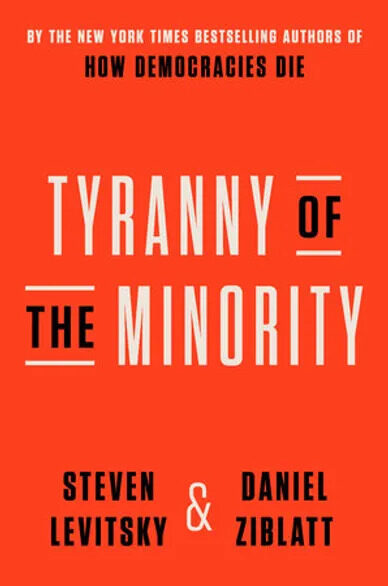
Harvard professors Steven Levitsky and Daniel Ziblatt offer a coherent framework for understanding these volatile times. They draw on a wealth of examples—from 1930s France to present-day Thailand—to explain why and how political parties turn against democracy. They then show how our Constitution makes us uniquely vulnerable to attacks from within: It is a pernicious enabler of minority rule, allowing partisan minorities to consistently thwart and even rule over popular majorities. Most modern democracies—from Germany and Sweden to Argentina and New Zealand—have eliminated outdated institutions like elite upper chambers, indirect elections, and lifetime tenure for judges. The United States lags dangerously behind.
INTERVIEW: Levitsky and Ziblatt with journalist Tiziana Dearing at Harvard
Review

The Joy of Talking Politics With Strangers
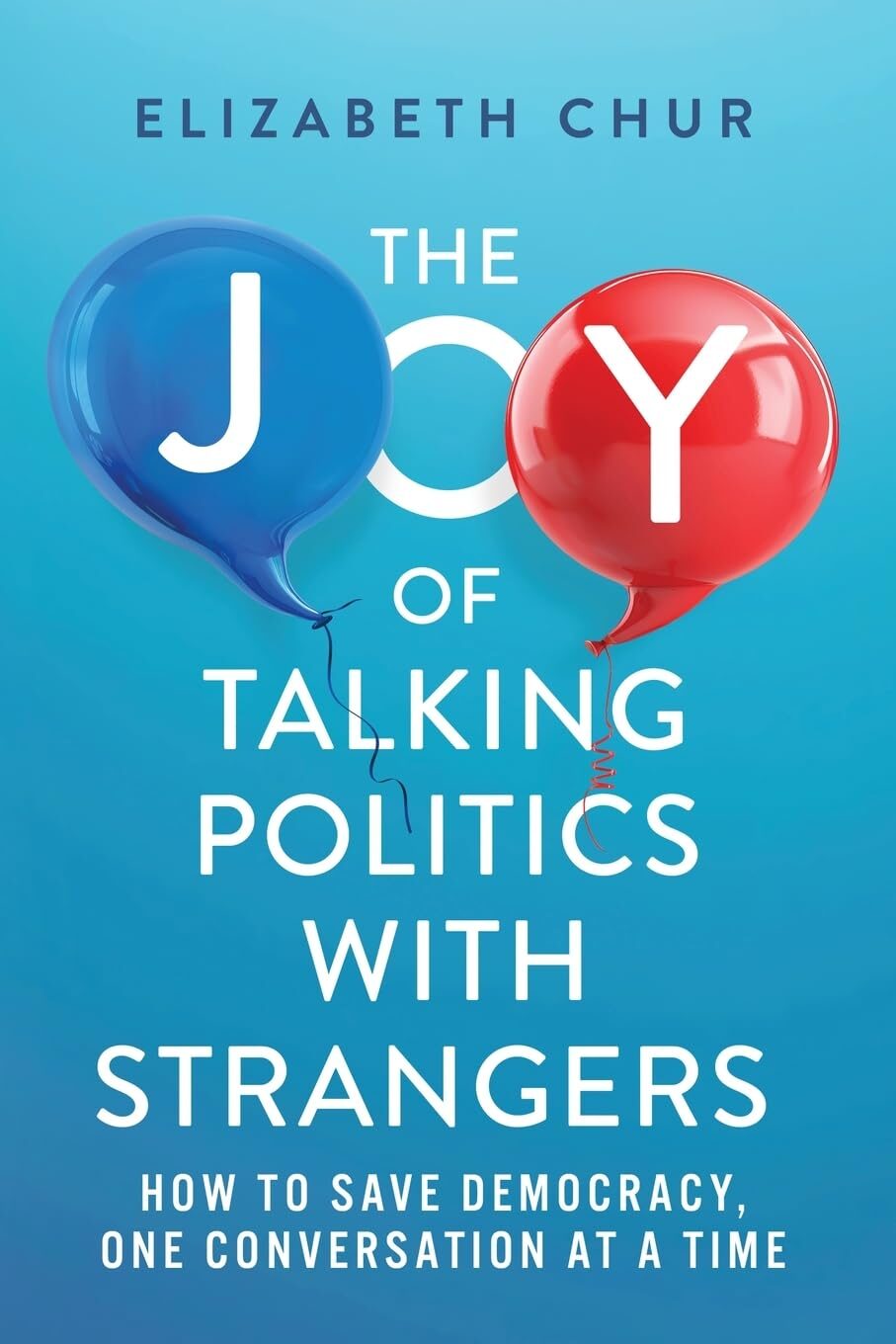
How to save democracy one conversation at a time
by Elizabeth Chur
Publisher: Talk with Voters Publishing
See also: talkwithvoters.substack.com
Buy
Why do we celebrate incompetent leaders?
By: Martin Gutmann
Publisher: TEDxTalks, TEDxBerlin
Recommended by: Bruce R.
“The evidence is clear that boring management matters.“–Raffaella Sadun
Leader selection mistake: People often pick leaders because they make for a good “story.” Excellent leaders have boring stories because they have avoided the conflicts that make for a good story.
We see leadership potential in people who:
- speak more (regardless of what they say)
- appear confident (regardless of competence)
- are perpetually busy (regardless of what they’re doing)
“since we reward people who are good in crises (and ignore people who are such good manager that there are very few crises), [people] soon learn to seek out (or reframe situations as) crises.”–Keith Grint

Is the press trying to help elect Trump?
Trump loses again, as Biden is cleared
Frame Lab advises responding to the special council report of Biden’s classified documents investigation by pointing out that Biden was cleared while Trump is still facing indictments.
“The best way for the media to sell newspapers and clicks is to give Republicans what they want to hear, which drives liberals to hate reading, hate sharing, and even hate subscribing. By rebutting them, [we] spread and strengthen them. That’s how our brains work.”
Always ‘Reframe’ Republican Talking Points
NEVER REPEAT LANGUAGE REPUBLICANS USE
“Consider the phrase “tax relief.” The world “relief” frames the word “tax” as an affliction or form of suffering. We generally need “relief” from things that are painful or unpleasant…Another example: Consider the phrase “forced birth.” It frames abortion bans with a negative word, “forced,” which frames abortion bans as aggressively stripping women of their freedom.” Moral Warfare 101: Frames and Your Brain, Frame Lab, February 5, 2024
“…when environmental issues are reframed in terms of the conservative value of purity – emphasizing the importance of keeping our forests, drinking water, and skies pure – conservatives are much more likely to support this cause.
The power of framing: It’s not what you say, it’s how you say it
The Guardian, July 20, 2017
Climate change? Global warming?
“David Fenton, a longtime PR specialist for progressive causes…urges the climate community to speak of pollution – a word everyone gets – and to settle on the image of a ‘blanket of pollution trapping heat on Earth’. Every oil and gas emission makes that blanket thicker – and all that trapped heat helps cause floods and start fires, he says.” As heat records break, the climate movement has the right answers – but the words are all wrong The Guardian, July 14, 2023
Frame Lab explains:
“Much of politics is a struggle to define how certain key words are framed — words like ‘tax,’ ‘freedom,’ ‘rights’ and ‘truth.’
“If you oppose an issue, you must try to frame it in negative terms. If you support an issue, you must try to frame it positively.”
Cognitive scientist Dr. George Lakoff and journalist Gil Duran share their political messaging expertise at
Frame Lab on Substack.
Latest Frame Lab Articles

Yes, Republicans really believe in starving kids
By: L O L G O P
Republican governors in 15 red states have refused to participate in this summer’s federal free lunch program, denying food to approximately 8 million kids.
Frame Lab advises responding without mentioning welfare states or calling Republicans scrooges. Say instead, “Tate Reeves [Republican Governor of Mississippi] doesn’t want these kids to succeed. He doesn’t want them to have the same freedom as his kids enjoy. This isn’t just about punishing poor kids for being poor. It’s about taking away their opportunities.”

AllSides
AllSides helps you get the full picture.
AllSides is the standard for information integrity. By revealing bias and providing perspectives from all sides, we help people better understand the world — and each other.
We believe information integrity requires:
- Revealing and combating bias to avoid information manipulation and blindspots.
- A breadth of perspectives to combat groupthink and false narratives.
- Effective dialogue and deliberation to make the best decisions and implement them effectively with buy-in.
Information integrity is not only needed in news, but also in AI, businesses, schools, government, and throughout our daily lives.
AllSides’ information integrity technologies and services help people and organizations get out of manipulative, one-sided, and biased information systems wherever they might be — in technology, news, companies, government, classrooms and beyond — so we can all see the full picture, think for ourselves and make the best decisions.
With the information ecosystem being rewired at a rapid pace, we dedicate ourselves to trustworthy information by using an explicitly multipartisan, diverse team and providing the systems and technology to deliver information from a variety of different sources so people can think critically and act confidently.

A Warning About Donald Trump and 2024

by The Editorial Board (New York Times)
Summary
“Mr. Trump does not offer voters anything resembling a normal option of Republican or Democrat, conservative or liberal, big government or small. He confronts America with a far more fateful choice: between the continuance of the United States as a nation dedicated to “the blessings of liberty to ourselves and our posterity” and a man who has proudly shown open disdain for the law and the protections and ideals of the Constitution.”
Publisher: The New York Times
A Citizen’s Guide to Preserving Democracy
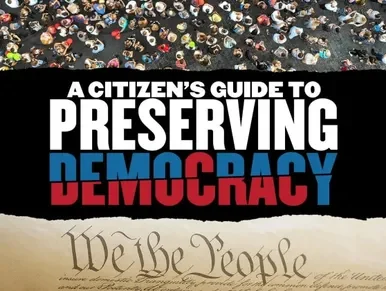
by PBS
With American democracy under threat, diplomat Dr. Richard Haass outlines ten habits to help citizens preserve democracy. Haass also explores real-life examples of Americans who are working towards strengthening democracy and renewing the spirit of a more informed and engaged citizenry. Premiered January 2, 2024 on PBS.
Watch the Video

HOPE
Harnessing Our Power to End (HOPE) Political Violence
Recommended by Bob B.
Here is the link to a 2024 data-driven guide for communities across the United States on how to organize to counter political violence and intimidation. Minneapolis has been using these techniques among others that were developed in 2020 in response to George Floyd’s murder to show how to build a “mutual aid culture” of caring and courage. There are lots of practical suggestions with context that Indivisible chapters and others can use.
ABOUT THIS GUIDE
Harnessing Our Power to End (HOPE) Political Violence is a guide for communities across the United States to organize to counter political violence.
It’s for people who recognize the dire stakes that political violence creates, and who want to work together nonviolently to protect our communities and uphold democracy.
The vast majority of people in the US – in cities and small towns, across party lines, and from all walks of life – oppose political violence. Together, we need to push back against those who want to silence our voices, who try to deny us our rights, and who aim to bully their way into political influence through intimidation and violence.

Reframing America
Changing the way the American Left engages in the public debate.
By Antonia Scatton
Recommended by Bob.
Article Feed
- Something I learned fighting the Chicago machine a long time ago.
- Back by popular demand! Here’s an updated list of ideas for protest signs!
- The antidote to gaslighting is to say what's true. Please add your own.
- War-mongers, pedos, billionaires, fossil-fuel addicts, corporate monopolists, and techno-fascists are totally out of control. We need accountability and common sense.
- I could not do this work without you.
- Stop using language that trips their “jargon” alarms.
- How to reset the agenda of the election debate.
- "One-pager" and more from Antonia Scatton and the Minnesota Messaging Group
- MLKs dream of solidarity lives on in Minnesota
- January 21, 2026: 8 PM EST / 7 PM CST / 6 PM MST / 5 PM PST

Courier Newsroom
COURIER is a pro-democracy news network that builds a more informed, engaged, and representative America by reaching audiences where they are online with factual, values-driven news and analysis.
COURIER’s local newsrooms provide Americans with news centered on the people and policies affecting their lives. Our reporting is primarily produced for the social media platforms and online channels our audiences spend their time on, with an emphasis on video, graphics, and skimmable newsletters to inform and engage our audiences in the ways they consume information today.

Ad Fontes Media
Ad Fontes Media is a public benefit corporation based in Colorado. Being a public benefit corporation means we are a for-profit business with a stated public mission, which is to rate all the news to positively transform society.
Fundamentally, we want to help bring people together. Misleading, inaccurate, and highly polarizing media content has driven so many of us apart. This affects everything from our familial relationships to our ability to create legislative solutions to our biggest challenges.
Ad Fontes is Latin for “to the source,” because at the heart of what Ad Fontes Media does is look at the source—analyze the very content itself—to rate it.
What We Do? We Rate the News
The information landscape is vast and noisy. We’re here to help you sort through it by rating sources for reliability and bias. Obviously, people have lots of different thoughts about how reliable and biased various news sources are, so we do everything we can to earn your trust.
News Feed
- Our analysts rated media coverage The post Topic of the Week: Security Lines at Airports Grow as TSA Remains Unfunded appeared first on Ad Fontes Media.
- 46 shows featured on March edition of Media Bias Chart® for podcasts The post Fox News and Rachel Maddow in the Green Box? Yes appeared first on Ad Fontes Media.
- Our analysts rated media coverage The post Topic of the Week: Preliminary Assessment: U.S. is Likely Responsible for Bombing of Iranian School appeared first on Ad Fontes Media.
- Our analysts rated media coverage The post Topic of the Week: Kristi Noem Fired as Secretary of Homeland Security appeared first on Ad Fontes Media.
- Make sure your sources of information are reliable and minimally biased The post Trying to Keep up on the News About the War in Iran? appeared first on Ad Fontes Media.
- Our analysts rated media coverage The post Topic of the Week: US and Israel Take Decisive Military Action Against Iran appeared first on Ad Fontes Media.
- Our analysts rated media coverage The post Topic of the Week: James Talarico Visits The Late Show with Stephen Colbert appeared first on Ad Fontes Media.
- February Media Bias Chart for TV/video features 39 sources The post When it Comes to News Consumption, TV is Still King appeared first on Ad Fontes Media.
- Our analysts rated media coverage The post Topic of the Week: AG Bondi Testifies Before the House on the Epstein Files appeared first on Ad Fontes Media.
- 49 shows featured on February edition The post Bongino Returns and Fuentes Debuts on Monthly Media Bias Chart® for Podcasts appeared first on Ad Fontes Media.
Builders

Rise Above US vs Them. Be a Builder
Recommended by: Bob B. – “Builders Movement, was launched by Starts With Us, and supported by Kind founder, Daniel Lubetsky.”
Our mission is to overcome “us vs. them” thinking and solve problems together. We equip people to uncover hidden common ground and build on it – with lasting solutions that reflect the will of the people.
News Feed
- How a politically diverse group of ordinary Wisconsin citizens turned a kitchen-table idea into the law of the land — and made their state the 49th to guarantee a full year of postpartum Medicaid coverage. When Governor Tony Evers stepped to the podium at a Wisconsin children’s hospital last Wednesday to sign legislation extending postpartum… The post Builders Like You Just Scored a Huge Legislative Victory for New Moms appeared first on Builders.
- Gallup Poll Finds New High of 45% in U.S. Identify as Political Independents — Here’s What That Means for the Future of Politics American politics can feel like a constant tug-of-war. Red versus blue. Left versus right. Us versus them. The rope has been pulled so hard for so long that a record number of… The post Nearly Half of Americans Now Identify as Political Independents appeared first on Builders.
- The Lone Star State Has Allocated $20 Billion to Solving Its Water Crisis. Some Experts Warn It’s Not Nearly Enough. Texas is a state built on growth. More people, more businesses, more cities rising from open land. For generations that growth felt almost limitless. But one resource may ultimately decide how far that growth can… The post Is Texas Running Out of Water? appeared first on Builders.
- How to stay grounded in reality — and humanity When the Iran War broke out, the public conversation escalated almost as quickly as the conflict itself. Within minutes, timelines filled with hot takes, sweeping claims, and people suddenly confident they solved Middle Eastern geopolitics between lunch and their third cup of coffee. But the Iran… The post What We Keep Getting Wrong About the Iran War appeared first on Builders.
- My name is Lucy, and I’ve been living in Israel for the past four and a half years. I work as a full-time scriptwriter for Builders of the Middle East, where I write content that amplifies the voices of real people across the region, especially those living in some of its most complex and conflicted… The post Humanity Is the One Thing War Can’t Take: Life in Israel During the Iran War appeared first on Builders.
- Primaries used to be the sad side salad of American democracy — technically part of the meal, but largely ignored. Now everyone wants a bite. And that shift could change everything about who ends up on your November ballot. Election season kicked off this week with the Texas, North Carolina, and Arkansas Primary Elections on… The post The Tides Are Turning This Election Season appeared first on Builders.
- Following the mass shooting in Downtown Austin this morning and the outbreak of war in the Middle East, Builders Movement is postponing its Texas Independence Day event scheduled for tomorrow, March 2, at the State Capitol until further notice. Monday’s event was intended to celebrate independence and civic participation ahead of Tuesday’s Primary Election. Out… The post Our Capitol Event on 3/2 Has Been Postponed Until Further Notice appeared first on Builders.
- By Sharon McMahon I am a person who has read the Minnesota state constitution for fun. I realize this makes me unusual. But when I ask most people what they could do this week to strengthen American democracy, they either go big — vote, protest, run for office — or they go nowhere, because nothing… The post What If It’s Simpler Than You Think? appeared first on Builders.
- Every election cycle, a fresh wave of misinformation sweeps through Texas — on social media, in group chats, and sometimes even on the news. These myths don’t just spread confusion. They actively discourage people from voting. As we approach the Texas primary election on March 3, let’s set the record straight on six of the… The post 6 Texas Voting Myths, Debunked appeared first on Builders.
- The first question every voter should ask when evaluating a candidate By Brian Hamilton My dad never graduated from high school. He used to tell me: “Brian, talking ain’t doing.” Despite not having the fancy degrees that many of us hold, my father instinctively knew the importance of action. One of our better presidents, Teddy… The post Have They Ever Built Anything? appeared first on Builders.
- We’re Launching a Get-Out-The-Vote Campaign Inspired by Texas’s Strangest and Most Beloved Mascot: The Armadillo In Texas, we have a state mammal that tells the whole story. When threatened, the armadillo rolls up into a tight little ball. Head down. Feet tucked in. Wait it out. It’s exactly what too many Texans do every primary… The post Don’t Roll Over, Texas appeared first on Builders.
- Voting based on who will actually govern effectively is hard. It requires asking questions that go deeper than party labels, campaign slogans, and who “won” the last debate. If you’re tired of representatives who perform for their base instead of solving problems, here are five questions to ask before you cast your vote. These aren’t… The post 5 Questions to Ask Before You Vote appeared first on Builders.

Grand Bargain Project

Recommended by: Bob B. – “A nonprofit working to create large collaborative projects to promote consensus policies frameworks with details that could be enacted by Congress on the basis of broad acceptance within the country from Democrats, Republicans, and Independents.”
In a recent YouGov poll, 83% of citizens wanted lawmakers from both parties to make our package of 39 life-enhancing reforms “a priority.”
These reforms would significantly advance citizens’ long-thwarted aspirations for:
-
Greater economic opportunity and growth
-
Schools that enable kids to reach their potential
-
Effective & affordable healthcare
-
Curbing the national debt
-
Reliable, clean & affordable energy
-
Fairer, simpler tax code
-
Congress organized to resolve our differences

Among the reforms that voters across the spectrum support, all but two have been around for years.
Congress has enacted NONE
The reason: Lawmakers win reelection over 90% of the time by blaming the other party for our critical problems and offering sound bites as remedies.
To overcome these dysfunctions, the Grand Bargain includes three reforms that would reward lawmakers who make major progress on our long-term ills — while those who stood in the way would be likely to lose their seats.
Hear Vinay Orekondy from the Grand Bargain Project talk passionately about our project at EarthX 2025 as part of a Rotaract Club spotlight.
News Feed
- The current Grand Bargain would produce vastly more benefits to society than the major legislation of this century, while shrinking the debt as a percentage of GDP.
- America’s housing crisis isn’t just a “housing” issue; it’s an economic mobility issue.
- For Independents, it’s not about reinventing the entire legislative process – it’s about re-designing the incentives and the system so that they work to benefit the American people.
- The avenue for unity already exists. The Grand Bargain Project is the roadmap to get us all there.
- Recently, our founder and CEO Sol Erdman, wrote about why the Grand Bargain framework needed to be updated to include a 7th aspiration
- To uplift the aspirations of the American people and identify a roadmap that could achieve them.
- Generation Z – adults aged 18-29 – represented by far the lowest turnout in the 2024 election, with only around 20 million voting despite more than double that number being eligible.
- When communities struggle, the economy weakens, workforce shortages increase, and political divides deepen. If leaders continue to ignore these issues, the long-term consequences will be severe.
- America, much like our universe, has always been a nation in motion. It has weathered crises, conflicts, and economic upheavals, yet through the lens of history, the country maintains a sense of forward momentum.
- In a recent conversation with Lura Forcum, President at the Independent Center, it became clear just how much thought and purpose is driving this quiet movement. From voter education to future electoral influence, the Independent Center is carving out space for independents to belong and lead.
- Smart budgeting isn’t about reducing numbers on a spreadsheet for a single fiscal year it’s about building the conditions for long-term growth
- As individuals grow from childhood dependence to adult independence, true maturity comes when we recognize that we are stronger when we work together
How to Know a Person
The Art of Seeing Others Deeply and Being Deeply Seen
by David Brooks
Summary
Recommended by Bob
Driven by his trademark sense of curiosity and his determination to grow as a person, David Brooks draws from the fields of psychology and neuroscience and from the worlds of theater, philosophy, history, and education to present a welcoming, hopeful, integrated approach to human connection. How to Know a Person helps readers become more understanding and considerate toward others, and to find the joy that comes from being seen. Along the way it offers a possible remedy for a society that is riven by fragmentation, hostility, and misperception.
Continue reading How to Know a PersonDemocracy Awakening
Notes on the State of America
by Heather Cox Richardson
Publisher: Penguin Random House
At a time when the very foundations of American democracy seem under threat, the lessons of the past offer a road map for navigating a moment of political crisis. In Democracy Awakening, acclaimed historian Heather Cox Richardson delves into the tumultuous journey of American democracy, tracing the roots of Donald Trump’s “authoritarian experiment” to the earliest days of the republic. She examines the historical forces that have led to the current political climate, showing how modern conservatism has preyed upon a disaffected population, weaponizing language and promoting false history to consolidate power.
With remarkable clarity and the same accessible voice that brings millions to her newsletter, Letters from an American, Richardson wrangles a chaotic news feed into a story that pivots effortlessly from the Founders to the abolitionists to Nixon to the January 6 insurrection. An essential read for anyone concerned about the state of America, Democracy Awakening is more than a history book; it’s a call to action. Richardson reminds us that democracy requires constant vigilance and participation from all of us, showing how we, as a nation, can take the lessons of the past to secure a more just and equitable future.
Heather Cox Richardson | Democracy Awakening
Buy
Heather Cox Richardson
Historians are fond of saying that the past doesn’t repeat itself; it rhymes.
To understand the present, we have to understand how we got here.
That’s where this newsletter comes in.
I’m a professor of American history. This is a chronicle of today’s political landscape, but because you can’t get a grip on today’s politics without an outline of America’s Constitution, and laws, and the economy, and social customs, this newsletter explores what it means, and what it has meant, to be an American.
These were the same questions a famous observer asked in a book of letters he published in 1782, the year before the Treaty of Paris ended the Revolutionary War.
Hector St. John de Crevecoeur called his book “Letters from an American Farmer.”
Like I say, history doesn’t repeat itself, but it sure rhymes.
Latest Posts
- In an interview with Reuters on Monday, Singapore’s minister for foreign affairs, Dr.
- Yesterday Trump told reporters that Iran “gave us a present and the present arrived today.
- This morning, economist Paul Krugman came right out and said it: “People close to Trump are trading based on national secrets.” Another word for that, he said, is “treason.” The evidence for such a claim is the sudden and isolated jump in trading volume in S&P 500 and oil futures about 15 minutes before Trump suddenly announced that the U.S.
- Listen now |
- Shortly after the close of the U.S.
- President Donald J.

Prequel
An American Fight Against Fascism
By Rachel Maddow
Inspired by her research for the hit podcast Ultra, Rachel Maddow charts the rise of a wild American strain of authoritarianism that has been alive on the far-right edge of our politics for the better part of a century. Before and even after our troops had begun fighting abroad in World War II, a clandestine network flooded the country with disinformation aimed at sapping the strength of the U.S. war effort and persuading Americans that our natural alliance was with the Axis, not against it. It was a sophisticated and shockingly well-funded campaign to undermine democratic institutions, promote antisemitism, and destroy citizens’ confidence in their elected leaders, with the ultimate goal of overthrowing the U.S. government and installing authoritarian rule.
Continue reading Prequel
The Conspiracy to End America

Five Ways My Old Party Is Driving Our Democracy to Autocracy
by Stuart Stevens
Publisher: Hachette Book Group
Former chief Republican strategist, Lincoln Project adviser, and bestselling author of It Was All a Lie, Stuart Stevens offers an ominous warning that the GOP is dragging our country toward autocracy—and if we don’t wake up to the crisis in our system, 2024 may well be our last free and fair election.
INTERVIEW: Stuart Stevens talks to Brian Watt (KQED) at the Commonwealth Club
Buy

The Divider

Trump in the White House, 2017-2021
by Peter Baker and Susan Glasser
Publisher: Vintage
The Divider brings us into the Oval Office for countless scenes both tense and comical, revealing how close we got to nuclear war with North Korea, which cabinet members had a resignation pact, whether Trump asked Japan’s prime minister to nominate him for a Nobel Prize and much more. The book also explores the moral choices confronting those around Trump—how they justified working for a man they considered unfit for office, and where they drew their lines.
INTERVIEW: Susan Glasser and Peter Baker on C-SPAN
Review
Buy
Muffle MAGA’s Megaphone
SWING LEFT PENINSULA created these engaging videos to help spread the word effectively that things are better when Democrats are in office AND to counter MAGA Republicans’ anti-democracy messages.
To Muffle the MAGAphone:
- Avoid amplifying MAGA messages.
- Amplify pro-Democracy messages.
- Don’t Repeat Disinformation – What’s the best thing to do when encountering MAGA disinformation? NOTHING!
- Ignore DogWhistles – Ever wonder why MAGA Republicans repeat certain words and phrases? Hint: Dog whistles
- Stay United! – Why do MAGA Republicans spend so much time attacking an ever-growing list of others?
- Frame It Our Way! – We need to avoid repeating MAGA GOP frames, even to refute them. Talk about the good stuff – what we need for all Americans to thrive.
- Share Effectively – What makes an effective message? Lead with shared values. Identify who stands in the way of those values and why. End with your vision for a better future.
Why Do Conservatives Fall For Fake News?
Leeja Miller’s deep dive into how people fall for fake news. (28 min.)
Why do conservatives fall for fake news? Is it just them, or are we all culpable? How did Americans become so susceptible to falling for disinformation? And what can we do about it??

Peril

by Bob Woodward and Robert Costa
Publisher: Simon & Schuster
Woodward and Costa interviewed more than 200 people at the center of the turmoil, resulting in more than 6,000 pages of transcripts—and a spellbinding and definitive portrait of a nation on the brink. This classic study of Washington takes readers deep inside the Trump White House, the Biden White House, the 2020 campaign, and the Pentagon and Congress, with vivid, eyewitness accounts of what really happened.
Woodward and Costa on Washington Post Live
Buy

Words that Win – The 3V Messaging Framework
VALUES, VILLAINS, and VISION
Communications consultant Anat Shenker-Osorio developed the 3V messaging framework. Effective 3V messages:
- lead with shared values,
- name the villains and their motives for opposing those values,
- present your vision for a better future.
As linguist George Lakoff says, “People vote based on values, connection, authenticity, trust and identity” – not lists of policies and facts.
BAC’s 3V Messaging Library
The Bay Area Coalition offers 3V statements on the critical issues of our time.
January 6th Committee Report
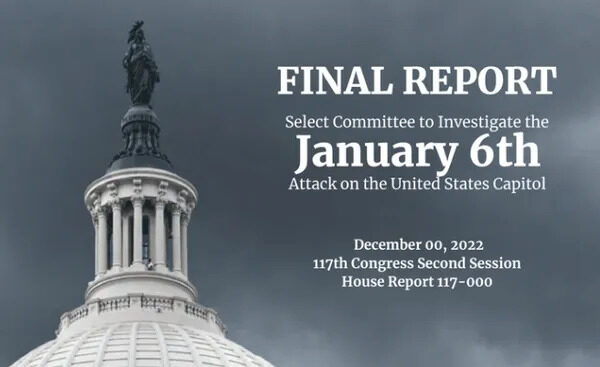
by Select Committee
“The Select Committee to Investigate the January 6th Attack has succeeded in bringing clarity and demonstrating with painstaking detail the fragility of our Democracy. Above all, the work of the Select Committee underscores that our democratic institutions are only as strong as the commitment of those who are entrusted with their care.
As the Select Committee concludes its work, their words must be a clarion call to all Americans: to vigilantly guard our Democracy and to give our vote only to those dutiful in their defense of our Constitution.”
Nancy Pelosi, Speaker of the House

Of Men and Boys

Why the Modern Male Is Struggling, Why It Matters, and What to Do about It
by Richard V. Reeves
Publisher: Brookings Institution Press
Recommended by: Bob B.
“The problem with men is typically framed as a problem of men,” writes Reeves. “It is men who must be fixed, one man or boy at a time. This individualist approach is wrong.” Instead, he maintains there are structural problems, societal issues, that need to be addressed if men are not to become ever more lost, defeated and angry.
Review

State Legislatures Are Torching Democracy
Even in moderate places like Ohio, gerrymandering has let unchecked Republicans pass extremist laws that could never make it through Congress.
by Jane Mayer
Summary
Even in moderate places like Ohio, gerrymandering has let unchecked Republicans pass extremist laws that could never make it through Congress.
Publisher: The Atlantic
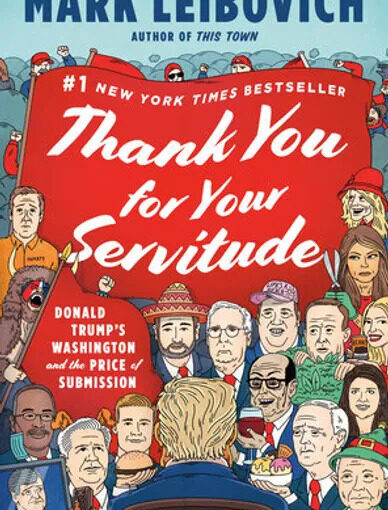
Thank You for Your Servitude
Donald Trump’s Washington and the Price of Submission
By Mark Leibovich
Publisher: Penguin Press
Recommended by Cindi
“This is a really funny book.” Kara Swisher.
Mark Leibovich’s unflinching account of the moral rout of a major American political party, tracking the transformation of Rubio, Cruz, Graham, and their ilk into the administration’s chief enablers, and the swamp’s lesser lights into frantic chasers of the grift…isn’t another view from the Oval Office: it’s the view from the Trump Hotel.

Why We Did It
A Travelogue From the Republican Road to Hell
by Tim Miller
Publisher: Harper Collins Publishers
Recommended by: Cindi Sears
In a bracingly honest reflection on both his own past work for the Republican Party and the contortions of his former peers in the GOP establishment, Tim Miller draws a straight line between the actions of the 2000s GOP to the Republican political class’s Trumpian takeover, including the horrors of January 6th.
From ruminations on the mental jujitsu that allowed him as a gay man to justify becoming a hitman for homophobes, to astonishingly raw interviews with former colleagues who jumped on the Trump Train, Miller diagrams the flattering and delusional stories GOP operatives tell themselves so they can sleep at night. With a humorous touch he reveals Reince Priebus’ neediness, Sean Spicer’s desperation, Elise Stefanik and Chris Christie’s raw ambition, and his close friends’ submission to a MAGA psychosis.
Why We Did It is a vital, darkly satirical warning that all the narcissistic justifications that got us to this place still thrive within the Republican party, which means they will continue to make the same mistakes and political calculations that got us here, with disastrous consequences for the nation
Read Review
Feel Good Action
Using the power of social networks and digital media, we motivate individual and collective action to advance resilient communities, just societies, and a healthy planet.
95% of young people are on social media.
Relationships, ideas, and images of our lives are shaped and shared on social media every day. In partnership with Feel Good Action, influencers are leading their followers to ACT.
After The Fall

The rise of Authoritarianism in the world we've made
by Bden Rhodes
Publisher: Random House
At a time when democracy in the United States is endangered as never before, Ben Rhodes spent years traveling the world to understand why. He visited dozens of countries, meeting with politicians and activists confronting the same nationalism and authoritarianism that are tearing America apart. Along the way, he discusses the growing authoritarianism of Vladimir Putin, and his aggression towards Ukraine, with the foremost opposition leader in Russia, who was subsequently poisoned and imprisoned; he profiled Hong Kong protesters who saw their movement snuffed out by China under Xi Jinping; and America itself reached the precipice of losing democracy before giving itself a fragile second chance.
High Conflict
Why We Get Trapped and How We Get Out
by Amanda Ripley
Publisher: Simon and Schuster
Recommended by: Cindi, Bob & Linda
When we are baffled by the insanity of the “other side”—in our politics, at work, or at home—it’s because we aren’t seeing how the conflict itself has taken over. That’s what “high conflict” does. It’s the invisible hand of our time. And it’s different from the useful friction of “healthy conflict”. That’s good conflict, and it’s a necessary force that pushes us to be better people.
Read Review
Buy

Insurgency

How Republicans Lost Their Party and Got Everything They Ever Wanted
by Jeremy W. Peters
Publisher: Random House Publishing House
NYTimes reporter, Jeremy W. Peters’ epic narrative chronicles the fracturing of the Republican Party. Insurgency is a fantasia-like story of a party establishment that believed it could control the dark energy it helped foment—right up until it suddenly couldn’t. How, Peters asks, did conservative values that Republicans claimed to cherish, like small government, fiscal responsibility, and morality get completely eroded?
Read Review
Buy

How Civil Wars Start

and How To Stop Them
by Barbara F. Walter
Publisher: Crown
Barbara F. Walter, a political science professor at U.C. San Diego, has spent over three decades studying civil conflict. Over the last two decades, the number of active civil wars around the world has almost doubled. Walter reveals the warning signs—where wars tend to start, who initiates them, what triggers them—and why some countries tip over into conflict while others remain stable. Drawing on the latest international research and lessons from over twenty countries, Walter identifies the crucial risk factors, from democratic backsliding to factionalization and the politics of resentment. A civil war today won’t look like America in the 1860s, Russia in the 1920s, or Spain in the 1930s. It will begin with sporadic acts of violence and terror, accelerated by social media. It will sneak up on us and leave us wondering how we could have been so blind.
Read Review
Buy
Unthinkable
Trauma, Truth and the Trials of American Democracy
by James Raskin
Publisher: Harper
In this searing memoir, Congressman Jamie Raskin tells the story of the forty-five days at the start of 2021 that permanently changed his life—and his family’s—as he confronted the painful loss of his son to suicide, lived through the violent insurrection in our nation’s Capital, and led the impeachment effort to hold President Trump accountable for inciting the political violence.
Jamie Raskin in conversation at The National Arts Club
Buy
Lincoln Square


Newsletter
Publisher: Lincoln Square
When you join Lincoln Square, you are more than a passive consumer of content – You are a critical member of the Ferocious Opposition. We’ll provide you with the truth that you need and the tools to help spread the antidote to Trump, MAGA, Musk, and what once was a legitimate major political party in our country, the Republicans.
Lincoln Square founders introduce LSM here.
About
Lincoln Square is a collaborative effort with The Lincoln Project, America’s leading pro-democracy organization. It’s an ambitious effort to rethink how the media fights against autocracy, disinformation, and the flood of attacks on truth and our democracy. We don’t pull punches. We don’t cower in fear and hope Trump, Musk, and their minions don’t notice us and be spared their wrath.
We aren’t legacy media. We don’t have billionaire backers or corporate overlords directing what we can and cannot say.
Our mission is to expose, inspire, inform, lead, and connect — and give you the tools not just to fight back, but fight forward for the America we all deserve – not just the broligarchs and kleptocrats. We fight for the rights of all of us because it takes all of us for America to achieve her extraordinary potential. And we’re getting louder than ever with podcasts, live streaming, digital and social media, commentary, articles, town halls, public and virtual community gatherings, and strategy calls with people like Rick Wilson, Stuart Stevens, and Joe Trippi, who have led the biggest campaigns — and won.
Latest Articles
The Art & Science of Persuasion Playbook
A Message from Galvanize Action about a huge block of persuadable voters!
“White women are the largest voting bloc in this country and will be for decades to come. They account for 38% of the national vote share and 43% of the vote share across Galvanize Action’s priority states. Within this voting bloc, we’ve identified 44,093,812 moderate women who are not ideologically entrenched, meaning they are open to new ideas and perspectives and movable on key issues such as reproductive freedom, healthcare, gender equity, climate, and the economy.”
Galvanize Action has a fabulous interactive messaging worksheet we can all use!
Galvanize Action says, “We’ll share with you exactly how to create a message that meets people at their values and how to turn those into an effective ad. Our interactive worksheet will guide you through the process with prompts about your target audience and the issue you want to move them on. You’ll walk away with customized advice!”


Betrayal

The Final Act of the Trump Show
by Johnathan Karl
Publisher: Dutton
This is the explosive look at the aftermath of the 2020 election–and the January 6th uprising–from ABC News’ chief Washington correspondent, Jonathan Karl. Jonathan Karl, the reporter who has known Donald Trump longer than any other White House correspondent, Karl told the story of Trump’s rise in the New York Times bestseller Front Row at the Trump Show. Now he tells the story of Trump’s downfall, complete with riveting behind-the-scenes accounts of some of the darkest days in the history of the American presidency and packed with original reporting and on-the-record interviews with central figures in this drama who are telling their stories for the first time.
Buy

Corruptible
Who Gets Power and How It Changes Us
By: Brian Klaas
Publisher: Scribner
Recommended by: Bruce R.
Does power corrupt, or are corrupt people drawn to power? Are tyrants made or born? Are entrepreneurs who embezzle and cops who kill the result of poorly designed systems or are they just bad people? If you were suddenly thrust into a position of power, would you be able to resist the temptation to line your pockets or seek revenge against your enemies?
To answer these questions, Corruptible draws on over 500 interviews with some of the world’s top leaders—from the noblest to the dirtiest—including presidents and philanthropists as well as rebels, cultists, and dictators. Some of the fascinating insights include: how facial appearance determines who we pick as leaders, why narcissists make more money, why some people don’t want power at all and others are drawn to it out of a psychopathic impulse, and why being the “beta” (second in command) may actually be the optimal place for health and well-being.
Corruptible also features a wealth of counterintuitive examples from history and social science: you’ll meet the worst bioterrorist in American history, hit the slopes with a ski instructor who once ruled Iraq, and learn why the inability of chimpanzees to play baseball is central to the development of human hierarchies.
The Election Sabotage Scheme and How Congress Can Stop It

The Freedom to Vote Act can halt this growing antidemocratic threat.
by Will Wilder, Derek Tisler, Wendy R. Weiser
Publisher: Brennan Center for Justice
Essentially this article addresses laws and proposed legislation enabling partisan interference in election administration as part of a broader “election sabotage” or “election subversion” campaign, a national push to enable partisans to distort democratic outcomes.
Read Article
Professor Jason Stanley outlines how fascism takes over a country
Fascism is a cult of the leader, who promises national restoration in the face of supposed humiliation by immigrants, leftists, liberals, minorities, homosexuals, women, in the face of what the fascist leader says is a takeover of the country’s media, cultural institutions, schools by these forces.
Fascist movements typically, though not invariably, rest on an urban/rural divide. The cities are where there’s decadence, where the elites congregate, where there’s immigrants, and where there’s criminality.
Each of these individuals alone is not in and of itself fascist, but you have to worry when they’re all grouped together, seeing the other as less than. Those moments are the times when societies need to worry about fascism.
Laboratories of Autocracy

A Wake-Up Call From Behind The Lines
by David Pepper
Publisher: St. Helena Press
Recommended by: Cindi Sears
David Pepper shows that far more than the high-profile antics of national politicians and Trump himself, it’s anonymous, often corrupt politicians in statehouses across the country who pose the greatest dangers to American democracy. Amid all the chaos, these statehouses are hard at work, every day, hacking away at core principles and protections of our democratic system. And they’re getting more audacious every year.
Because these statehouses no longer operate as functioning democracies, these unknown politicians have all the incentive to keep doing greater damage, and can not be held accountable however extreme they get. This has driven steep declines in states like Ohio and others across the country. And collectively, it’s placed American democracy in its greatest peril since the dawn of the Jim Crow era.
But Pepper doesn’t stop there. He lays out a robust pro-democracy agenda outlining how everyone from elected officials to business leaders to everyday citizens can fight back.
Read Review
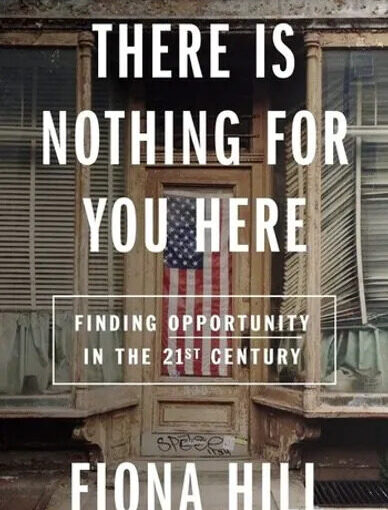
There’s Nothing For You Here

Finding Opportunity in the 21st Century
by Fiona Hill
Publisher: Mariner Books
A celebrated foreign-policy expert and key impeachment witness reveals how declining opportunity has set America on the grim path of modern Russia – and draws on her personal journey out of poverty, and her unique perspectives as a historian and policy maker, to show how we can return hope to our forgotten places.
Fiona Hill grew up in a world of terminal decay. The last of the local mines had closed, businesses were shuttering, and despair was etched in the faces around her. Her father urged her to get out of their blighted corner of northern England: “There is nothing for you here, pet,” he said.
The coal-miner’s daughter managed to go further than he ever could have dreamed. She studied in Moscow and at Harvard, became an American citizen, and served three U.S. Presidents. But in the heartlands of both Russia and the United States, she saw troubling reflections of her hometown and similar populist impulses. By the time she offered her brave testimony in the first impeachment inquiry of President Trump, Hill knew that the desperation of forgotten people was driving American politics over the brink—and that we were running out of time to save ourselves from Russia’s fate. In this powerful, deeply personal account, she shares what she has learned, and shows why expanding opportunity is the only long-term hope for our democracy.
Read Review
Buy
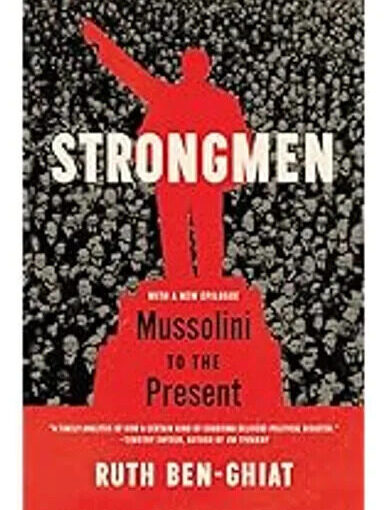
Strongmen
Mussolini to the Present
by Ruth Ben-Ghiat
Publisher: W. W. Norton & Company
Ruth Ben-Ghiat is the expert on the “strongman” playbook employed by authoritarian demagogues from Mussolini to Putin—enabling her to predict with uncanny accuracy the recent experience in America and Europe. In Strongmen, she lays bare the blueprint these leaders have followed over the past 100 years, and empowers us to recognize, resist, and prevent their disastrous rule in the future.
Read Review
Ruth Ben-Ghiat interviewed by Dean Peter Arnade at University of Hawai
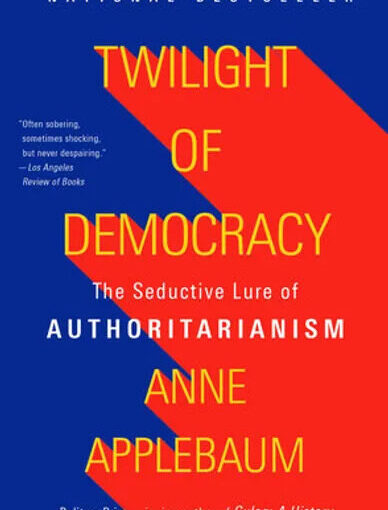
Twilight of Democracy
The Seductive Lure of Authoritarianism
Recommended by: Linda and Cindi
Despotic leaders do not rule alone; they rely on political allies, bureaucrats, and media figures to pave their way and support their rule. The authoritarian and nationalist parties that have arisen within modern democracies offer new paths to wealth or power for their adherents.