
Tag: feature
Featured menu will list posts with this tag.
A Call to Freeze ICE
Suspend all ICE activities pending judicial review of their methods.
By: Antonia Scatton

Publisher: Reframing America
There are many, many demands we can make about ICE including reforming it, replacing it with something better, or at minimum, repealing the recent massive funding increases. But those take time. We need action now. We need to call for an immediate suspension of activities, an appropriately named “freeze,” to stop the harm right now. A temporary freeze is a good place to start. It is both drastic and reasonable.
WHAT: Our Demands
- FREEZE OPERATIONS pending LEGAL AND CONSTITUTIONAL REVIEW: Immediately suspend ICE activities and have agents withdraw to their local base. All out-of-state agents conducting “surge” activities should be returned to their home states until further notice.
- DETAINEE STATUS REPORT: No more “disappearing” people.
- List and account for every person detained or arrested by ICE and where they are now (including whether those detained were/are U.S. Citizens, people following the legal immigration process, previous status as a humanitarian parolee, DREAMers, long term residents with no record of violent crime, etc.)
- Every detained person must have the ability to contact their families and access legal representation and a fair and timely hearing.
- Assess the conditions of all detention facilities and assure that all detainees are being held under humane and legal conditions.
- INCIDENT REPORT: No more extrajudicial violence.
- Immediate inventory of all incidents involving shootings, beatings, injury, death, use of chemical weapons, as well as confrontation, investigation and/or arrest of protesters, legal observers, or U.S. citizens.
- Review the legality of above incidents and whether they violate constitutional rights, specifically the First, Fourth and Tenth Amendments of the Constitution.
- All cases of illegal arrest and use of force and/or violation of Constitutional rights should be referred to appropriate jurisdictions for prosecution.
- OPERATIONAL LIMITS:
- ICE must only arrest specific persons using judicial warrants. No racial profiling. No arrests in schools, churches, or medical facilities. ICE must not enter private homes or businesses without search warrants.
- ICE is not to conduct non-immigration-related law enforcement.
- DHS/ICE must provide and commit to clear definitions as to who is eligible for arrest on immigration law violations and why, such as record of being convicted of a violent crime or having crossed the border outside legal border crossings and being ineligible for the asylum process. DHS/ICE must provide and commit to clear definition of who is not eligible for arrest.
- DHS/ICE must agree to crystal clear terms of engagement and use of force: when agents are allowed to stop people, ask for identification, or draw and/or use weapons including vehicles, guns and chemical weapons.
- All arrests must be carried out with respect for due process and the Constitutional rights of suspects.
- Agents must not wear masks. Agents must identify themselves; with their name, department/division and badge number clearly visible. Vehicles must be clearly identified as ICE or DHS. Agents must use body cameras at all times.
- ENFORCEMENT AND RIGHTS OF OBSERVERS:
- DHS and ICE must agree to these terms before resuming operations. Concrete consequences of violating these terms must be laid out in advance and enforced.
- Protesters and legal observers must be provided clear definitions of their rights and responsibilities. Constitutional rights to protest and observe must be respected. We need clear definitions of what does or does not constitute “interfering” with federal agents. Consequences of clearly unlawful interference should be clearly defined in advance and proportionate, not a free pass for extrajudicial violence or murder.
- DHS/ICE must defer to and coordinate with state and local law enforcement. Agents should not operate without the approval of state leadership. Local law enforcement must be able to supervise activities and stop any violations. DHS and the FBI must share all evidence of incidents and work with state and local law enforcement on all investigations.
More Reframing America articles
ACTION HUB – Click on photo to learn more!
Pressure Reps to Act!

Attend Protests!

Attend Town Halls

Promote Constructive Conversation

Stay Informed & Avoid Disinformation
Support Pro-Democracy Organizations and Litigation


Stop ICE Raids Alert Network
Nation-Wide Mobile Alert System
by Sherman Austin
The Stop ICE Raids Alert Network lets you send and receive mobile alerts about nearby ICE activity whenever and wherever it occurs.
No downloadable app required. StopICE works with technology already built into your phone. Send and receive mobile alerts via text message, or at stopice.net, from any mobile device with a tap of a button.
Adjust your notification settings at any time to receive alerts within a certain mile radius of your neighborhood.
Alerts are crowd-sourced by the public. This means alerts are sent directly by people from their communities.
Noncooperation & Targeting Pillars of Support

This handout describes some of the Pillars of Support.
Each time a pillar institution yields to or supports the regime, the regime grows stronger. In contrast, noncooperation — refusing to do what is expected, disrupting the normal course of events, and withdrawing support from unjust or illegal policies — weakens the regime and creates cracks in its foundation of power.
PDF Handout
One Million Rising

by Indivisible
Publisher: No Kings
Across the country, authoritarian forces are getting bolder and more dangerous. Trump and his allies are not hiding their agenda: mass deportations, rollbacks of civil rights, weaponized courts, and full-scale attacks on our democracy. We don’t have to wait until it’s too late. We can stop this. But it’ll take all of us—not just single days of mass action, but sustained organizing in our communities.
That’s why this summer, we’re launching One Million Rising—a national effort to train one million people in the strategic logic and practice of non-cooperation, as well as the basics of community organizing and campaign design. This is how we build people power that can’t be ignored. You’re invited to join us—and lead.
You can visit the site to see the recorded videos and access the training materials.
https://www.nokings.org/rise
Outraged

Why We Fight About Morality and Politics and How to Find Common Ground
By Kurt Gray
Publisher: Pantheon
It’s easy to assume that liberals and conservatives have radically different moral foundations. In Outraged, Kurt Gray showcases the latest science to demonstrate that we all have the same moral mind—that everyone’s moral judgments stem from feeling threatened or vulnerable to harm.
We all care about protecting ourselves and the vulnerable. Conflict arises, however, when we have different perceptions of harm. We get outraged when we disagree about who the “real” victim is, whether we’re talking about political issues, fights with our in-laws, or arguments on the playground.
In this fascinating and insightful tour of our moral minds, Gray tackles popular myths that prevent us from understanding ourselves and those around us. While it is commonly believed that our ancestors were apex predators, Gray argues that for the majority of our evolutionary history, humans were more hunted than hunter. This explains why our minds are hard-wired to perceive threats, and provides surprising insights on the scientific origins of our values and beliefs. Though we might think ourselves driven by objective reasoning, Gray unveils new research that finds our moral judgments are based on gut feelings rather than rational thought, and presents a compelling reminder that we are more alike than we might think.
Drawing on groundbreaking research, Gray provides a captivating new explanation for our moral outrage, and unpacks how to best bridge divides. If you want to understand the morals of the “other side,” ask yourself a simple question—what harms do they see?
Corruptible
Who Gets Power and How It Changes Us
By: Brian Klaas
Publisher: Scribner
Recommended by: Bruce R.
Does power corrupt, or are corrupt people drawn to power? Are tyrants made or born? Are entrepreneurs who embezzle and cops who kill the result of poorly designed systems or are they just bad people? If you were suddenly thrust into a position of power, would you be able to resist the temptation to line your pockets or seek revenge against your enemies?
To answer these questions, Corruptible draws on over 500 interviews with some of the world’s top leaders—from the noblest to the dirtiest—including presidents and philanthropists as well as rebels, cultists, and dictators. Some of the fascinating insights include: how facial appearance determines who we pick as leaders, why narcissists make more money, why some people don’t want power at all and others are drawn to it out of a psychopathic impulse, and why being the “beta” (second in command) may actually be the optimal place for health and well-being.
Corruptible also features a wealth of counterintuitive examples from history and social science: you’ll meet the worst bioterrorist in American history, hit the slopes with a ski instructor who once ruled Iraq, and learn why the inability of chimpanzees to play baseball is central to the development of human hierarchies.
How to Citizen with Baratunde
By Baratunde Thurston
Recommended by: Bob
Here are some sources of ideas from a podcast by Baratunde Thurston, which began in 2020 and has four seasons of episodes. The overall theme is encouraging thinking about “citizen” as a verb. The four
pillars for doing this are:
- To participate, not just vote, but to show up for each other and publicly participate by discussing concerns, debating policy choices, advocating, etc.
- To invest in relationships, by deepening our interconnections with our community, family, neighbors, etc..
- To understand power, by learning about the fluidity of power and the various ways we the people can use it for our collective benefit.
- To value the collective, by working towards outcomes that benefit the many, not just the few.
The four seasons of episodes (ranging from 11 to 16 episodes each season) consist of interviews with folks who are thinking about and demonstrating democracy-building activities. It’s a wonderful resource for ideas. They include international, national, statewide, and local leaders.
Indivisible.org
Table of Contents
In America, we don’t do kings.
We’re a grassroots movement of thousands of local Indivisible groups with a mission to elect progressive leaders, rebuild our democracy, and defeat the Trump agenda.
Indivisible National Organization
How we win
Defeating a multi-decade right-wing takeover of American government ain’t easy. But we’re here to win, and we have a plan. Here’s how we’re doing it:
We Are Indivisible. Our opponents depend on a divide-and-conquer strategy, so we treat an attack on one like an attack on all. We show up for each other, and particularly for those facing the brunt of right-wing ideologues’ attacks – often immigrants, people of color, and low-income people. We share a vision: a real democracy, of, by, and for everyone.
Strong Leaders, Strong Groups, Strong Movement. We build and sustain our movement’s power by helping individuals take leadership. They grow and lead local Indivisible groups, take independent action, and coordinate with their fellow local leaders. As a movement, our power comes from coordinated national campaigns where we act together, indivisible.
Inside/Outside Strategy. We understand systems of power – like how Congress operates – and we work inside them to get results. That complements our outside strategy of locally-based constituent pressure to demand elected leaders, regardless of political party, work for our democracy.
A Virtuous Cycle of Advocacy and Elections. We show up to advocate for policy wins in off-years and get out the vote in election years. These efforts reinforce each other to ensure our democracy works for all of us and that the people in power do too – or we will replace them with electeds who will.
Indivisible’s LinkTree
Instagram: indivisibleteam
Indivisible’s YouTube Channel
Indivisible No Kings Spot: A Weak, Failing Wannabe-King.
—–
Indivisible is a national grassroots movement dedicated to building progressive power and fixing our democracy. …We have hundreds of groups around the country fighting for D.C. statehood, court reform, racial justice, climate justice, and more. Subscribe to our channel today!
website: https://indivisible.org/
facebook: https://www.facebook.com/indivisibleguide/
threads: https://www.threads.net/@indivisibleteam
Tiktok: https://tiktok.com/@indivisibleguide
Instagram: https://instagram.com/indivisibleteam
Mastodon: https://mastodon.social/@indivisibleteam
BlueSky: https://bsky.app/profile/indivisibleguide.bsky.social
Twitter: https://x.com/indivisibleteamShow More

Indivisible No Kings Spot: A Weak, Failing Wannabe-King.
On March 28, we rise up in nonviolent protest all across the country. Join us: https://www.nokings.org/?SQF_SOURCE=indivisible —– Indivisible is a national grassroots movement dedicated to building progressive power and fixing our democracy. We have hundreds of groups around the country fighting for D.C. statehood, court reform, racial justice, climate justice, and more. Subscribe to our channel today! website: https://indivisible.org/ facebook: https://www.facebook.com/indivisibleguide/ …

Hell yeah it's No Kings 3 — here's how to make it massive
March 28th. 3000+ protests. No Kings 3. Leah breaks down the strategic logic — why Trump fears mass protest, what we can actually accomplish, and what comes next. Ezra shares a dead-simple ‘tripling’ tactic to get your friends, family, and neighbors off the couch and into the streets. Plus: live Q&A, including why the single best message against Trump is that he doesn’t give two flying fucks about you. 0:00 – Start 16:57 – Q&A —– About What’s the Plan: The onslaught of news, the chaos …

No Kings Kickoff Call: Join us March 28
On March 28, millions of us are rising again to show the world: the power belongs to the people. We don’t do kings in America. Our nonviolent movement is only growing. Join our Kickoff Call to learn more about the vision, urgency, and strategy behind this national day of action. Whether you’re brand new or a seasoned organizer, the time to act is now! You’ll hear from movement leaders about the strategic and moral imperative behind the next No Kings mobilization. —– Join up, get to work, …
No Forever Wars
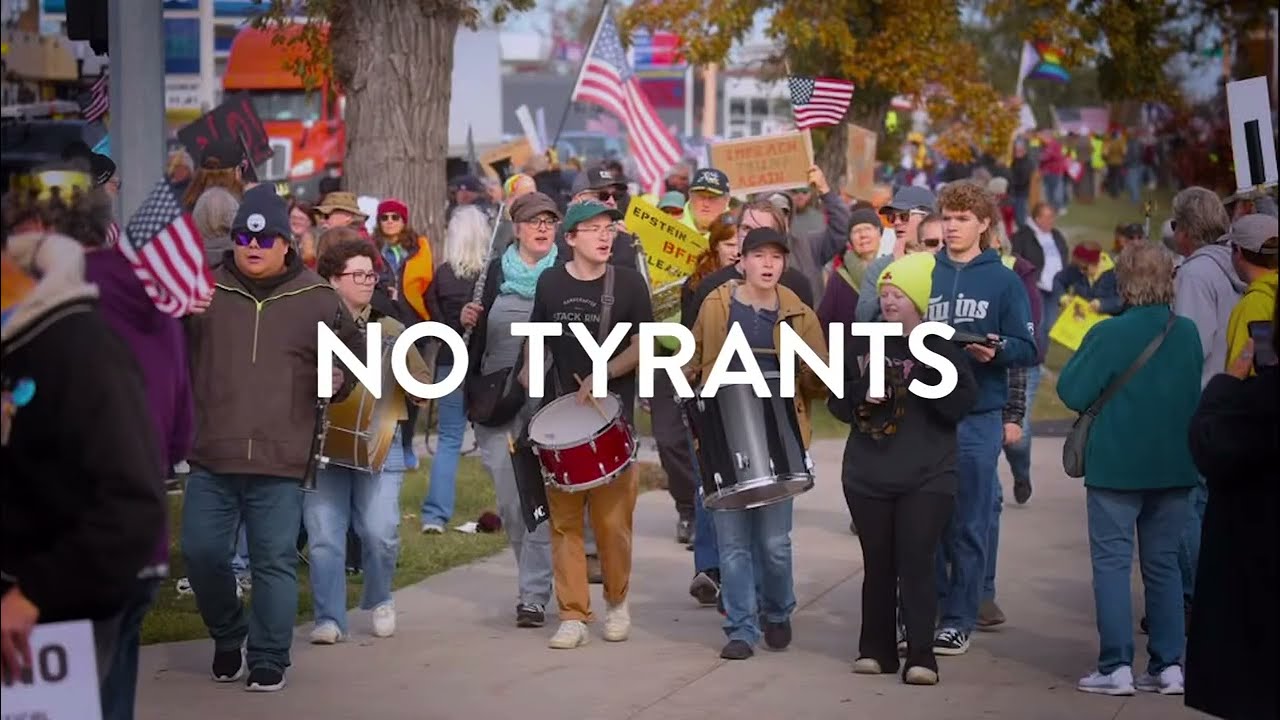
We the People reject Trump’s brutality at home and abroad. Let’s show up on March 28 to say in one voice: No wars of aggression. No terrorizing our communities or yours. No tyrants, no conquests, no kings. nokings.org —– Indivisible is a national grassroots movement dedicated to building progressive power and fixing our democracy. We have hundreds of groups around the country fighting for D.C. statehood, court reform, racial justice, climate justice, and more. Subscribe to our channel …
Fascism funders are buying our elections
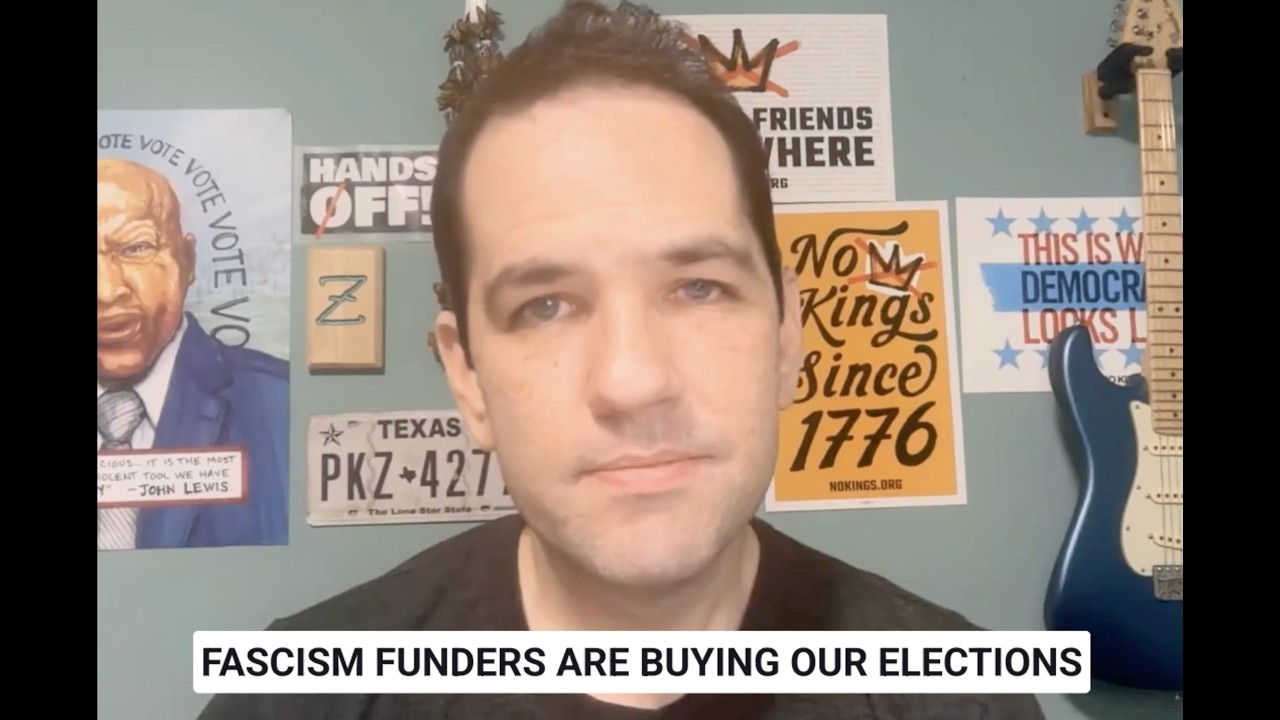
Crypto, AI, AIPAC, and other fascism funders are spending millions of dollars to buy as many Democratic politicians as they can. The Illinois primaries showed us how we can organize to fight back. —– Indivisible is a national grassroots movement dedicated to building progressive power and fixing our democracy. We have hundreds of groups around the country fighting for D.C. statehood, court reform, racial justice, climate justice, and more. Subscribe to our channel today! website: …

This land is our land — not Trump’s
March 28 will be the largest protest in American history. Please join us in the streets again for No Kings Day: https://www.nokings.org/?SQF_SOURCE=indivisible

What does No Kings III have to do with Iran?
What does the largest protest in American history look like two weeks out from the big day? We give a sneak peek at the planning and next steps for No Kings III. Then we welcome Sara Haghdoosti, foreign policy expert and MoveOn Chief of Program Officer, to discuss Trump’s war with Iran, what congress can do about it, and what we all can do to change what happens next. 0:00 Intro 11:17 Sara Haghdoosti 35:23 Q&A —– About What’s the Plan: The onslaught of news, the chaos coming out of the …

ICE Off Campus: Alumni & Higher Education Organizing Call
Since Trump’s return to office, higher education has been under attack – with schools facing pressure from the administration to curtail free speech and academic freedom, eliminate DEI policies as part of admissions, and limit the number of international students. And now colleges and universities are facing yet another pressing threat: ICE enforcement on campus. We’ve seen ICE terrorize our communities, use intimidation tactics on innocent bystanders, and deploy chemical weapons at schools …

No Kings 3: Join the Movement
The next No Kings Day will be the largest protest in American history: https://www.nokings.org/ —– Indivisible is a national grassroots movement dedicated to building progressive power and fixing our democracy. We have hundreds of groups around the country fighting for D.C. statehood, court reform, racial justice, climate justice, and more. Subscribe to our channel today! website: https://indivisible.org/ facebook: https://www.facebook.com/indivisibleguide/ threads: …

Organized pressure works! Just ask Kristi Noem.
Yes, we get to celebrate Kristi Noem getting shitcanned. Pressure works, the regime is weak, joy and celebration are beautiful acts of defiance. Leah covers Trump’s illegal war with Iran and the live fight within the Democratic caucus on whether to fund it. We remember that both No Kings III and our anniversary are this month. And always, lots of live Q&A. 0:00 Intro 17:19 Q&A —– About What’s the Plan: The onslaught of news, the chaos coming out of the White House – it’s all meant to …
1
of 19
Newsfeed
- The first year of the second Trump administration was defined by horrifying authoritarian abuses from an unpopular regime that were met again and again by courageous resistance from everyday Americans…and cowardice or complicity from elites of every stripe. Despite genuine efforts from a handful of Democrats in congress, their ability to advance real, leave-it-all-on-the-field opposition strategy was repeatedly upended by the feckless leadership of Senate Democrats — and none were more feckless than Leader Chuck Schumer.Senator Schumer isn’t responsible for all of the Democrats’ problems, but in 2025 he became emblematic of the party’s failed status quo: a poor communicator who is out-of-touch […]
- By Leah Greenberg, Indivisible Co-Founder and Co-Executive DirectorScreengrab via Democracy Now!Martin Luther King Jr. Day arrives this year amid a deliberate effort to rewrite American history and a wholesale assault on civil rights in America.It has been one year since Donald Trump was inaugurated on Martin Luther King Jr. Day. It felt cruel and grotesque that a man who represents so much of what Dr. King stood against could rise to power on a day meant to honor the struggle for racial justice and democracy.Over the last year, we have seen a devastating, sustained attack on nearly every facet of the […]
- Over Thanksgiving weekend, tens of thousands of people across the country came together to say “We Ain’t Buying It!” to companies that have capitulated to Trump.From Thanksgiving Day through Cyber Monday, they participated in a shopping pause at Target, Home Depot, and Amazon, in protest of those retailers completely caving to the Trump administration and going along with their harmful, authoritarian policies.Target rolled back their diversity, equity, and inclusion (DEI) policiesHome Depot has done nothing to protect immigrants in their stores as ICE continues to conduct violent raids on their property.Amazon has funded the Trump administration through donations and significantly discounted government […]
- It’s time to turn the page in the Democratic Party.Since his election in 2016, Indivisible has been dedicated to the defeat of Donald Trump and his authoritarian political project. Winning this fight is existential for our country and our communities, and the struggle in 2025 is as stark as it has ever been. Donald Trump rules as a wannabe king, dismantling our democracy with a league of sycophantic enablers at his side. Empowered by techno-fascists, corrupt self-dealing billionaires and corporate cowards, this regime is killing the American experiment with a death by a thousand cuts.We have secret police forces and federal […]
- By Sarah Dohl, Indivisible Chief Campaigns OfficerRemember the night Trump’s first reconciliation bill failed and we saved the Affordable Care Act?I do. It was July 28, 2017.After months of nonstop calls, packed town halls, and rallies in blistering Arizona heat, every sign pointed to defeat. Republicans appeared to have the votes to kill Obamacare, and we had our “we lost” email written, proofed, and ready to send. But we should have known better.Because in those months, weeks, and days leading up to that vote, Indivisibles never stopped fighting.Activists like you showed up at Susan Collins’ Fourth of July parades with signs and bullhorns. […]
- By Leah Greenberg, Indivisible Co-Founder and Co-Executive DirectorOver the last six weeks, we’ve gotten the occasional question about why Indivisible, together with our coalition of incredible partners, called for No Kings Day on June 14.Why another protest? What is it going to accomplish? Shouldn’t we be [insert alternate tactic] instead?These are good-faith questions, and they stem from very reasonable concerns. The speed, scope, and scale of the MAGA assault — on our rights, our neighbors, our democracy — is staggering. The stakes are enormous. There are days when nothing we’re doing feels sufficient to the magnitude of the horrors we face.Protest is a tactic. And with any […]
- via Indivisible Twin Cities on BlueskyWe are in the midst of a full-blown constitutional crisis.That statement has been true nearly every day since January 20, as the administration has usurped the powers of Congress by illegally freezing funds, declared fake emergencies to grant itself more power, and skirted judicial rulings.But Trump’s brazen defiance of a Supreme Court order to facilitate the return of Kilmar Abrego Garcia from a Salvadoran torture prison is truly a watershed moment for our teetering democracy.To recap:The Trump administration has sent over 238 people (likely far more) to a torture prison in El Salvador without due process. Mounting […]
- Yesterday was a bad day for Elon Musk and Donald Trump and a good day for democracy. Even after Musk spent more than $20 MILLION to buy a seat on Wisconsin’s top court, Susan Crawford won — and the liberal majority on Wisconsin’s Supreme Court is safe!This isn’t just a loss for Trump, Musk, and their lapdog Brad Schimel; it’s a wholesale rejection of oligarchy. The people of this country don’t want their courts stacked with bought-and-paid-for judges who’ll do the bidding of Musk and his billionaire friends. The vote results convey that loud and clear.And this isn’t just a victory for Susan Crawford […]
- screengrab via KHOUToday, Donald Trump signed an executive order that aims to eliminate the Department of Education. Emphasis on “aims to.” Trump cannot unilaterally abolish a federal department created by Congress.Let’s be clear about what this executive order will do: it instructs Secretary of Education Linda McMahon to facilitate the department’s closure while playing legal tricks to avoid a court making them stop. This approach indicates that the executive order is a preliminary step toward dismantling the department, setting the stage for further actions rather than causing an immediate shutdown.Trump’s goal here is to weaken the department (and thus public education), […]
- When Republicans first introduced their partisan funding bill to keep the government open — full of extreme cuts, attacks on basic rights, and provisions to give even more authority to Trump and Musk to continue dismantling the federal government — it was clear that the fight to stop it would require Democrats to operate with real unity.Federal employee unions, litigators fighting Trump in court, outside advocates, House Democrats, many Democratic party insiders, and Indivisible were all in lockstep that passing this bill would be worse than a government shutdown. The GOP funding bill would give Trump and Musk carte blanche to continue their administrative coup, […]