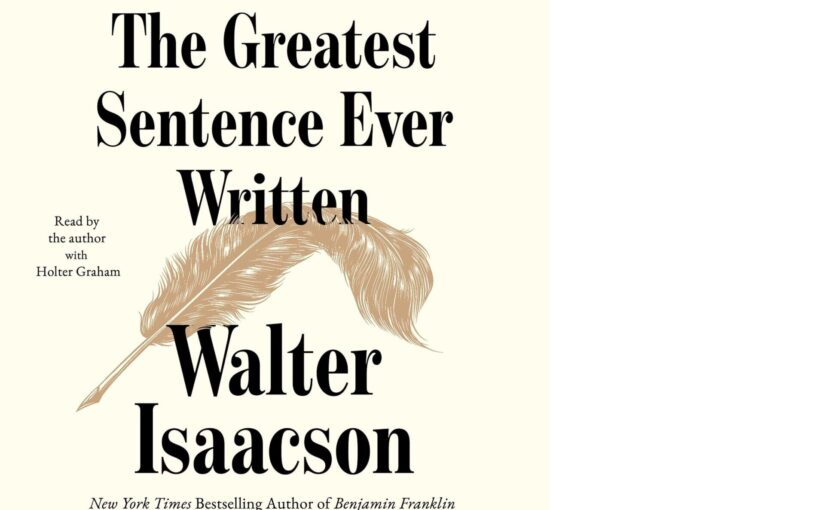
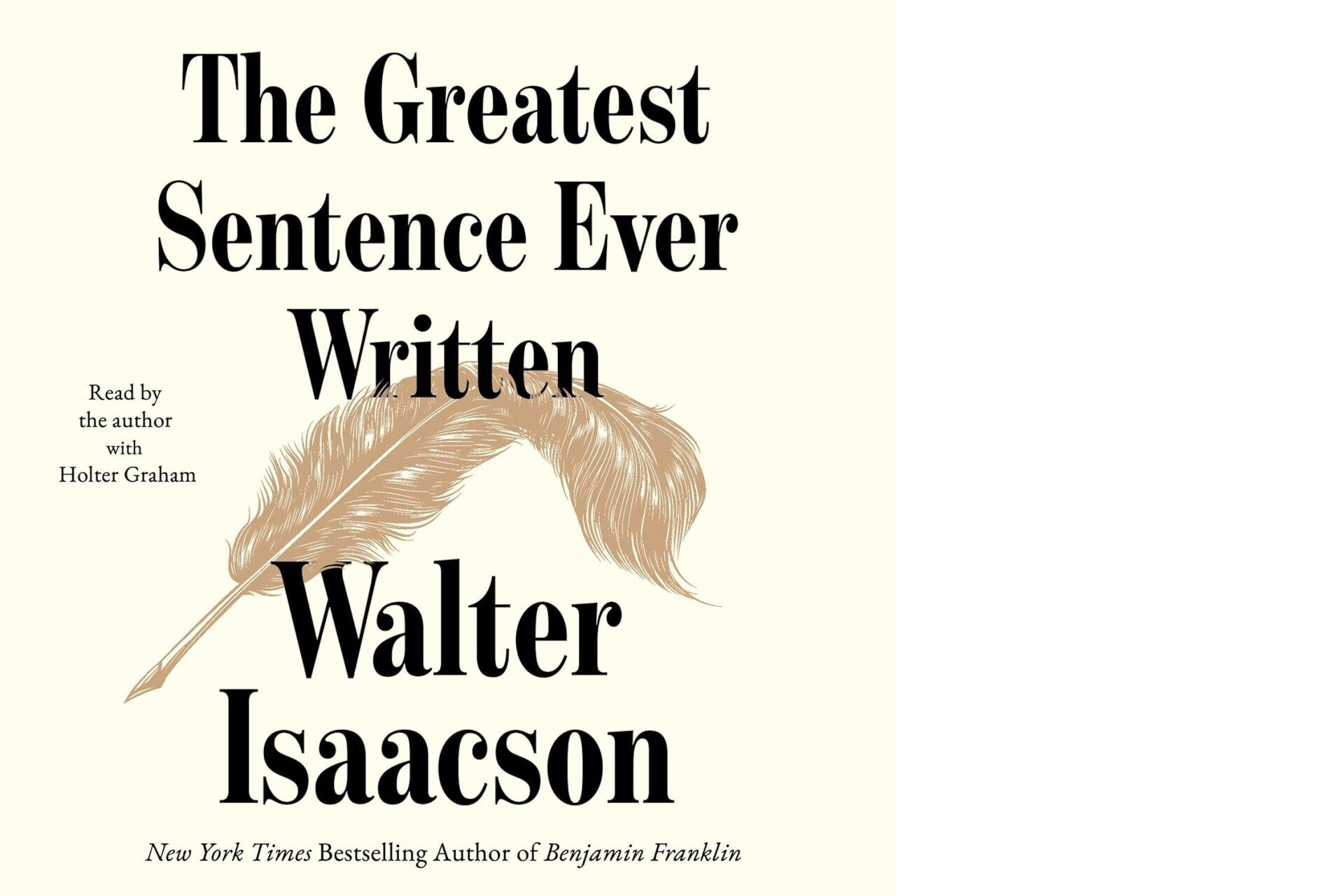
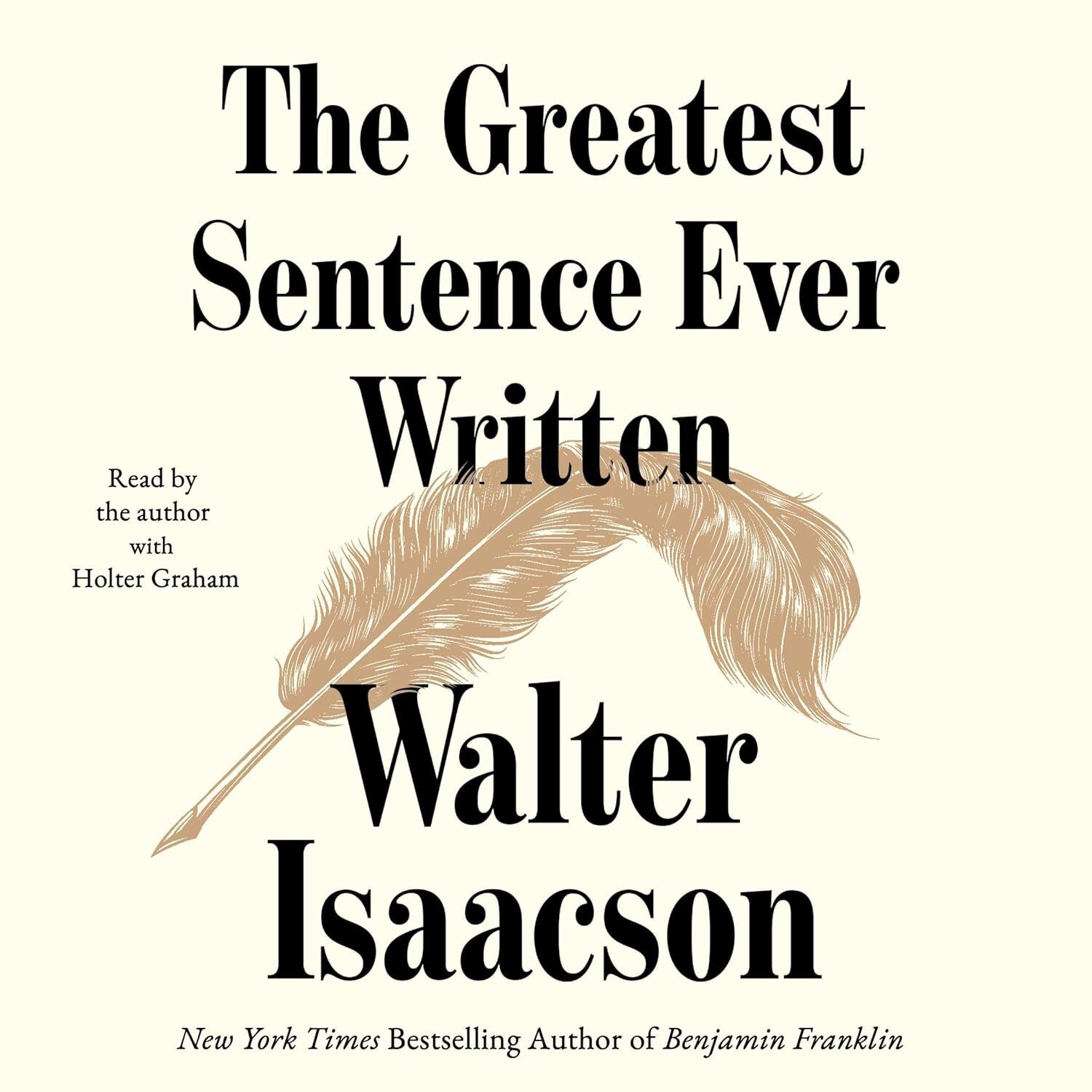
Isaacson explores the origins of the second sentence of the Declaration of Independence: “We hold these truths to be self-evident, that all men are created equal, that they are endowed by their Creator with certain unalienable Rights, that among these are Life, Liberty, and the pursuit of Happiness.” • He breaks down the historical context, showing how Jefferson drafted it and Franklin and Adams edited it. • The book highlights how those words shaped the American Dream and remain relevant in today’s polarized times.
Let’s be honest: this year has been a bit of a dumpster fire. Here at Red Wine & Blue, we’ve been hearing women in our community say they’re not sure how to make a difference — at least, not without totally losing their shit.
So we decided to tackle that question head-on with a brand-new podcast. It’s simply called How To Not Lose Your Sh!t and it’s hosted by our very own Katie Paris and LaFonda Cousin.
Katie, our founder, has worked in political organizing for most of her career. LaFonda, our Chief People Officer, is a wellness expert and yoga teacher on a mission to reimagine self-care. Every week, they’ll talk to experts and everyday women who are getting involved, building community, and feeling better in the process.
You can listen to our first episode with special guest Heather Cox Richardson on October 1st, with new episodes every Wednesday after that. If you’re already subscribed to the Red Wine & Blue podcast in your podcast player, you’ll automatically see new episodes each week here in your feed.
There are a lot of political podcasts out there already, and a lot of mental health and self-care shows too. What we want to do is reject that binary and explore how getting involved can actually be a form of not only caring for your community, but also yourself. We can’t wait for you to join us on a journey through self-care, politics, community, and tackling this difficult moment… together.
Across the country, authoritarian forces are getting bolder and more dangerous. Trump and his allies are not hiding their agenda: mass deportations, rollbacks of civil rights, weaponized courts, and full-scale attacks on our democracy. We don’t have to wait until it’s too late. We can stop this. But it’ll take all of us—not just single days of mass action, but sustained organizing in our communities.
That’s why this summer, we’re launching One Million Rising—a national effort to train one million people in the strategic logic and practice of non-cooperation, as well as the basics of community organizing and campaign design. This is how we build people power that can’t be ignored. You’re invited to join us—and lead.
You can visit the site to see the recorded videos and access the training materials.
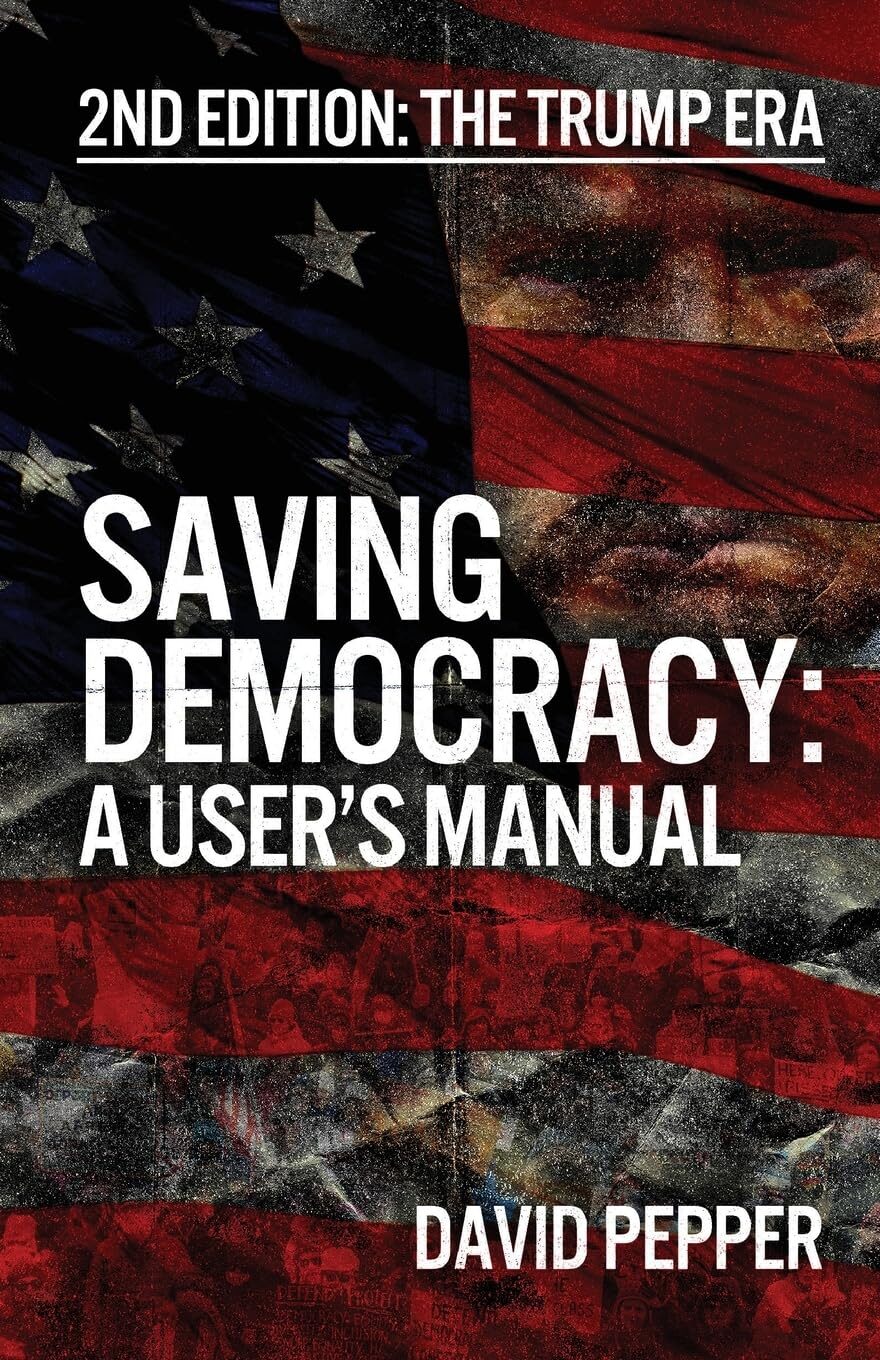
A User's Manual for Every American: 2nd Edition: The Trump Era
by David Pepper
Publisher: St. Helena Press
Recommended by: Steve G.
Saving Democracy is that rare book that doesn’t simply diagnose the crisis our democracy faces, and the broader strategies that we must take to fight back…but it breaks it all down so that every reader understands the role she or he can play in their own lives.
A New Vision for Building the Beloved Community By Adam Russell Taylor Recommended by: Bob Publisher: Broadleaf Books
Thinking about alternatives is an important part of the One Million Rising training. In the words of the president of Sojourners, Adam Russell Taylor, whom I heard speak recently, to build a “more perfect union,” we need to be focusing on three priorities: Blocking, Bridging, and Building. We are focused a lot on Blocking bad things happening, but have little power to do that. In the future, we can work on Bridging, but that will take a very long time and will entail millions of one-on-one relationships.
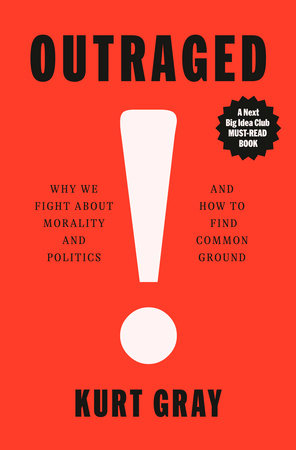
Why We Fight About Morality and Politics and How to Find Common Ground
By Kurt Gray
Publisher: Pantheon
It’s easy to assume that liberals and conservatives have radically different moral foundations. In Outraged, Kurt Gray showcases the latest science to demonstrate that we all have the same moral mind—that everyone’s moral judgments stem from feeling threatened or vulnerable to harm.
We all care about protecting ourselves and the vulnerable. Conflict arises, however, when we have different perceptions of harm. We get outraged when we disagree about who the “real” victim is, whether we’re talking about political issues, fights with our in-laws, or arguments on the playground.
In this fascinating and insightful tour of our moral minds, Gray tackles popular myths that prevent us from understanding ourselves and those around us. While it is commonly believed that our ancestors were apex predators, Gray argues that for the majority of our evolutionary history, humans were more hunted than hunter. This explains why our minds are hard-wired to perceive threats, and provides surprising insights on the scientific origins of our values and beliefs. Though we might think ourselves driven by objective reasoning, Gray unveils new research that finds our moral judgments are based on gut feelings rather than rational thought, and presents a compelling reminder that we are more alike than we might think.
Drawing on groundbreaking research, Gray provides a captivating new explanation for our moral outrage, and unpacks how to best bridge divides. If you want to understand the morals of the “other side,” ask yourself a simple question—what harms do they see?
Recommended by: Bob B. – “A nonprofit working to create large collaborative projects to promote consensus policies frameworks with details that could be enacted by Congress on the basis of broad acceptance within the country from Democrats, Republicans, and Independents.”
In a recent YouGov poll, 83% of citizens wanted lawmakers from both parties to make our package of 39 life-enhancing reforms “a priority.”
These reforms would significantly advance citizens’ long-thwarted aspirations for:
Greater economic opportunity and growth
Schools that enable kids to reach their potential
Effective & affordable healthcare
Curbing the national debt
Reliable, clean & affordable energy
Fairer, simpler tax code
Congress organized to resolve our differences
Among the reforms that voters across the spectrum support, all but two have been around for years.
Congress has enacted NONE
The reason: Lawmakers win reelection over 90% of the time by blaming the other party for our critical problems and offering sound bites as remedies.
To overcome these dysfunctions, the Grand Bargain includes three reforms that would reward lawmakers who make major progress on our long-term ills — while those who stood in the way would be likely to lose their seats.
Hear Vinay Orekondy from the Grand Bargain Project talk passionately about our project at EarthX 2025 as part of a Rotaract Club spotlight.
The current Grand Bargain would produce vastly more benefits to society than the major legislation of this century, while shrinking the debt as a percentage of GDP.
For Independents, it’s not about reinventing the entire legislative process – it’s about re-designing the incentives and the system so that they work to benefit the American people.
Generation Z – adults aged 18-29 – represented by far the lowest turnout in the 2024 election, with only around 20 million voting despite more than double that number being eligible.
When communities struggle, the economy weakens, workforce shortages increase, and political divides deepen. If leaders continue to ignore these issues, the long-term consequences will be severe.
America, much like our universe, has always been a nation in motion. It has weathered crises, conflicts, and economic upheavals, yet through the lens of history, the country maintains a sense of forward momentum.
In a recent conversation with Lura Forcum, President at the Independent Center, it became clear just how much thought and purpose is driving this quiet movement. From voter education to future electoral influence, the Independent Center is carving out space for independents to belong and lead.
Recommended by: Bob B. – “Builders Movement, was launched by Starts With Us, and supported by Kind founder, Daniel Lubetsky.”
Our mission is to overcome “us vs. them” thinking and solve problems together. We equip people to uncover hidden common ground and build on it – with lasting solutions that reflect the will of the people.
Find Common Ground and Build Real Solutions Together
If enough people adopt a Builders Mindset, we can replace our toxic “us vs. them” culture with one of curiosity, compassion, courage, and creative innovation.
It won’t be easy. The incentives in our media, social algorithms, and politics reward and amplify the conflict entrepreneurs working overtime to divide, diminish, and destroy.
Our approach is to reach and teach people at scale with powerful content, equip them with new skills and innovative tools, and mobilize the growing Builders movement with grassroots civic programs to hold political leaders accountable for being Builders.
Practicing the 4Cs Daily
The Builders mindset is rooted in the 4Cs: curiosity, compassion, courage, and creativity. By adopting these values as daily habits, we promote flexible thinking, constructive problem solving, and respecting the dignity of all people.
How a politically diverse group of ordinary Wisconsin citizens turned a kitchen-table idea into the law of the land — and made their state the 49th to guarantee a full year of postpartum Medicaid coverage. When Governor Tony Evers stepped to the podium at a Wisconsin children’s hospital last Wednesday to sign legislation extending postpartum… The post Builders Like You Just Scored a Huge Legislative Victory for New Moms appeared first on Builders.
Gallup Poll Finds New High of 45% in U.S. Identify as Political Independents — Here’s What That Means for the Future of Politics American politics can feel like a constant tug-of-war. Red versus blue. Left versus right. Us versus them. The rope has been pulled so hard for so long that a record number of… The post Nearly Half of Americans Now Identify as Political Independents appeared first on Builders.
The Lone Star State Has Allocated $20 Billion to Solving Its Water Crisis. Some Experts Warn It’s Not Nearly Enough. Texas is a state built on growth. More people, more businesses, more cities rising from open land. For generations that growth felt almost limitless. But one resource may ultimately decide how far that growth can… The post Is Texas Running Out of Water? appeared first on Builders.
How to stay grounded in reality — and humanity When the Iran War broke out, the public conversation escalated almost as quickly as the conflict itself. Within minutes, timelines filled with hot takes, sweeping claims, and people suddenly confident they solved Middle Eastern geopolitics between lunch and their third cup of coffee. But the Iran… The post What We Keep Getting Wrong About the Iran War appeared first on Builders.
My name is Lucy, and I’ve been living in Israel for the past four and a half years. I work as a full-time scriptwriter for Builders of the Middle East, where I write content that amplifies the voices of real people across the region, especially those living in some of its most complex and conflicted… The post Humanity Is the One Thing War Can’t Take: Life in Israel During the Iran War appeared first on Builders.
Primaries used to be the sad side salad of American democracy — technically part of the meal, but largely ignored. Now everyone wants a bite. And that shift could change everything about who ends up on your November ballot. Election season kicked off this week with the Texas, North Carolina, and Arkansas Primary Elections on… The post The Tides Are Turning This Election Season appeared first on Builders.
Following the mass shooting in Downtown Austin this morning and the outbreak of war in the Middle East, Builders Movement is postponing its Texas Independence Day event scheduled for tomorrow, March 2, at the State Capitol until further notice. Monday’s event was intended to celebrate independence and civic participation ahead of Tuesday’s Primary Election. Out… The post Our Capitol Event on 3/2 Has Been Postponed Until Further Notice appeared first on Builders.
By Sharon McMahon I am a person who has read the Minnesota state constitution for fun. I realize this makes me unusual. But when I ask most people what they could do this week to strengthen American democracy, they either go big — vote, protest, run for office — or they go nowhere, because nothing… The post What If It’s Simpler Than You Think? appeared first on Builders.
Every election cycle, a fresh wave of misinformation sweeps through Texas — on social media, in group chats, and sometimes even on the news. These myths don’t just spread confusion. They actively discourage people from voting. As we approach the Texas primary election on March 3, let’s set the record straight on six of the… The post 6 Texas Voting Myths, Debunked appeared first on Builders.
The first question every voter should ask when evaluating a candidate By Brian Hamilton My dad never graduated from high school. He used to tell me: “Brian, talking ain’t doing.” Despite not having the fancy degrees that many of us hold, my father instinctively knew the importance of action. One of our better presidents, Teddy… The post Have They Ever Built Anything? appeared first on Builders.
We’re Launching a Get-Out-The-Vote Campaign Inspired by Texas’s Strangest and Most Beloved Mascot: The Armadillo In Texas, we have a state mammal that tells the whole story. When threatened, the armadillo rolls up into a tight little ball. Head down. Feet tucked in. Wait it out. It’s exactly what too many Texans do every primary… The post Don’t Roll Over, Texas appeared first on Builders.
Voting based on who will actually govern effectively is hard. It requires asking questions that go deeper than party labels, campaign slogans, and who “won” the last debate. If you’re tired of representatives who perform for their base instead of solving problems, here are five questions to ask before you cast your vote. These aren’t… The post 5 Questions to Ask Before You Vote appeared first on Builders.
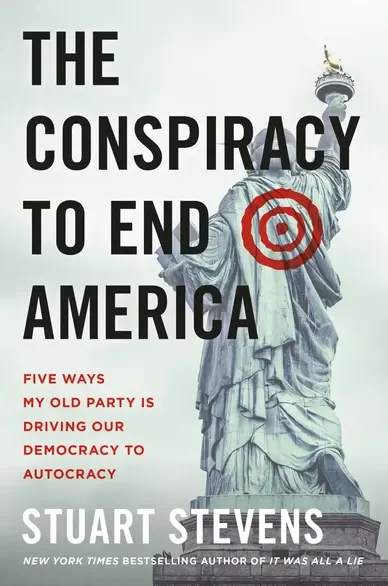
Five Ways My Old Party Is Driving Our Democracy to Autocracy
by Stuart Stevens
Publisher: Hachette Book Group
Former chief Republican strategist, Lincoln Project adviser, and bestselling author ofIt Was All a Lie, Stuart Stevens offers an ominous warning that the GOP is dragging our country toward autocracy—and if we don’t wake up to the crisis in our system, 2024 may well be our last free and fair election.
INTERVIEW: Stuart Stevens talks to Brian Watt (KQED) at the Commonwealth Club
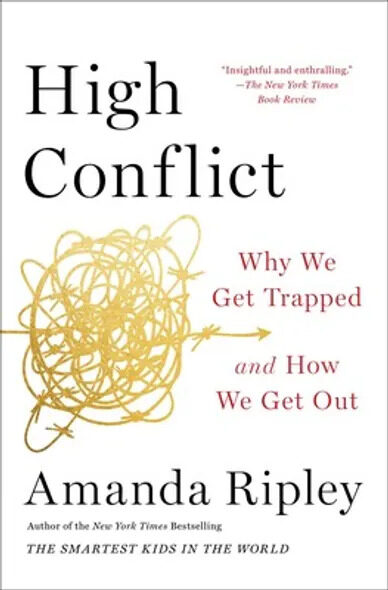
When we are baffled by the insanity of the “other side”—in our politics, at work, or at home—it’s because we aren’t seeing how the conflict itself has taken over. That’s what “high conflict” does. It’s the invisible hand of our time. And it’s different from the useful friction of “healthy conflict”. That’s good conflict, and it’s a necessary force that pushes us to be better people.
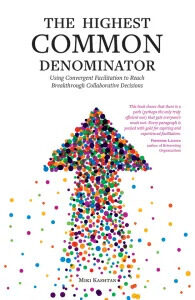
Using Convergent Facilitation to Reach Breakthrough Collaborative Decisions
by Miki Kashtan
Miki introduces a novel decision-making process called Convergent Facilitation that builds trust from the beginning, surfaces concerns and addresses them, and turns conflicts into creative dilemmas that groups feel energized to solve together. This highly effective process has been used successfully around the world to resolve problems and teach people how to collaborate without sacrificing productivity.
Bringing people together across divides to tackle today’s toughest challenges
Recommended by: Bob B. – “(NCDD), a nonprofit membership organization that maintains a database of collaborative organizations around the world.”
What We’re All About
The National Coalition for Dialogue & Deliberation (NCDD) is a network of innovators who bring people together across divides to discuss, decide, and take action together effectively on today’s toughest issues. NCDD serves as a gathering place, a resource center, a news source, and a facilitative leader for this vital community of practice.
Dialogue and deliberation are innovative processes that help people come together across differences to tackle our most challenging problems. In a time when we are increasingly told how divided we are in so many ways in our nation and in our world, teaching, spreading, and supporting the skills of dialogue and deliberation are vital.
The NCDD website is a clearinghouse for literally thousands of resources and best practices, and our highly participatory national and regional conferences have brought together more nearly 3,000 practitioners, community leaders, public administrators, researchers, activists, teachers and students since 2002. We keep in touch monthly with 28,000 people involved in public engagement and conflict resolution work.
Above all, NCDD provides opportunities for members of the broadly-defined dialogue and deliberation (“D&D”) community to share knowledge, inspire one another, build collaborative relationships, and have a greater collective impact.
Below you’ll find our contact info, mission, details about our membership, and more. You can also read the full story of NCDD’s beginnings and learn about the NCDD team. And, of course, if this resonates with you, please consider becoming a member or making a donation to NCDD!
Why did the Coalition form?
NCDD exists to support the growing “dialogue and deliberation community” — a broadly-defined community of practice involving practitioners, scholars, activists, public officials, nonprofit leaders, process geeks, students, and others who engage and mobilize people to come together and strengthen understanding of each other and issues in ways that supports community-building and collaborative problem-solving.NCDD was formed in 2002 in response to a clear need for an infrastructure for learning and collaboration among those who approach D&D from a variety of disciplines, including public policy, social work, communication, education, social justice, social activism, and organizational development. The Coalition was a result of the first National Conference on Dialogue & Deliberation, held near Washington, DC in October 2002.
NCDD is an educational organization and a Community of Practice. Communities of practice are formed by people who engage in a process of collective learning in a shared domain or topic area. In other words, communities of practice are groups of people who share a concern or a passion for something they do and learn how to do it better as they interact regularly.
Our members make up the core of our community of practice. As of January 2021, the Coalition’s membership has grown to include 700 organizations and individuals. Our website visitors, social media group members, conference attendees, and over
28,000 newsletter subscribers are also part of this ever-growing community of practice.