
Beyond MAGA

A Profile of the Trump Coalition

by: Stephen Hawkins, Daniel Yudkin, PhD, Tim Dixon, and Jason Mangone

Publisher: More in Common US

Recommended by: Bob B.

A Coalition, Not a Cult

There is an image at the heart of American politics: a sea of
red-hat-wearing MAGA supporters at a Trump campaign rally,
representing the millions of Americans who voted for him over the past
three elections — 63 million in 2016, 74 million in 2020, and 77
million in 2024. Yet this image is misleading. President Trump has
built a coalition, not a cult. This coalition shares many common
concerns, from unregulated immigration to progressive overreach to
American decline. But it also contains groups with distinct
identities, competing priorities, and clashing worldviews. And while
there is a strong core of ardent Trump supporters whose identity is
wrapped up in the MAGA movement, they represent a minority: only 38
percent of Trump voters say that being MAGA is important to them.

The Four Types of Trump Voters

  • The Reluctant Right
  • MAGA Hardliners
  • Anti-Woke Conservatives
  • Mainline Republicans

Thoughts on Aliens of Our Creation

Do they work for us, or for themselves?

By: Bruce Rafnel

Publisher: Substack, Authentic Community

Clearly, humans are causing climate change.

But we have more problems than warming the planet. Even if we control the temperature by reducing our CO2 emissions, there are many other ecological problems caused by humans: deforestation, desertification, disruption of water cycles, plastic pollution, insect decline, fishery collapses, and fuel resource depletion. The list goes on and on. “It is no accident that the ruins of the world’s oldest civilizations are mostly in deserts now. It wasn’t desert before that.”

Our human institutions are unwilling (or unable) to address these problems with real solutions. We created these institutions—corporations and governments, most notably—but we seem unable to control them. They have morphed into alien entities that now control us.

The smallest effective human-powered unit is a community, not an individual. However, tight, effective communities have been hobbled. It is time to relearn how to build communities, and then to do the work of taking back our government. At the same time, large organizations can be reformed or broken up, with non-violent actions, to remind them that they exist for humans, not themselves.


Authentic Community feed

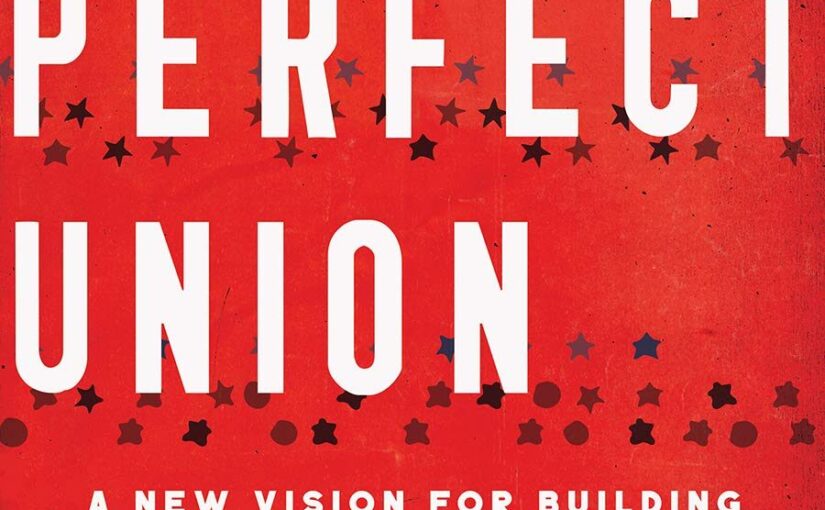
A More Perfect Union

A New Vision for Building the Beloved Community
By Adam Russell Taylor
Recommended by: Bob
Publisher: Broadleaf Books

Thinking about alternatives is an important part of the One Million Rising training. In the words of the president of Sojourners, Adam Russell Taylor, whom I heard speak recently, to build a “more perfect union,” we need to be focusing on three priorities: Blocking, Bridging, and Building. We are focused a lot on Blocking bad things happening, but have little power to do that. In the future, we can work on Bridging, but that will take a very long time and will entail millions of one-on-one relationships.

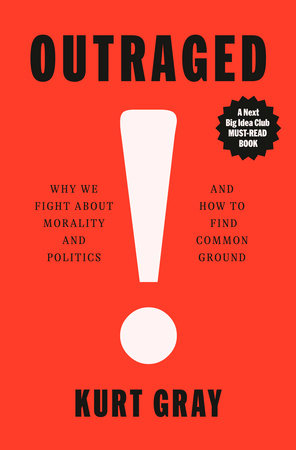
Outraged

Why We Fight About Morality and Politics and How to Find Common Ground

By Kurt Gray

Publisher: Pantheon

It’s easy to assume that liberals and conservatives have radically different moral foundations. In Outraged, Kurt Gray showcases the latest science to demonstrate that we all have the same moral mind—that everyone’s moral judgments stem from feeling threatened or vulnerable to harm.

We all care about protecting ourselves and the vulnerable. Conflict arises, however, when we have different perceptions of harm. We get outraged when we disagree about who the “real” victim is, whether we’re talking about political issues, fights with our in-laws, or arguments on the playground.

In this fascinating and insightful tour of our moral minds, Gray tackles popular myths that prevent us from understanding ourselves and those around us. While it is commonly believed that our ancestors were apex predators, Gray argues that for the majority of our evolutionary history, humans were more hunted than hunter. This explains why our minds are hard-wired to perceive threats, and provides surprising insights on the scientific origins of our values and beliefs. Though we might think ourselves driven by objective reasoning, Gray unveils new research that finds our moral judgments are based on gut feelings rather than rational thought, and presents a compelling reminder that we are more alike than we might think.

Drawing on groundbreaking research, Gray provides a captivating new explanation for our moral outrage, and unpacks how to best bridge divides. If you want to understand the morals of the “other side,” ask yourself a simple question—what harms do they see?

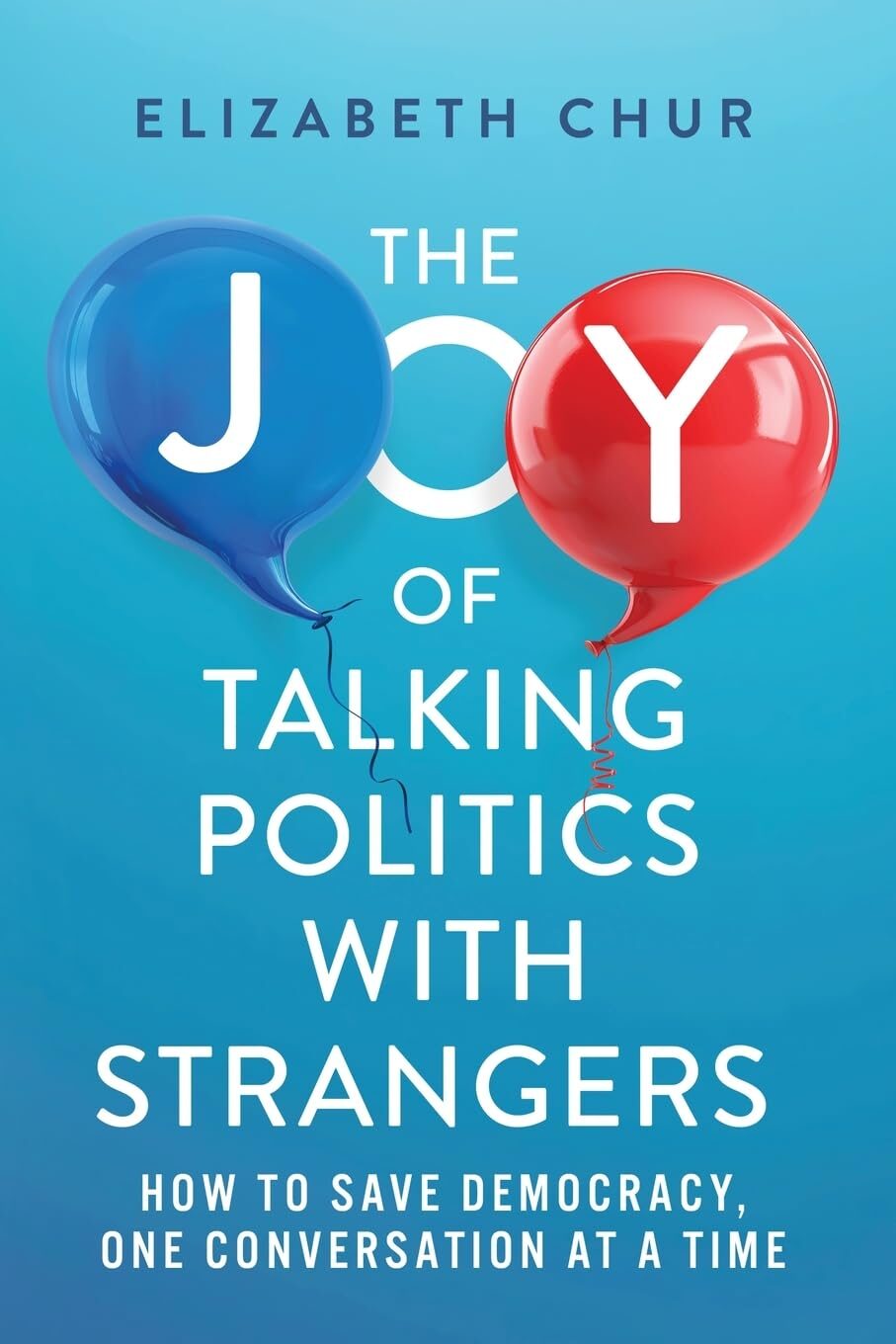
The Joy of Talking Politics With Strangers

How to save democracy one conversation at a time

by Elizabeth Chur

Publisher: Talk with Voters Publishing

Elections are decided on front porches and phone calls across the country, one voter at a time. The Joy of Talking Politics with Strangers is a comprehensive guidebook that helps volunteers connect one-on-one with voters – our most powerful tool for winning elections. These conversations can also spark unexpected moments of empathy and even kinship with our fellow Americans.
 

After 2016, volunteer Elizabeth Chur realized it’s up to ordinary citizens to protect our democracy. She started learning Spanish, began phone banking, and canvassed in California’s Central Valley, home to some of the nation’s most contested swing districts. By talking with over 1,000 people, she discovered how to forge meaningful connections with the hardest-to-reach voters, including:

  • Young people
  • Latinos
  • People who say, “I don’t vote.”

Filled with uplifting stories and practical tips, this inspiring book helps you earn people’s trust – and their votes. It demonstrates how taking positive action builds community and creates hope. Whether you’re a first-time volunteer or seasoned activist, The Joy of Talking Politics with Strangers shows you how to engage more effectively with voters and win elections.


Buy

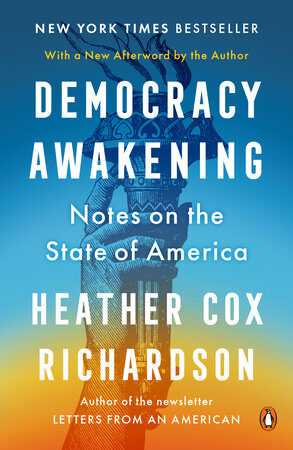
Democracy Awakening

Notes on the State of America

by Heather Cox Richardson

Publisher: Penguin Random House

At a time when the very foundations of American democracy seem under threat, the lessons of the past offer a road map for navigating a moment of political crisis. In Democracy Awakening, acclaimed historian Heather Cox Richardson delves into the tumultuous journey of American democracy, tracing the roots of Donald Trump’s “authoritarian experiment” to the earliest days of the republic. She examines the historical forces that have led to the current political climate, showing how modern conservatism has preyed upon a disaffected population, weaponizing language and promoting false history to consolidate power.

With remarkable clarity and the same accessible voice that brings millions to her newsletter, Letters from an American, Richardson wrangles a chaotic news feed into a story that pivots effortlessly from the Founders to the abolitionists to Nixon to the January 6 insurrection. An essential read for anyone concerned about the state of America, Democracy Awakening is more than a history book; it’s a call to action. Richardson reminds us that democracy requires constant vigilance and participation from all of us, showing how we, as a nation, can take the lessons of the past to secure a more just and equitable future.

Heather Cox Richardson | Democracy Awakening

Buy

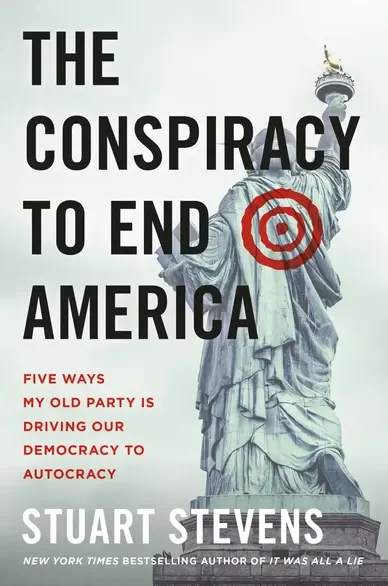
The Conspiracy to End America

Five Ways My Old Party Is Driving Our Democracy to Autocracy

by Stuart Stevens

Publisher: Hachette Book Group

Former chief Republican strategist, Lincoln Project adviser, and bestselling author of It Was All a Lie, Stuart Stevens offers an ominous warning that the GOP is dragging our country toward autocracy—and if we don’t wake up to the crisis in our system, 2024 may well be our last free and fair election.

 
INTERVIEW: Stuart Stevens talks to Brian Watt (KQED) at the Commonwealth Club

Buy

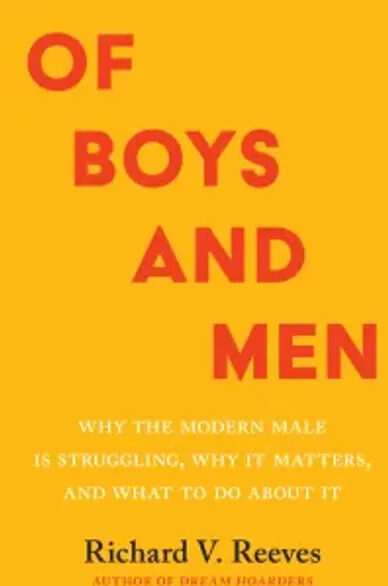
Of Men and Boys

Why the Modern Male Is Struggling, Why It Matters, and What to Do about It

by Richard V. Reeves

Publisher: Brookings Institution Press

Recommended by: Bob B.

“The problem with men is typically framed as a problem of men,” writes Reeves. “It is men who must be fixed, one man or boy at a time. This individualist approach is wrong.” Instead, he maintains there are structural problems, societal issues, that need to be addressed if men are not to become ever more lost, defeated and angry.

Review

After The Fall

The rise of Authoritarianism in the world we've made

by Bden Rhodes

Publisher: Random House

At a time when democracy in the United States is endangered as never before, Ben Rhodes spent years traveling the world to understand why. He visited dozens of countries, meeting with politicians and activists confronting the same nationalism and authoritarianism that are tearing America apart. Along the way, he discusses the growing authoritarianism of Vladimir Putin, and his aggression towards Ukraine, with the foremost opposition leader in Russia, who was subsequently poisoned and imprisoned; he profiled Hong Kong protesters who saw their movement snuffed out by China under Xi Jinping; and America itself reached the precipice of losing democracy before giving itself a fragile second chance.

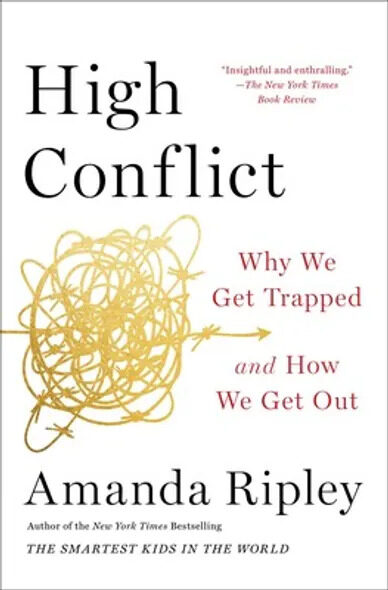
High Conflict

Why We Get Trapped and How We Get Out

by Amanda Ripley

Publisher: Simon and Schuster

Recommended by: Cindi, Bob & Linda

When we are baffled by the insanity of the “other side”—in our politics, at work, or at home—it’s because we aren’t seeing how the conflict itself has taken over. That’s what “high conflict” does. It’s the invisible hand of our time. And it’s different from the useful friction of “healthy conflict”. That’s good conflict, and it’s a necessary force that pushes us to be better people.

Read Review

Buy

The Hidden Tribes of America

A year-long project of More in Common launched in October 2018.

by: Stephen Hawkins, Daniel Yudkin, Míriam Juan-Torres, and Tim Dixon

Publisher: More in Common US

Recommended by: Bob B.

The report was conducted by More in Common, a new international initiative to build societies and communities that are stronger, more united, and more resilient to the increasing threats of polarization and social division. We work in partnership with a wide range of civil society groups, as well as philanthropy, business, faith, education, media and government to connect people across the lines of division.

America has never felt so divided. Bitter debates that were once confined to Congressional hearings and cable TV have now found their way into every part of our lives, from our Facebook feeds to the family dinner table. But most Americans are tired of this “us-versus-them” mindset and are eager to find common ground. This is the message we’ve heard from more than 8,000 Americans in one of our country’s largest-ever studies of polarization: We hold dissimilar views on many issues. However, more than three in four Americans also believe that our differences aren’t so great that we can’t work together.

A range of major issues split the country

  • Immigration impact
  • White privilege
  • Sexual Harassment
  • Islamophobia

More in Common US

Recommended by: Bob B.

More in Common was established with the mission of tackling the ‘us-versus-them’ divisions that pose a generational threat to the United States. We have published over 30 reports since launching in the US in 2018, with a foundational study that helped shape the emerging field of efforts to tackle polarization in America. Hidden Tribes:  A Study of America’s Polarized Landscape showed that rather than being evenly divided, most Americans belonged to an ‘Exhausted Majority’. America’s Exhausted Majority is tired of tribalism, fed up with the country’s polarization, and more flexible and less ideological than the strident voices who dominate public debates.

We work with leaders across the ideological spectrum to strengthen American democracy, solve problems, and better navigate the dynamics of a polarized society. The common thread through our ever-increasing range of projects and partnerships is a simple truth: what we as Americans have in common is greater than our differences. Through both our research insights and on-the-ground projects, we’re building evidence-based solutions to bring this truth to life.

More in Common is a 501(c) 3 non-profit organization. We receive funding from foundations, organizations and individuals who share a commitment to building communities and societies that are more resilient to the forces of social fracturing and polarization. Philanthropies that support More in Common’s work fund projects across a wide range of issue areas.

See also: